9:11in productionCh. 1 · A letter, not a lab/ 9:11 · ceiling 15 min
Physics · Computing & AI
Schrödinger's cat
Schrödinger didn’t invent quantum weirdness — he exposed its refusal to describe reality without cheating.
Schrödinger's cat is a 1935 thought experiment designed by Erwin Schrödinger in correspondence with Einstein to critique the Copenhagen interpretation of quantum mechanics. It uses a sealed chamber containing a cat, radioactive source, Geiger counter, relay, hammer, and flask of hydrocyanic acid. The setup links a single quantum event — atomic decay — to a macroscopic outcome. Mathematically, the wave function describes a superposition of 'alive' and 'dead', yet observation always reveals one definite state. Schrödinger intended this as reductio ad absurdum, not as a proposal. No experiment was conducted. The work establishes a tension between formalism and observation — nothing more.
This was never an experiment — it was a letter to Einstein critiquing the EPR paper and Bohr’s view.
2:14
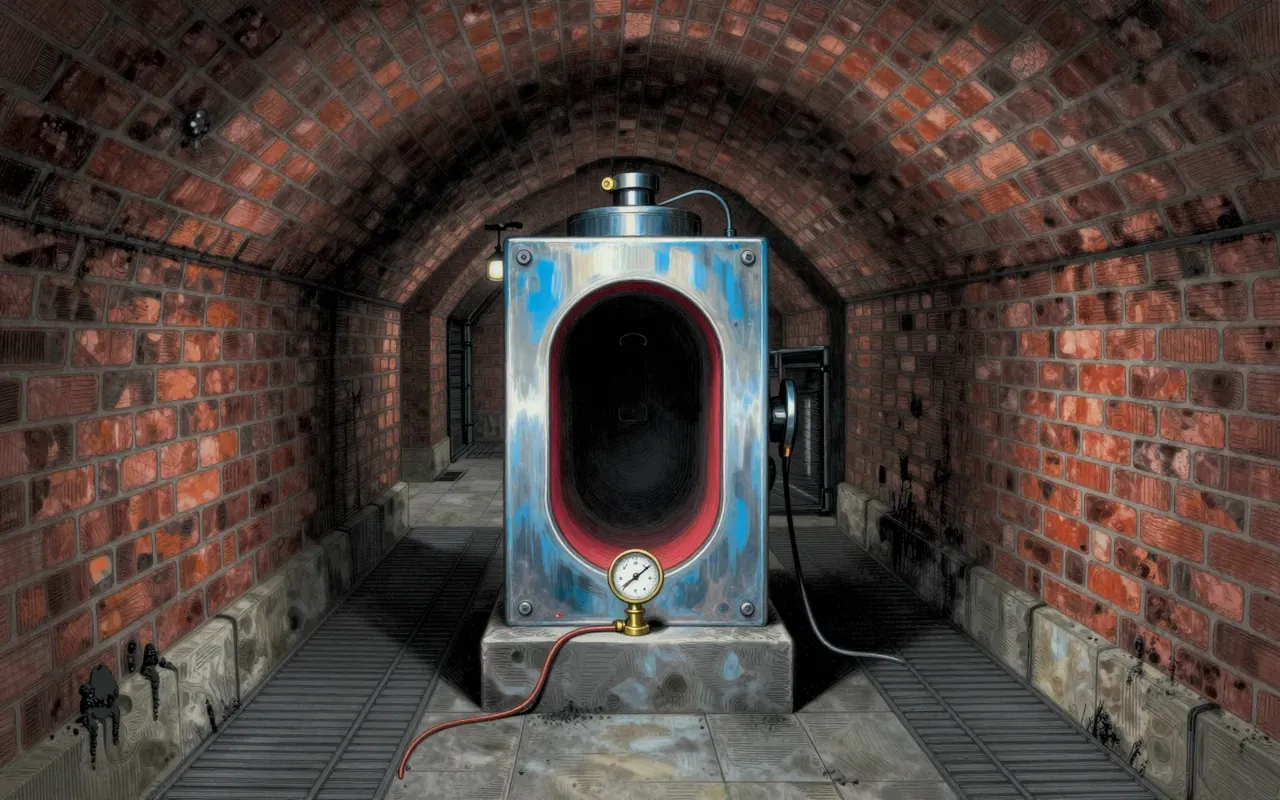
The infernal device
The apparatus is specific: steel chamber, Geiger counter, hydrocyanic acid, one-hour decay window.
3:47
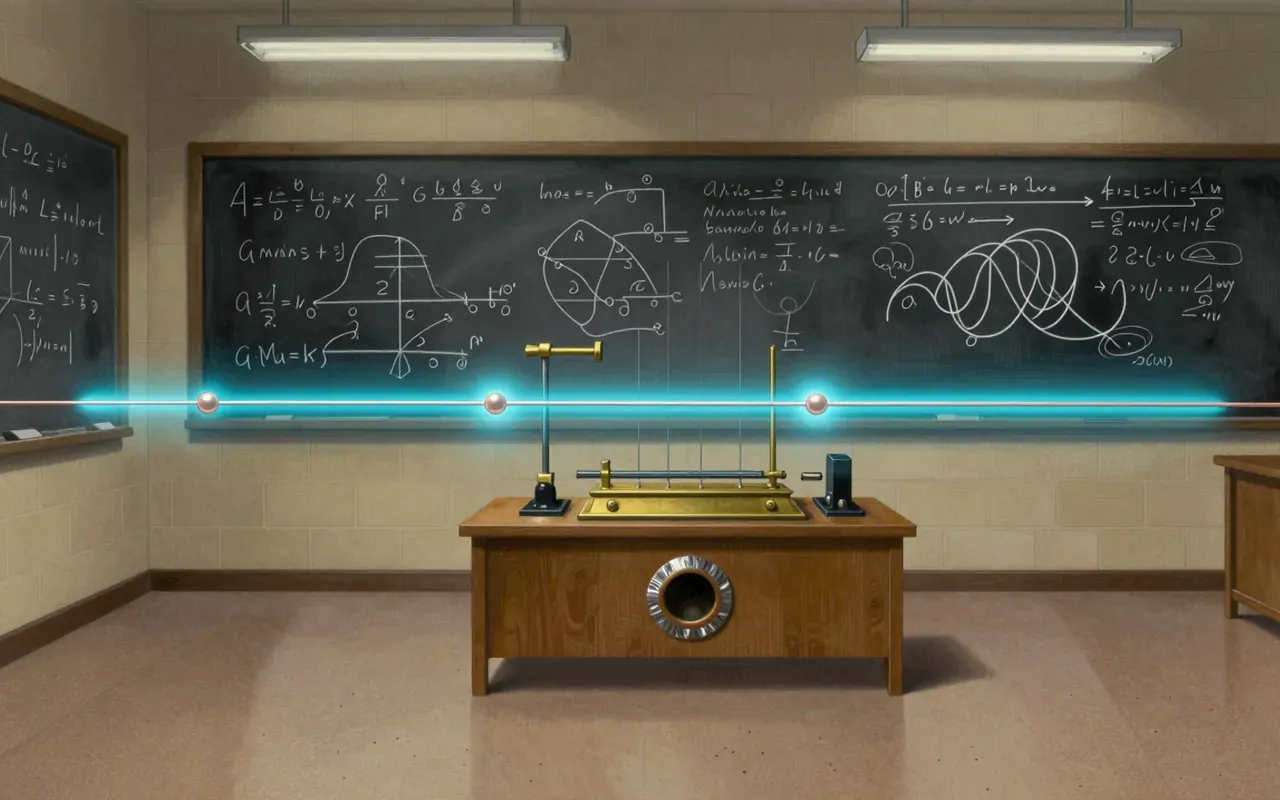
Two truths, one box
Math says ‘alive + dead’. Eyes say ‘alive’ or ‘dead’. The gap is the problem.
5:14
A reductio, not a revelation
Reductio ad absurdum — not advocacy. Schrödinger meant to break the idea, not prove it.
Worth your time?
Yes. Study the whole thing.
4.5/ 5
What works
exposes the measurement problem with unmatched clarity
forces precise language about what quantum maths describes
remains indispensable for teaching the limits of interpretation
What does not
prove wave function collapse
demonstrate macroscopic superposition
involve actual cats or poison
refute Copenhagen interpretation
Study it if
philosophers of physics
students confronting quantum formalism
anyone who hears 'alive and dead' and wonders what that means
Skip it if
those seeking experimental results
practising quantum engineers
biologists studying feline physiology
The written brief1 min read
What the work claims
Schrödinger claimed the Copenhagen interpretation leads to absurdity when extended to macroscopic systems. He used the cat to expose a contradiction: quantum mathematics permits coexisting states, yet experience never delivers them. He did not claim cats are both alive and dead.
How it was done
Schrödinger devised a thought experiment in 1935 in correspondence with Einstein. He placed a cat, radioactive source, Geiger counter, relay, hammer, and flask of hydrocyanic acid in a sealed steel chamber. The setup linked a single quantum event — one atom decaying within an hour — to a macroscopic outcome: the cat’s life or death.
What holds up
The wave function mathematically describes the box’s contents as a superposition of ‘alive’ and ‘dead’. Observation always yields one classical outcome — alive or dead — never both. This mismatch between formalism and experience is real and unresolved.
What does not
It does not demonstrate superposition in cats. It was never performed. It makes no empirical claim about feline physiology, radioactivity rates, or detector efficiency. It establishes nothing about observation causing collapse — only that the Copenhagen interpretation yields an uncomfortable description before measurement.
Why it matters beyond the lab
It anchors decades of debate about realism, measurement, and the role of consciousness — not because it answers those questions, but because it isolates the precise point where quantum theory refuses to speak plainly about what exists before we look.
Is it worth your time
Yes. It forces a confrontation with how quantum formalism maps onto lived reality — not as a puzzle to solve, but as a boundary marker for where the theory stops making unambiguous predictions.