What the work claims
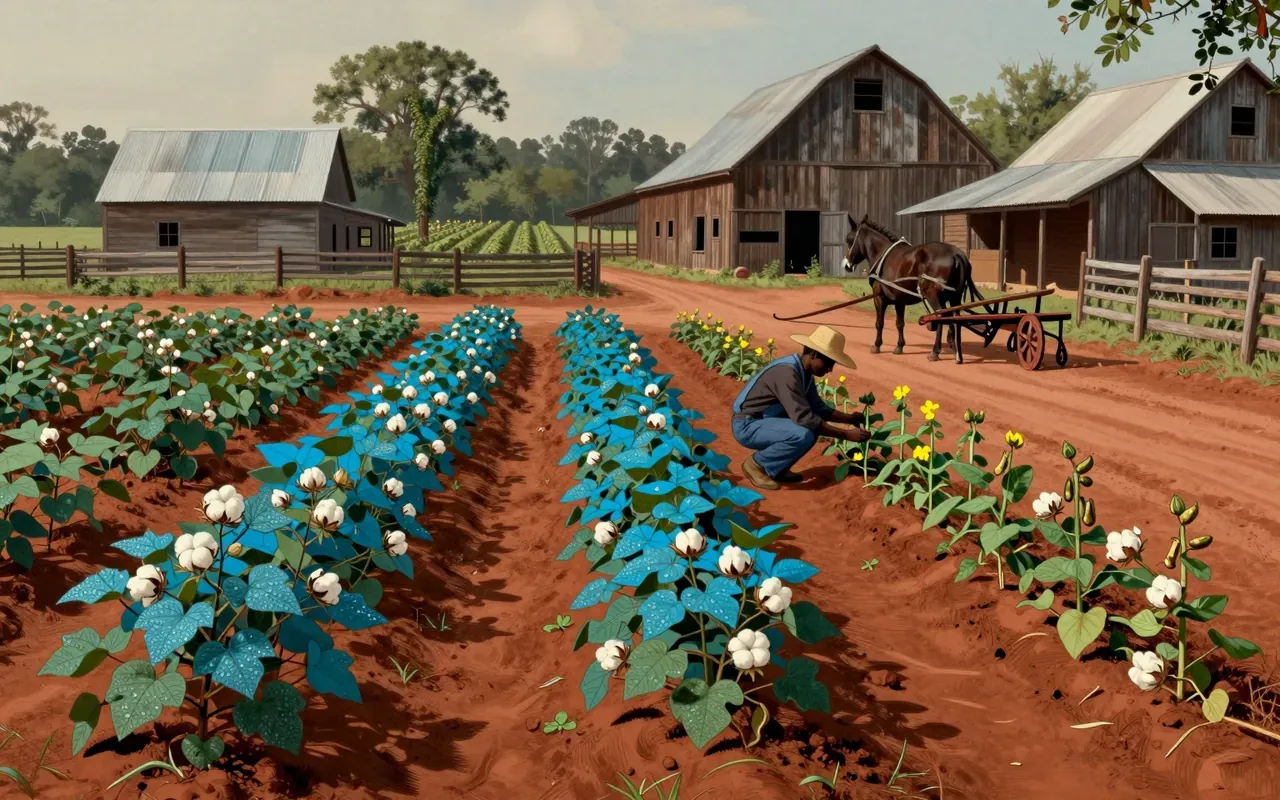
That systematic crop rotation — alternating cotton with peanuts and sweet potatoes — restores soil, boosts cotton yields, improves farmer nutrition, and creates new income streams through diversified crop use.
How it was done
Carver developed soil-replenishing crop rotation systems, especially with peanuts and sweet potatoes. He founded an industrial research lab to develop non-food uses for those crops. He authored over forty practical bulletins for farmers. He ran an agricultural extension program in Alabama. He widely distributed recipes using alternative crops.
What holds up
Crop rotation with nitrogen-restoring crops improved cotton yields and provided alternative cash crops. Carver’s bulletins, extension work, recipes, and industrial applications were all deployed at scale for poor Southern farmers. His methods targeted soil depletion, food security, and market diversification — with documented adoption in the region.
What does not
The sources do not establish that Carver discovered peanut-based products as novel chemical compounds, nor that he invented crop rotation itself. They do not report experimental controls, yield quantification beyond ‘improved’, error margins, replication outside Alabama, or long-term ecological monitoring.
Why it matters beyond the lab
It demonstrates how applied science can be structured around human constraints — poverty, limited capital, lack of infrastructure — rather than abstract optimisation. It remains a benchmark for context-specific, non-extractive agricultural development.
Is it worth your time
Yes. Carver’s work is a rare documented case of applied agricultural science designed explicitly for economic and nutritional self-sufficiency among marginalised farmers — not just yield maximisation or commercial scale-up.