sciencebriefs
10:02in productionCh. 1 · Disease as contagion/ 10:02 · ceiling 15 min
Medicine · Physics

Avicenna

Avicenna invented conceptual scaffolding for science—not data, but the grammar of causality, certainty, and self-evidence.

Avicenna laid structural foundations for scientific reasoning—linking observation to logic, disease to unseen agents, self-awareness to immateriality—but produced no empirical verification, no taxonomy of organisms, no experimental protocol, and no mechanism for transmission.

Chapters & takeaways4
  1. 0:56
    Disease as contagion

    He proposed invisible tainted organisms cause disease—and prescribed isolation—centuries before microbes were seen.

  2. 3:09
    Natural causation, case by case

    Polydactyly was his proof that even rare anomalies have natural causes—not divine whim or fate.

  3. 4:33
    The soul without senses

    The 'floating man' thought experiment isolates self-awareness from sensation—establishing the soul as immaterial.

  4. 6:26
    Certainty and first principles

    In Al-Burhan, he defined scientific certainty as grasping necessary relations—and named induction and experimentation as paths to first principles.

Worth your time?

Yes. Study the whole thing.

4/ 5
What works
  • defines a standard for scientific certainty
  • integrates observation, logic, and experimentation into one framework
  • argues consistently for natural causation in medicine
  • introduces isolation as a public health measure based on causal reasoning
What does not
  • proves germ theory
  • describes a microbe
  • measures transmission rates
  • refutes supernatural causation empirically
Study it if
  • historians of science
  • philosophers of medicine
  • students of epistemology
Skip it if
  • epidemiologists
  • microbiologists
  • clinical researchers
The written brief1 min read

What the work claims

Avicenna claimed invisible tainted organisms cause disease and advocated isolation. He claimed the soul is immaterial and self-aware, demonstrated by the ‘floating man’. He claimed God’s existence can be proven via the ‘Proof of the Truthful’. He claimed scientific certainty arises only when necessary relations between terms are grasped.

How it was done

Avicenna used case-based reasoning—such as polydactyly—to argue for natural causation in medicine. He devised the ‘floating man’ thought experiment while imprisoned in Fardajan castle. In Al-Burhan, part of The Book of Healing, he described a method of inquiry that included induction and experimentation to reach first principles.

What holds up

His argument that all medical events—including rare ones like polydactyly—have natural causes holds as a foundational shift from supernatural to causal explanation. His insistence that certainty requires grasping necessary relations between terms remains a coherent epistemic standard. His inclusion of tajriba (examination/experimentation) as a route to first principles predates later formalisations.

What does not

Avicenna did not test his claim about tainted organisms experimentally. He did not quantify transmission risk. He did not link specific organisms to specific diseases. His ‘scientific method’ lacked falsifiability criteria, controlled variables, or reproducibility protocols.

Why it matters beyond the lab

It matters because Avicenna’s integration of observation, logic, and experimentation shaped Islamic Golden Age medicine and philosophy—and indirectly influenced later European scholasticism. His framing of disease as transmissible via unseen agents anticipates germ theory conceptually, though not mechanistically.

Is it worth your time

Yes—if you need to trace how early systematic reasoning about disease, self-awareness, or scientific certainty was formalised. Not if you expect empirical epidemiology, neuroimaging, or statistical validation.
Same field · Medicine4 of 83
8:42
Monoclonal antibodyGeorges Köhler and César MilsteinThe 1975 hybridoma technique solved one problem: how to make unlimited quantities of identical antibodies targeting a known antigen. It did not solve delivery, safety, scalability, or therapeutic function. Its value lies in reproducibility — not potency, not novelty of target, not clinical impact.
8:44
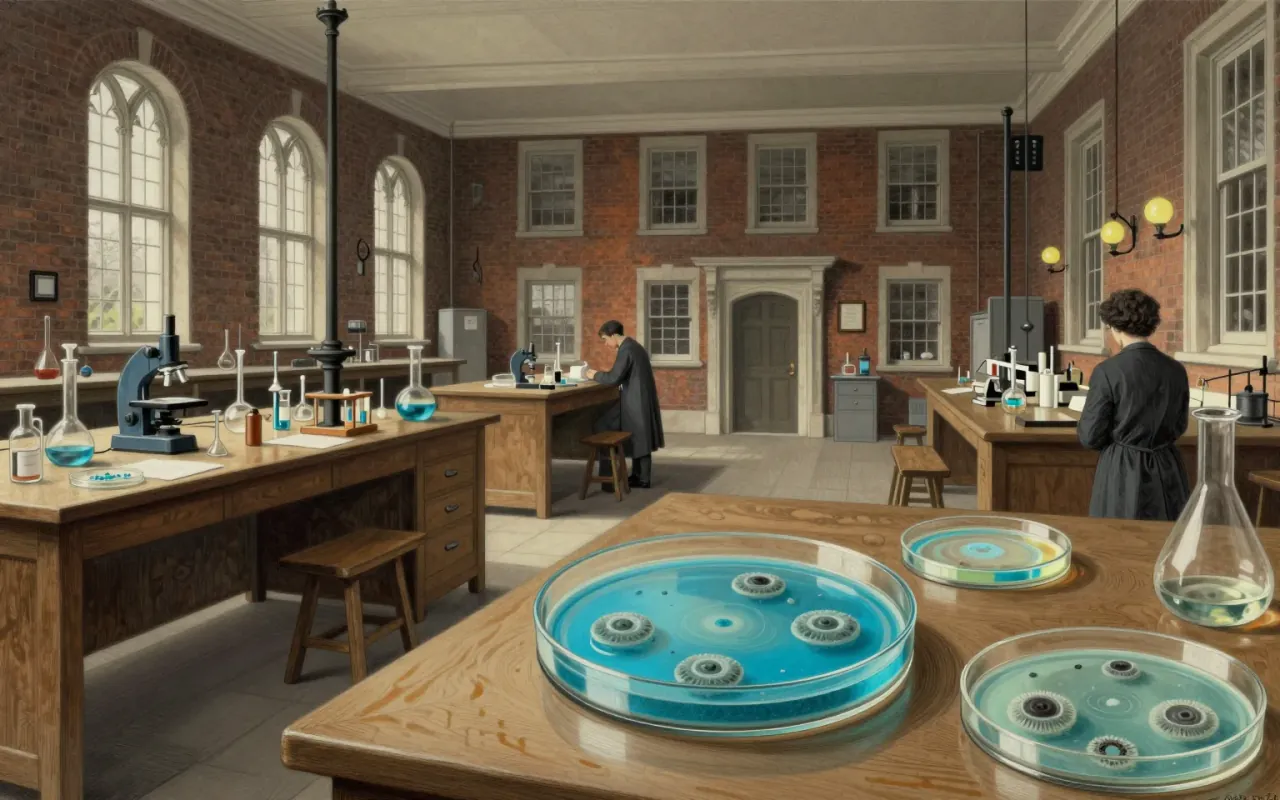
Alexander FlemingFleming’s 1928 observation was narrow, unreplicated in vivo, and clinically inert at the time — yet it encoded three durable truths: microbes can inhibit each other selectively; that inhibition fails if deployment is incomplete; and the agent responsible is both unstable and taxonomically specific. Nothing he did translated directly to therapy. Everything he saw framed the problem correctly.
13:00
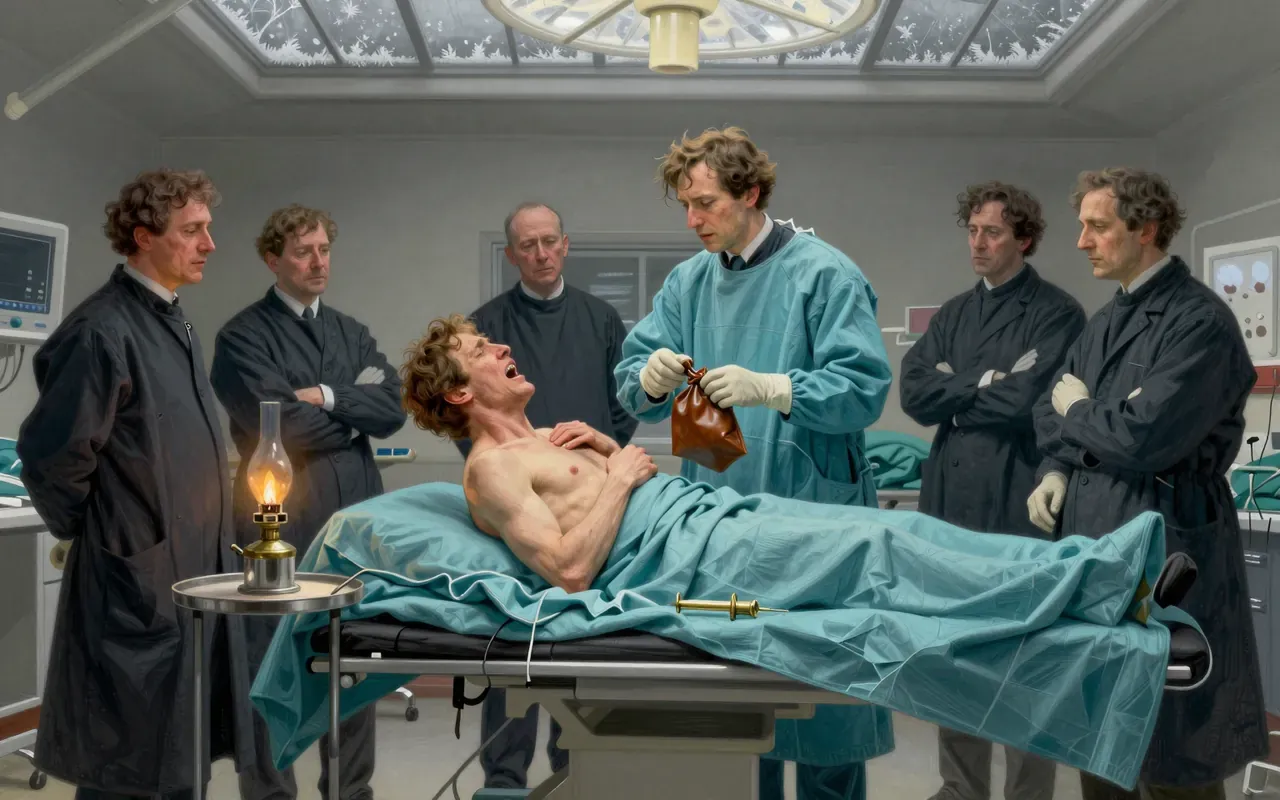
History of general anesthesiaAt Massachusetts General Hospital on 16 October 1846, the dentist William Morton administered inhaled ether to a young printer named Edward Gilbert Abbott, allowing surgeon John Collins Warren to remove a neck tumour without Abbott reporting any pain, a demonstration that ended with Warren's remark that this was no humbug. News of the success spread to Europe and across America within weeks, quickly overshadowing an earlier failed attempt, a nitrous oxide demonstration by Horace Wells the previous year that had gone wrong when the patient cried out. Morton's claim to priority was disputed almost immediately, both by Charles Jackson, who said Morton had taken the idea from him, and by the fact that Crawford Long had used ether for a similar operation back in 1842 without publishing the result until years later, leaving Morton's public demonstration, rather than any single discovery, as the moment credited with launching modern surgical anaesthesia.
13:00
Management of HIV/AIDSHuman studies tracking how fast HIV levels fell once patients started treatment showed the virus was replicating continuously and mutating constantly, not lying dormant. That finding argued for combining several drugs at once rather than relying on any single one, a strategy the 1996 clinical trials confirmed and that remains the basis of antiretroviral therapy today.
Up next in Science

Molecular Structure of Nucleic Acids: A Structure for Deoxyribose Nucleic Acid

1953 · 9:53

It didn’t prove replication — it made replication geometrically inevitable.

9:53