sciencebriefs
Topic

Scientific method

The procedure for being wrong less often, imperfectly followed.

146
in science
10:55
average
1594 min
in total
186
across the network
Scientific method across the network →
All briefs146
10:16

Jennifer Doudna

Jennifer Doudna and Emmanuelle Charpentier

Doudna and Charpentier’s 2012 work established CRISPR-Cas9 as the first programmable, RNA-guided DNA cleavage system. It relies on Cas9 protein and a synthetic guide RNA chimera. It works in vitro. It does not demonstrate editing in living organisms or repair outcomes. It is the origin of all subsequent CRISPR applications — not a refinement, but the first functional design.

11:20

Ibn al-Haytham

He didn’t just study light—he invented the scientific method for perception.
8:20

Eric F. Wieschaus
He didn’t find genes that build embryos—he found the switches that start the clock.
10:02

Avicenna

Avicenna invented conceptual scaffolding for science—not data, but the grammar of causality, certainty, and self-evidence.
10:34

Baconian method

Francis Bacon

Bacon’s method is not a working protocol but a declaration of epistemic discipline: knowledge must be built stepwise from particulars, anchored in observation, and guarded against the Idols of the mind. Its power lies in its framing—not its execution.

10:55

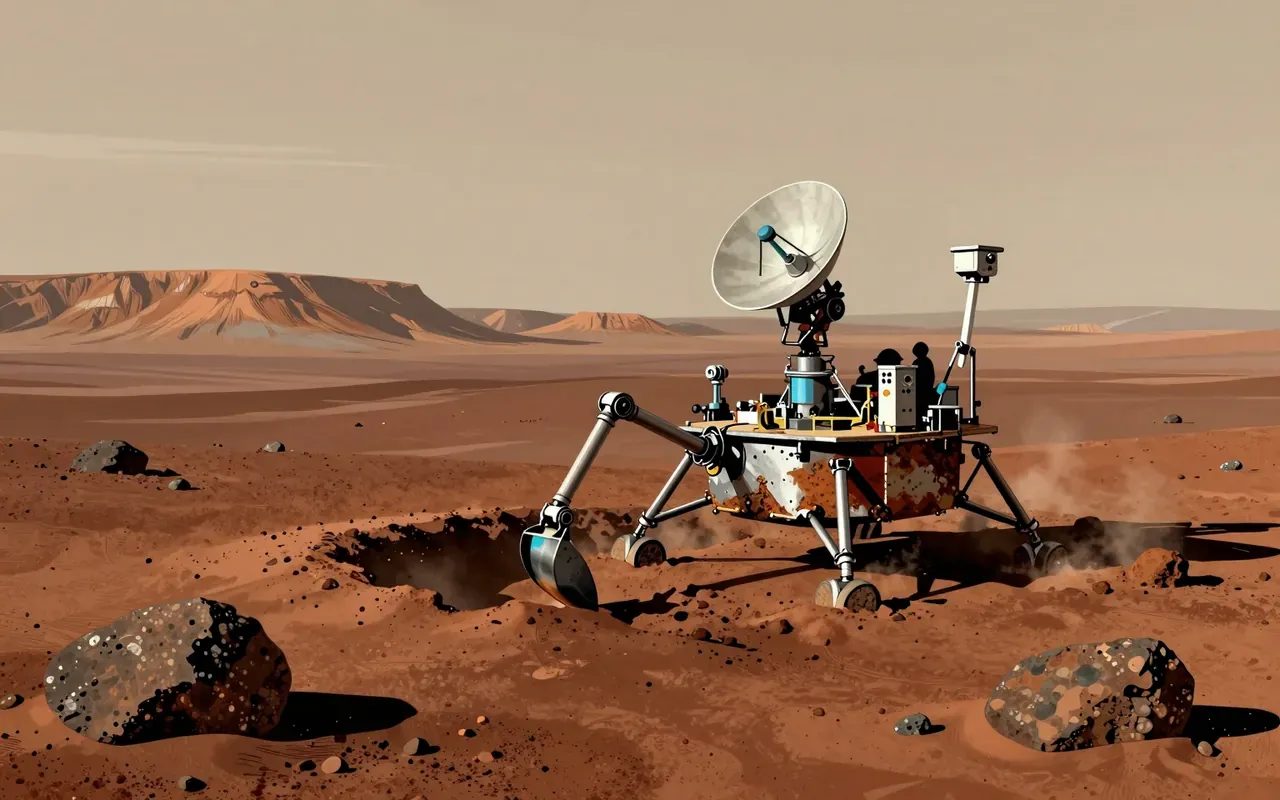
Viking lander biological experiments

Gil Levin

The Viking lander biological experiments were a suite of four in situ tests conducted in 1976 by the Viking 1 and Viking 2 landers to detect microbial life on Mars. The experiments—Gas Chromatograph–Mass Spectrometer (GCMS), Gas Exchange (GEX), Labeled Release (LR), and Pyrolytic Release (PR)—used soil samples collected by robotic arm and analyzed them under controlled conditions. While GCMS found no significant organic molecules, LR yielded positive, reproducible signals of radioactive gas release upon nutrient addition—signals that diminished or disappeared after heat sterilization or cold storage—prompting ongoing debate over whether the results indicate biological metabolism or abiotic oxidative chemistry, especially in light of later discoveries like perchlorate.
9:19

Water cycle

A correct theory of the water cycle existed for 230 years before science accepted it.
9:11

Lord Kelvin

He didn’t discover cold — he made temperature itself objective.
8:32

Wind power

Wind power did not begin with climate policy — it began with a Scottish professor lighting his cottage in 1887.
11:00

Abdus Salam

Salam didn’t discover a particle — he built the grammar that lets physicists speak about weak and electromagnetic forces as one thing.
8:44

Alexander Fleming

Fleming didn’t discover a drug — he discovered a warning system built into microbial ecology.
9:53

André-Marie Ampère

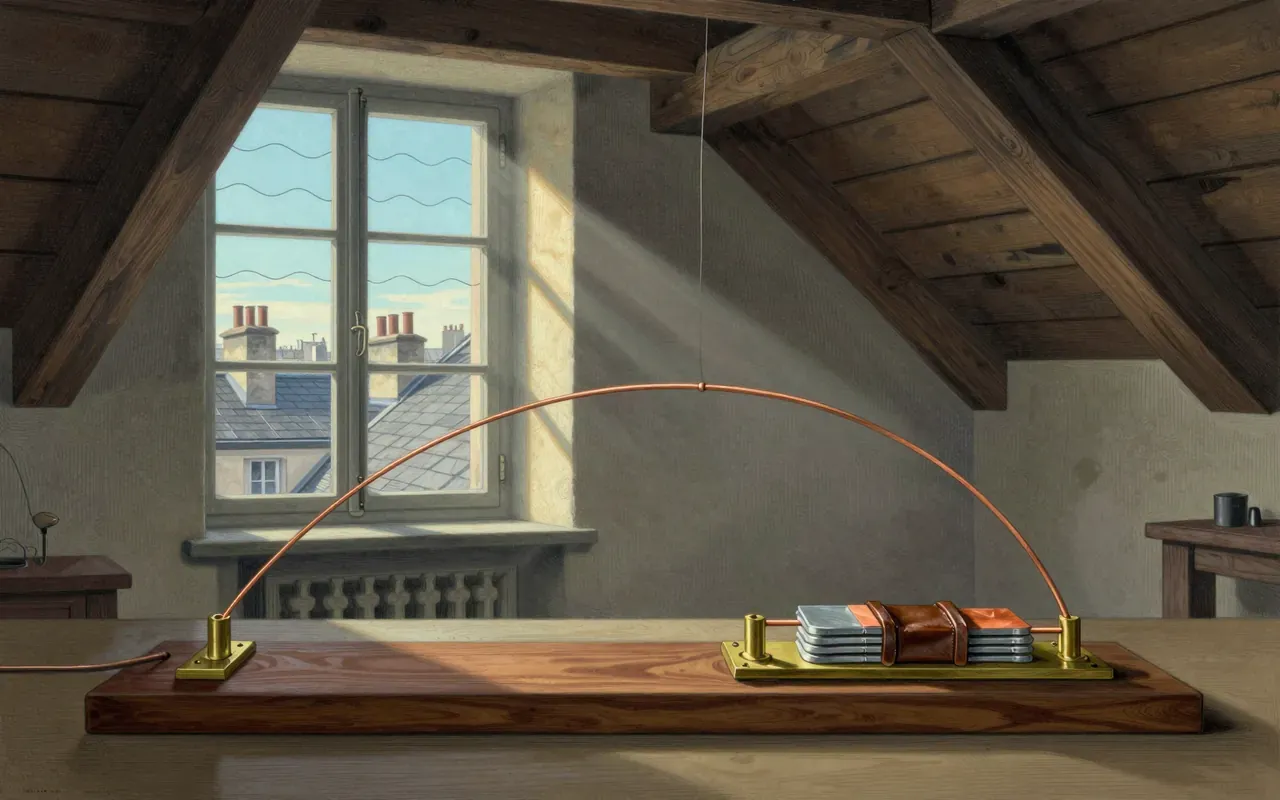
Ampère didn’t discover electromagnetism — he turned it into a science you can calculate with.
9:31

Arieh Warshel

He did not explain enzymes—he built the first working computational microscope for them.
9:14

Aryabhata

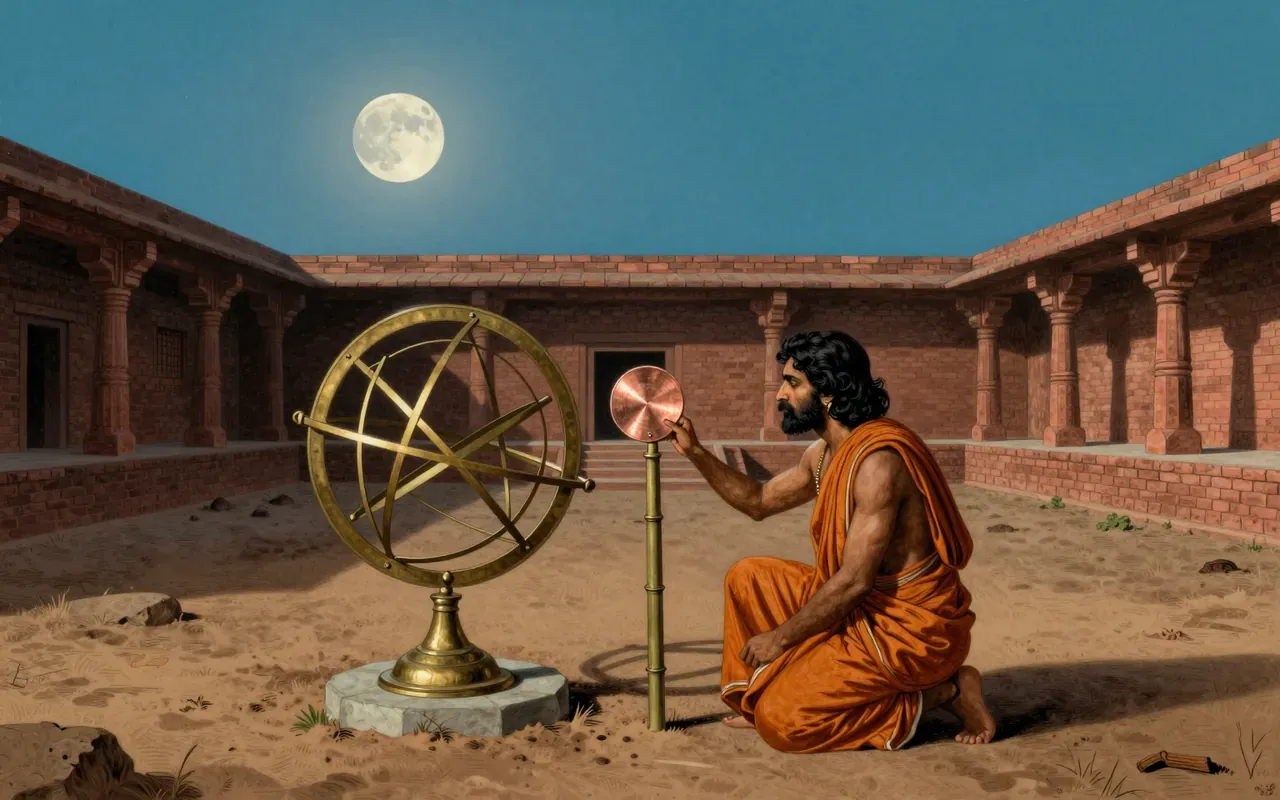
Aryabhata didn’t just anticipate Copernicus — he built a working, quantified geocentric model that outperformed contemporaries for a millennium.
13:00

Bell test

Alain Aspect's early 1980s photon experiments turned Einstein's decades-old discomfort with entanglement into a testable question, and quantum mechanics won, though it took another three decades of closing loopholes before the answer became fully conclusive.
9:05

Barbara McClintock

Genes don’t just code—they jump, break, and switch traits on and off depending on where they land.
9:55

Barry Marshall

A man drank bacteria and proved ulcers were infectious—not psychological.
13:00

Boltzmann's entropy formula

Boltzmann's formula reduced entropy to a count of possible atomic arrangements, but the atomic theory it depended on was not confirmed until 1908, two years after his death by suicide amid professional resistance.
13:00

Brownian motion

Pollen grains jittering under a microscope in 1827 sat unexplained for nearly eighty years until Einstein worked out that invisible molecules were bumping them around, turning a small curiosity into decisive proof that atoms are real.
9:35

Carl Rogers

Therapy isn’t about what you say — it’s about how you hold space, and in 1941 they proved it with tape recorders.
9:52

Caroline Herschel

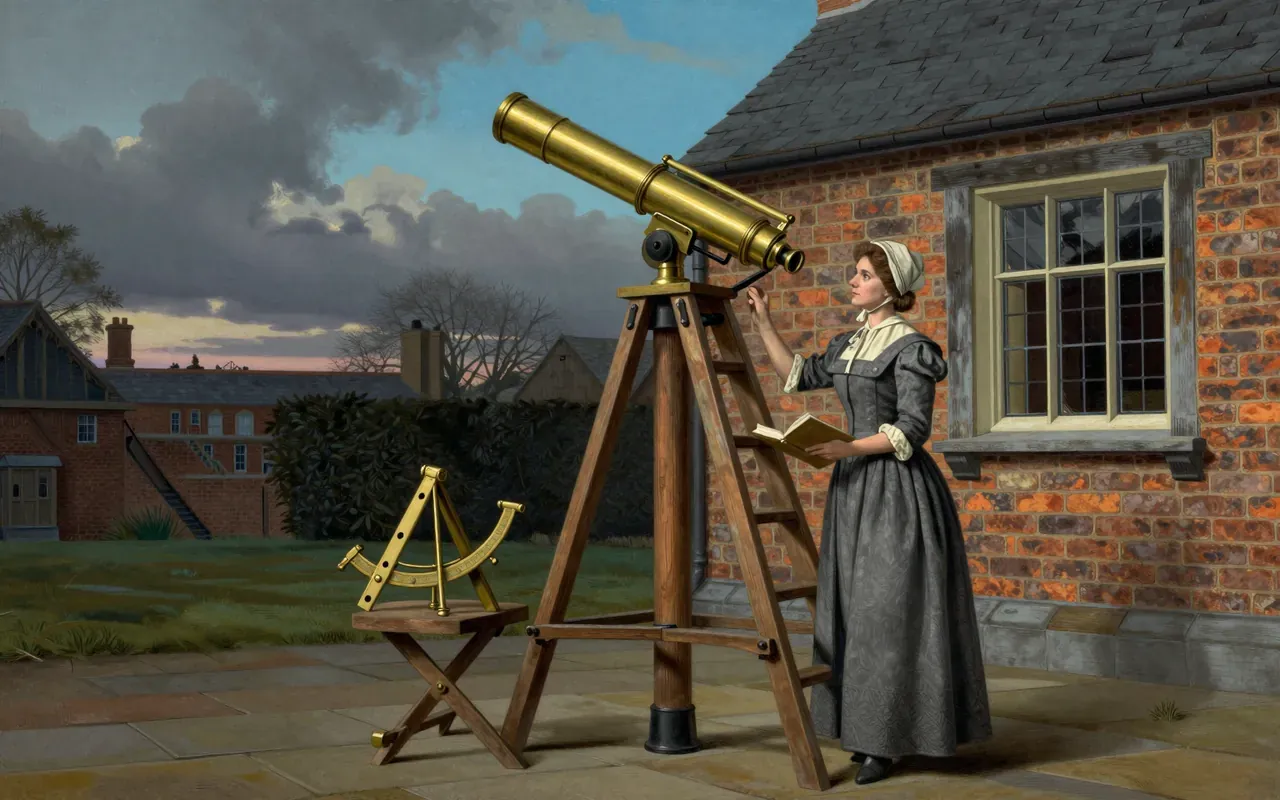
She didn’t wait for permission — she swept the sky, found what others missed, and rewrote the official star catalogue.
13:00

Catastrophe theory

René Thom classified every possible way a stable system can suddenly break into seven geometric templates. The mathematics is settled; its 1970s use to explain animal and human behaviour was not, and a public critique said so.
13:00

Cavendish experiment

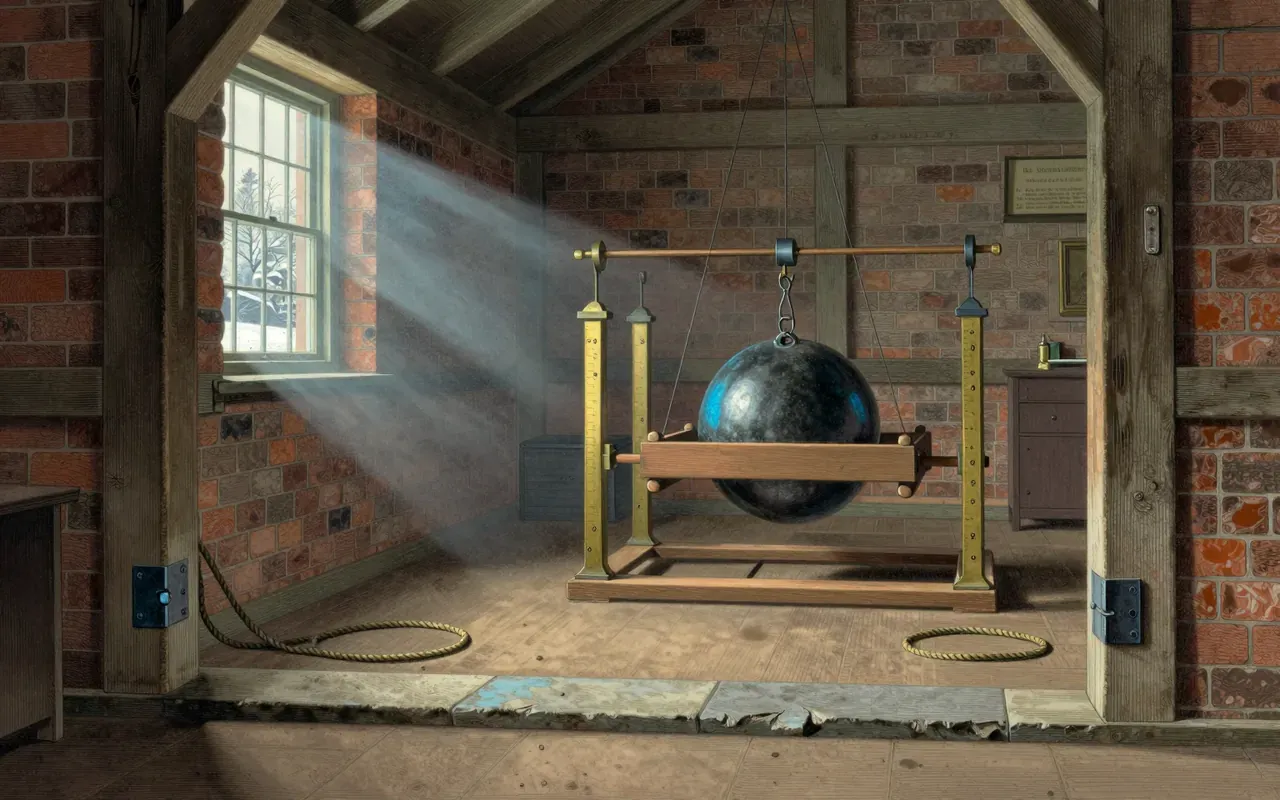
Henry Cavendish measured a gravitational force fifty million times weaker than the weight of the objects producing it, using an apparatus designed by a scientist who died before he could run the experiment himself.
13:00

Chargaff's rules

Erwin Chargaff measured DNA base ratios across dozens of species and found a pairing rule steady enough to become the numerical clue behind Watson and Crick's double helix — credit for which he never received.
13:00

Cognitive bias

Amos Tversky and Daniel Kahneman's 1970s experiments found people rate a detailed, statistically impossible scenario as more probable than a plain one — evidence that judgment runs on shortcuts, not pure logic, a claim that reshaped economics and drew its own rationality war.
13:00

Publication of Darwin's theory

The 1858 Linnean Society reading credited natural selection jointly to Darwin and Wallace, who had reached the same idea independently, in a negotiated arrangement neither man attended and that made barely any impression at the time.
10:34

David Gross

Asymptotic freedom isn’t just clever math — it’s why we can ever see quarks at all.
10:06

David Hilbert

Hilbert didn’t build tools—he built the rules for building tools, and then proved some tools can’t be built at all.
13:00

Dihydrogen monoxide parody

Describing plain water by its formal chemical name and a list of true but alarming facts got a New Zealand MP asking for a ban, proving how easily technically accurate language can mislead.
10:44

Dmitri Mendeleev

Mendeleev didn’t discover elements — he discovered how to think like nature thinks.
11:02

Edward B. Lewis

Lewis didn’t just find new genes — he broke the gene open, then used the pieces to rebuild how we think about risk, development, and inheritance.
11:03

Edwin Hubble

Hubble didn’t prove the universe is expanding — he proved galaxies are islands, and that they flee each other in proportion to distance.
13:00

Photoemission spectroscopy

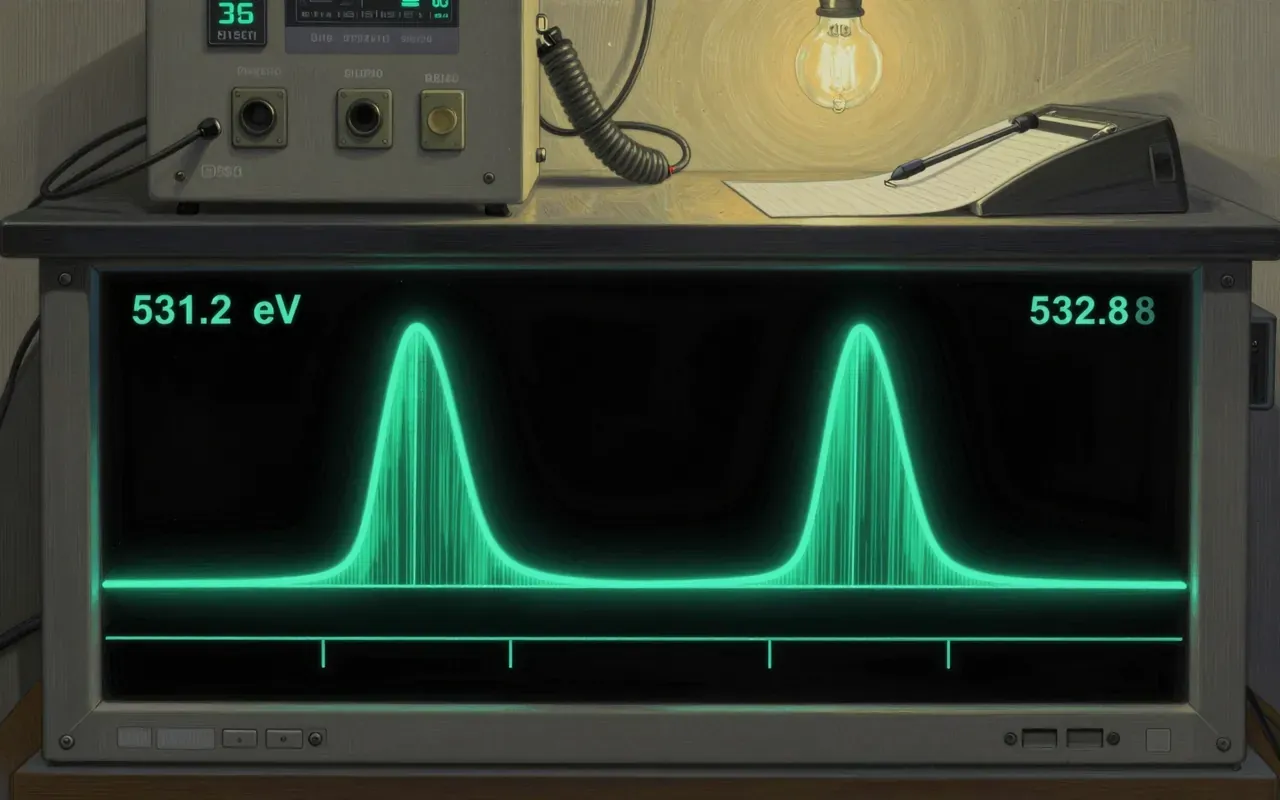
Shine light on a surface and the electrons it knocks loose carry a precise record of the energy levels inside — the method Kai Siegbahn spent decades turning into one of chemistry's sharpest tools.
10:25

Enrico Fermi

Fermi didn’t discover new elements — he discovered how to split atoms, then misread the evidence.
13:00

Earth's circumference

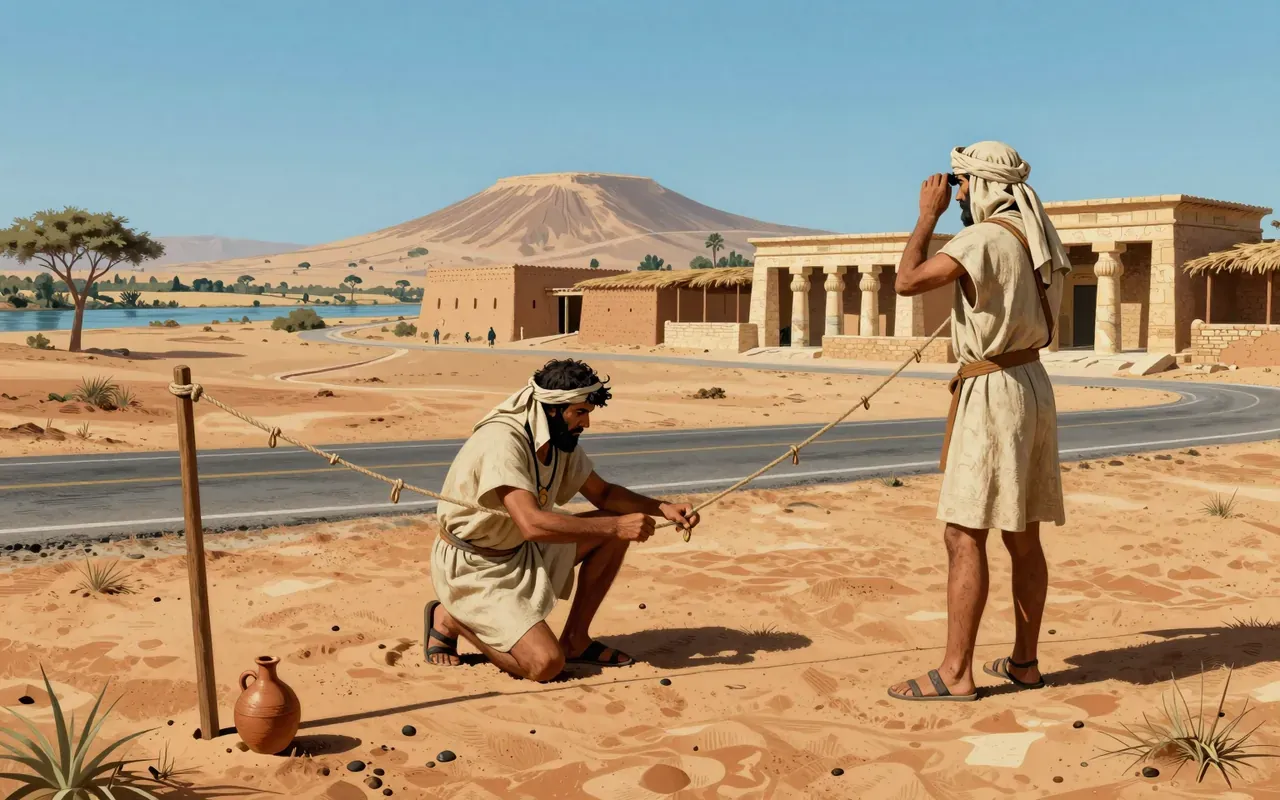
Around 240 BC a librarian in Alexandria compared a shadowless well in one city to a measurable shadow in another and worked out the size of the whole planet, though nobody today can say exactly how close he got, because his unit of measurement no longer has one agreed length.
9:11

Erwin Schrödinger

Schrödinger didn’t just write an equation — he gave quantum theory its working language and named its deepest mystery.
10:14

Eunice Newton Foote

The first person to experimentally prove CO2 heats more than air under sunlight was a woman in 1856 — and her apparatus was simpler than your kitchen thermometer.
13:00

Design of experiments

A well-designed experiment and an underpowered one can ask the identical question and still deserve opposite trust. The gap between them is arithmetic, and across whole fields the arithmetic has not been going well.
10:14

Fermat's Last Theorem

Andrew Wiles · 1638

Wiles proved Fermat’s Last Theorem by establishing the modularity theorem for semistable elliptic curves — a result that, combined with Ribet’s theorem, ruled out integer solutions to a^n + b^n = c^n for n > 2. His initial 1993 proof contained a flaw in the Selmer group argument; he and Taylor repaired it in 1994 using Galois representations and Iwasawa theory. The complete proof appeared in the Annals of Mathematics in 1995.

9:52

Fick's laws of diffusion

Adolf Fick

Fick’s laws quantify diffusion in fluids using direct measurements of salt flux and concentration. They hold for liquids, not solids. Their derivation is experimental, their form exact, and their reach vast — but they are not universal, not theoretical first principles, and not extended beyond their empirical domain.

10:40

Frank Wilczek

Asymptotic freedom didn’t explain quarks — it saved quantum chromodynamics from mathematical collapse.
8:48

Galileo Galilei

Galileo didn’t prove Copernicus right — he proved Ptolemy wrong, using light, shadow, and timing.
10:41

Georg Ohm

Ohm didn’t discover a universal law — he built a working model for a narrow class of circuits, and it stuck.
13:00

Germ theory of disease

Working separately from the 1860s to the 1880s, Louis Pasteur and Robert Koch replaced the idea that disease arises from bad air with evidence that specific microorganisms cause specific infections, and Koch's postulates gave the field a standard for proving it.
9:17

Gregor Mendel

Mendel didn’t discover genes — he discovered that inheritance isn’t blended, but counted.
13:00

Experiments on Plant Hybridization

A monk in Moravia counted traits across 28,000 pea plants and found a hereditary pattern so tidy that a statistician later suspected the numbers were too good to be true, a suspicion still argued over more than a century on.
9:33

Hans Christian Ørsted

Ørsted didn’t stumble on electromagnetism — he hunted it for two years with a compass, and got the physics half-right.
9:58

Hilbert's problems

David Hilbert

Hilbert’s problems are not a discovery in the empirical sense. They are a curatorial act—23 unsolved questions published in 1900 to define mathematics’ trajectory for the next century. Their influence stems from uptake, not truth. They succeeded because mathematicians treated them as a syllabus—not because they were complete, precise or even consistent.

10:50

Isaac Newton

Newton didn’t discover gravity — he discovered that the same mathematics explains an apple and a moon.
10:06

Ivan Pavlov

Pavlov won the Nobel Prize for stomach surgery — not salivation. The dog’s drool was a footnote, not the finding.
11:18

James Clerk Maxwell

Maxwell didn’t discover light — he discovered that light is electricity dancing with magnetism.
13:00

PSR B1919+21

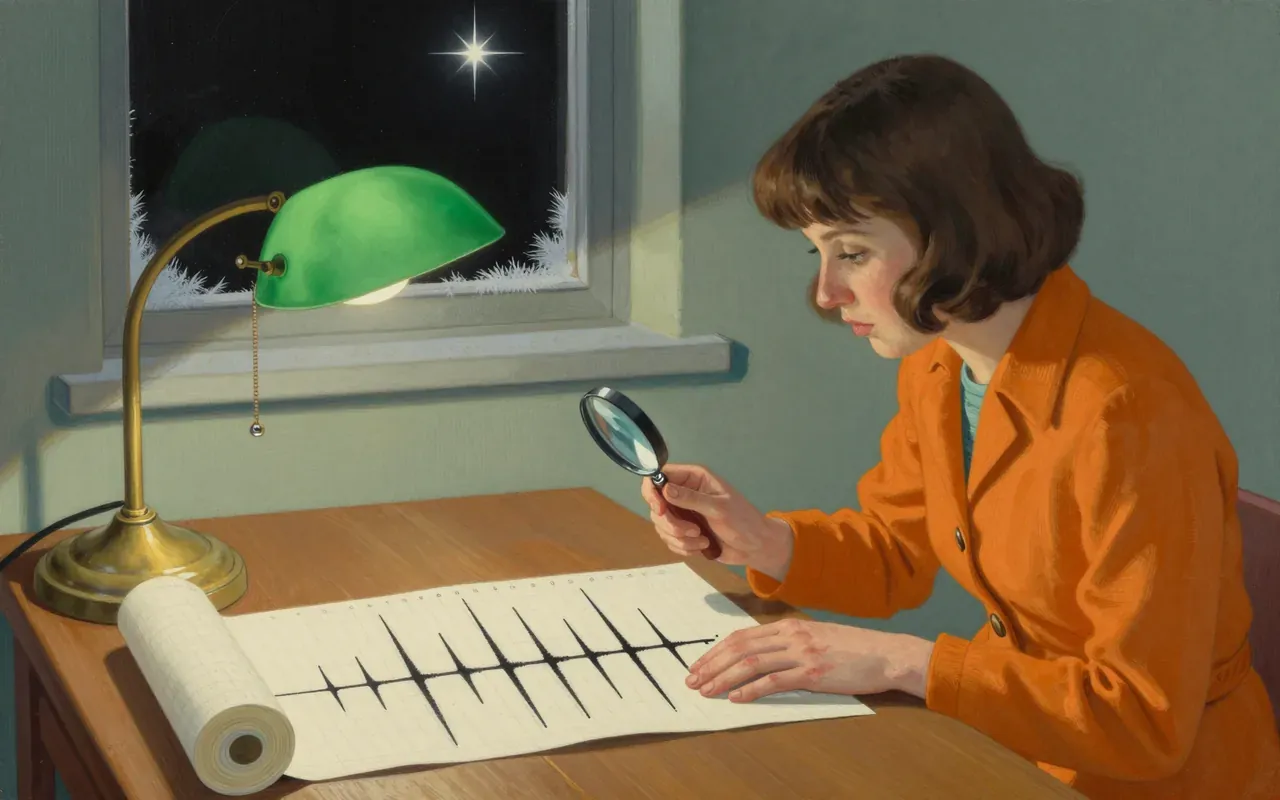
In 1967 a Cambridge graduate student noticed an oddly regular signal on a chart recorder, ruled out interference and little green men, and found the first pulsar, a discovery that won a Nobel Prize for the men above her.
12:18

Johannes Kepler

Kepler didn’t just map the planets—he invented celestial physics by forcing geometry to obey Tycho’s data.
10:18

John Tyndall

Tyndall didn’t discover climate change — he discovered why the atmosphere holds heat at all.
13:00

Kamioka Observatory

A tank of water buried under a Japanese mountain to escape cosmic ray noise caught eleven particles from an exploding star in 1987, and a decade later caught a pattern showing neutrinos are not massless after all.
10:04

Kinetic theory of gases

Daniel Bernoulli

Bernoulli’s 1738 kinetic theory is the first mechanistic explanation of gas behaviour. It correctly identifies pressure as momentum transfer and temperature as mean kinetic energy. It derives Boyle’s law from molecular motion. It fails to resolve energy conservation or collision elasticity — gaps that stalled acceptance for a century. Its value lies not in immediate utility but in framing matter as particulate and dynamic — a conceptual pivot that enabled thermodynamics and statistical mechanics.

13:00

Animalcule

A self-taught Delft draper's hand-ground lenses revealed bacteria, sperm cells and single-celled organisms nobody else could see, and the Royal Society verified his claims before microbiology existed as a field.
11:09

Lise Meitner

Meitner and Frisch didn’t discover fission — they explained it, named it, and measured its energy in six weeks.
9:24

Liu Hui

Liu Hui didn’t borrow from Greece — he built a parallel mathematics, complete with proof, algorithms, and limits.
10:38

Lorentz transformation

Hendrik Lorentz

Lorentz’s transformations were a technically successful but conceptually constrained response to experimental anomalies in electrodynamics. They preserved the aether while making predictions match observation—by introducing local time, length contraction, and time dilation as mathematical corrections. Their algebraic form survived into special relativity, but their physical meaning did not.

9:42

Louis Pasteur

Pasteur didn’t discover germs—he proved dust carries them, and nothing grows without them.
10:08

Lynn Margulis

Endosymbiosis isn’t just about organelles — it’s proof that evolution advances by merger, not just mutation.
9:31

Lysosome

Lysosomes weren’t found — they were inferred from acid phosphatase, then confirmed by centrifugation.
9:19

Marie Curie

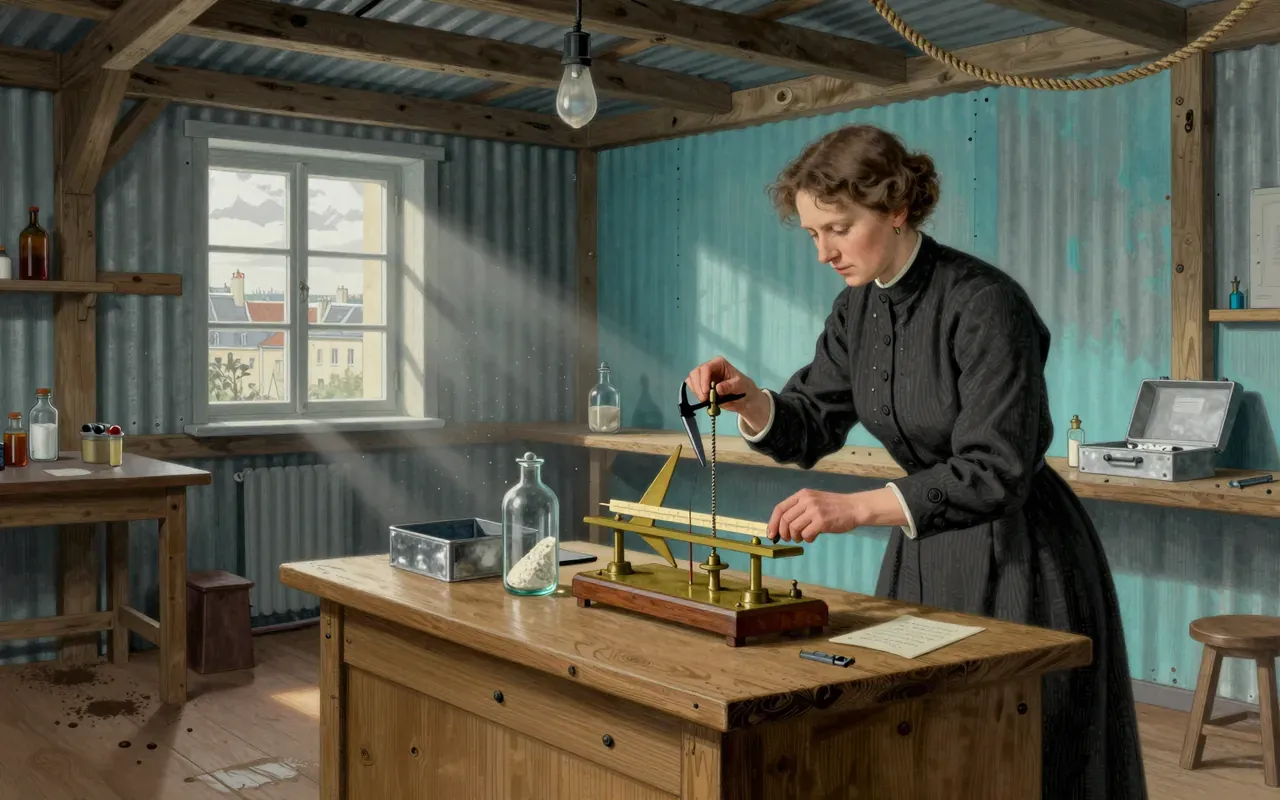
She didn’t find radioactivity—she proved it lived inside the atom.
10:33

Mario Molina

A postdoc and a chemist proved your fridge coolant was eating the sky — and changed how the world governs chemistry.
11:00

Max Planck

Planck didn’t discover quanta — he invented them to save classical physics, then accidentally broke it forever.
10:49

Ole Rømer

Light does not arrive when it happens — Rømer proved it arrives late, and that delay changed how we see the universe.
9:06

Omar Khayyam

Omar Khayyam didn’t just do maths and astronomy — he built tools that outlived empires.
13:00

Swan neck flask

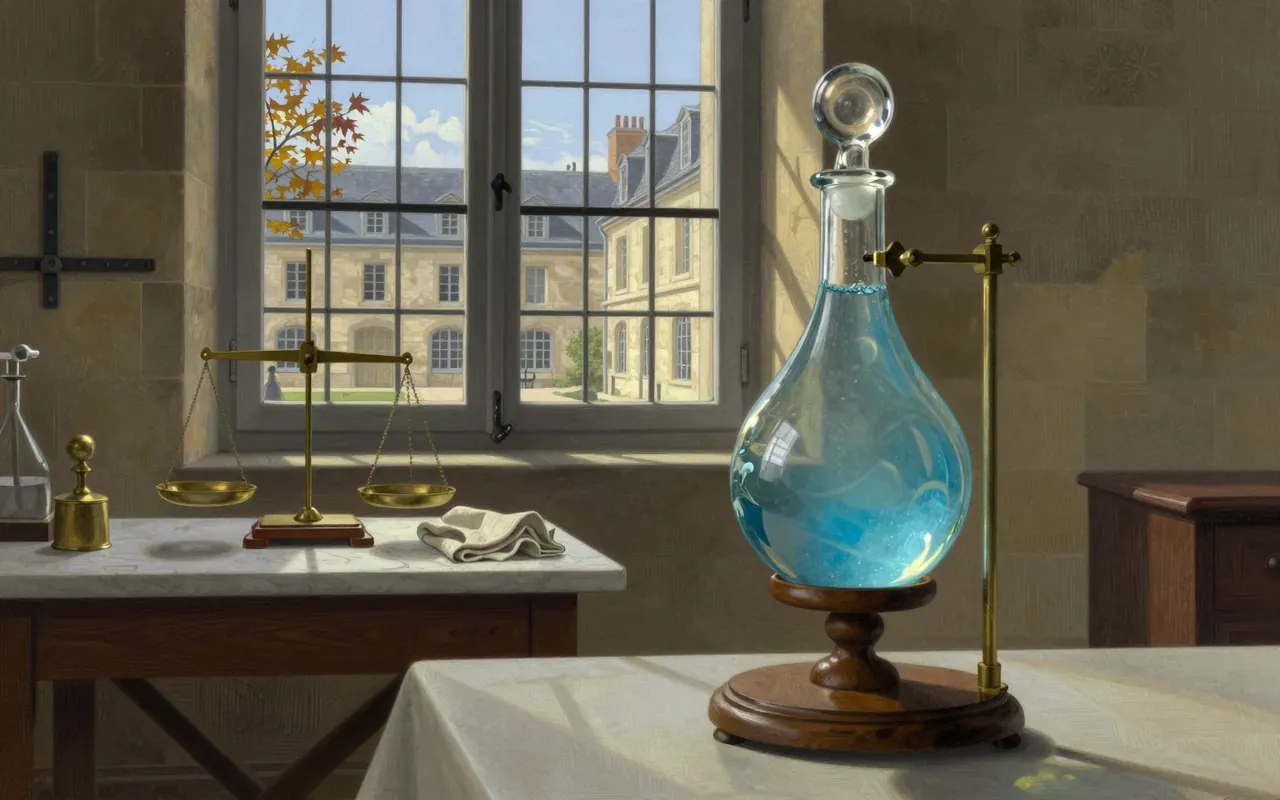
A curved glass neck that let air through but trapped dust settled a centuries-old argument about whether life could spring from nothing, by turning a philosophical dispute into a shape anyone could picture and test.
13:00

Pentaquark

A wave of pentaquark sightings in 2003 collapsed entirely by 2008 once other experiments failed to replicate them, and it took the LHCb collaboration's accidental 2015 discovery, confirmed at 15-sigma significance, to establish the particle for real.
13:00

Perpetual motion

Every self-sustaining machine ever proposed, from a medieval overbalanced wheel to modern magnetic motors, runs into the same two laws of thermodynamics that patent offices now use to reject them without a hearing.
13:00

Piltdown Man

A human skull and an orangutan jaw, filed and stained to look ancient, passed as the missing link for forty-one years because they told British science exactly the evolutionary story it expected to hear.
13:00

Radiocarbon dating

Willard Libby built radiocarbon dating around a half-life value later found off by three percent, an error still baked into how raw dates get reported, and this brief follows that wrinkle and everything else that must be corrected first.
13:00

2019 revision of the SI

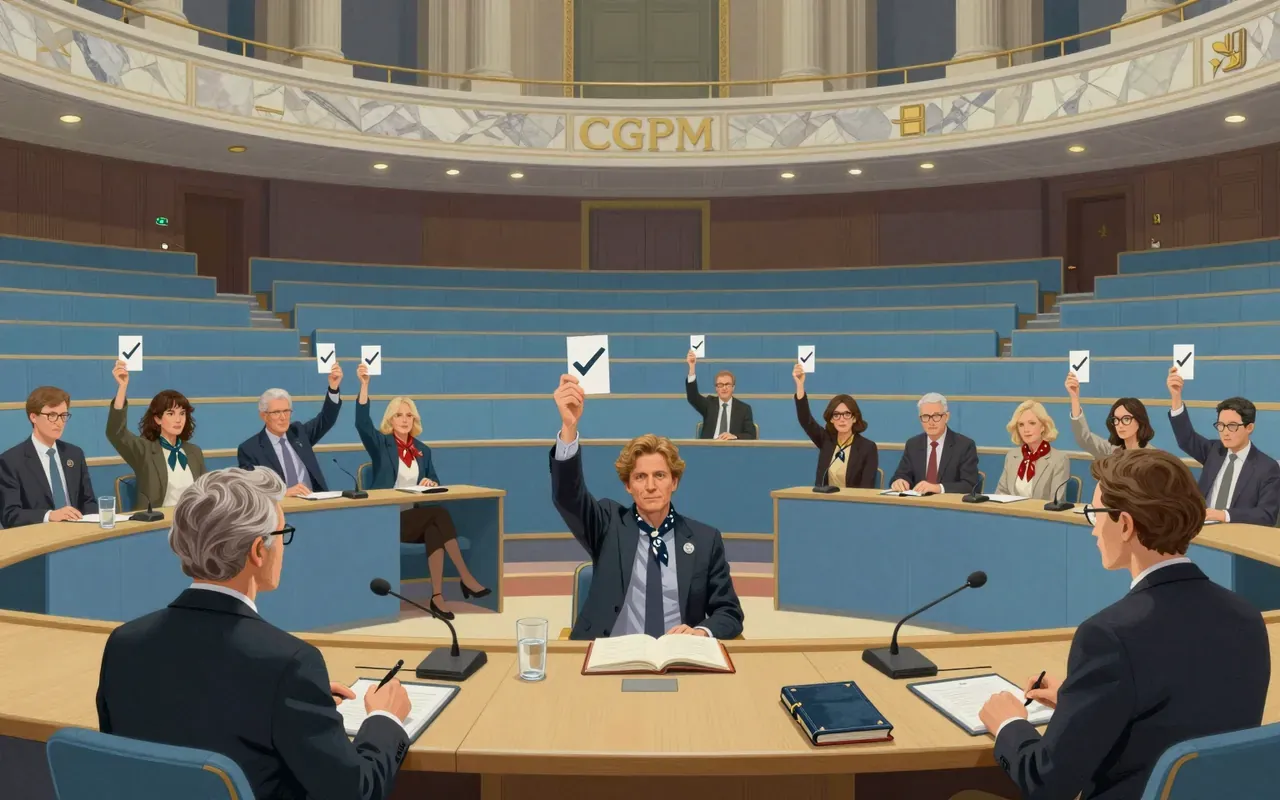
On 20 May 2019 the kilogram stopped being a chunk of metal in France and became a consequence of the Planck constant. The vote took eleven years to arrive and left a few loose mathematical ends behind.
10:30

Richard Feynman

Feynman didn’t explain quantum reality — he built a working language for it.
10:16

Robert Hooke

Hooke didn’t just see further — he built the lenses, drew what he saw, and named what he found.
13:00

Photo 51

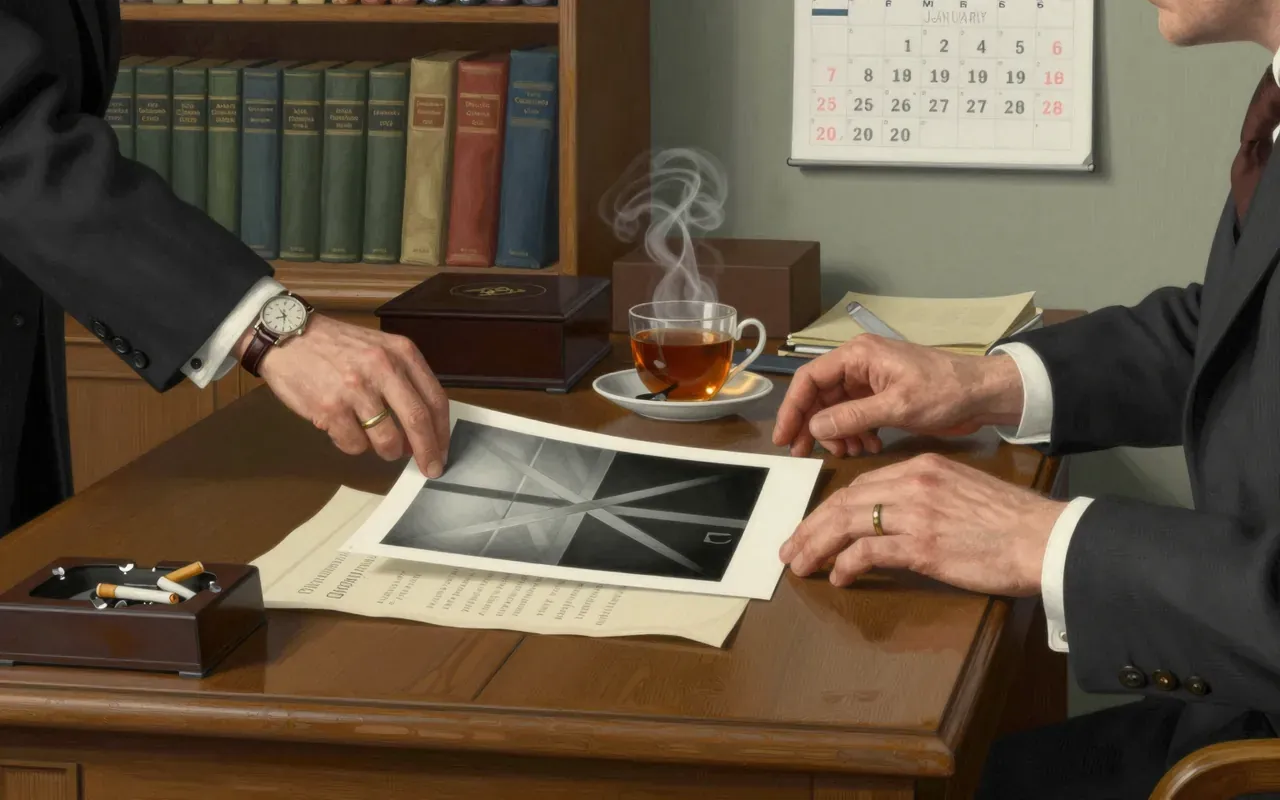
The X-ray photograph that revealed DNA's helical structure was Rosalind Franklin's, made with a camera she engineered herself, and it reached Watson and Crick's desk in 1953 through two separate acts of sharing she never agreed to.
13:00

Rutherford scattering experiments

In 1909 a beam of particles fired at gold foil should have passed through with barely a wobble, and the tiny fraction that bounced almost straight back instead forced physicists to accept that atoms are mostly empty space around a dense core.
10:16

Sheldon Glashow

Glashow didn’t discover particles — he built the grammar that forced them to exist.
9:36

Stanley Norman Cohen

This wasn’t about curing disease — it was about making bacteria read foreign genes, copy them, and pass them on.
10:39

Sydney Brenner

Brenner didn’t decode life — he built the syntax that made decoding possible.
8:32

Cell-mediated immunity

Cell-mediated immunity isn’t a discovery—it’s a category carved from a 19th-century conceptual split.
9:30

Calvin cycle

Calvin

The Calvin cycle is the first experimentally mapped biochemical pathway for carbon fixation. It established the sequence of carbon-containing intermediates using carbon-14 labelling in algae. It did not characterise enzymes, kinetics, or regulation. Its power lies in its direct, empirical tracing — not theoretical elegance.

11:05

Central dogma of molecular biology

Francis Crick

Crick’s central dogma is a precise, unidirectional constraint on sequential information transfer — not a summary of known pathways. It was proposed theoretically, refined formally in 1970, and immediately misrepresented. Its endurance lies not in experimental confirmation but in its utility as a boundary condition: what molecular biology *cannot* do.

13:00

Cold fusion

Two respected electrochemists announced room-temperature fusion at a press conference before publication, and within six weeks most of the physics community had rejected the claim outright.
13:00

Copernican heliocentrism

Copernicus's 1543 heliocentric model was neither more accurate nor simpler than the system it challenged, and it took Kepler's ellipses and Galileo's telescope, decades later, to actually settle the argument.
13:00

Cryo-electron microscopy

Freezing biological molecules in place fast enough to stop ice crystals forming let electron microscopes see proteins as they actually sit in solution, ending structural biology's dependence on crystallisation.
10:16

Tobacco mosaic virus

Ivanovsky and Beijerinck

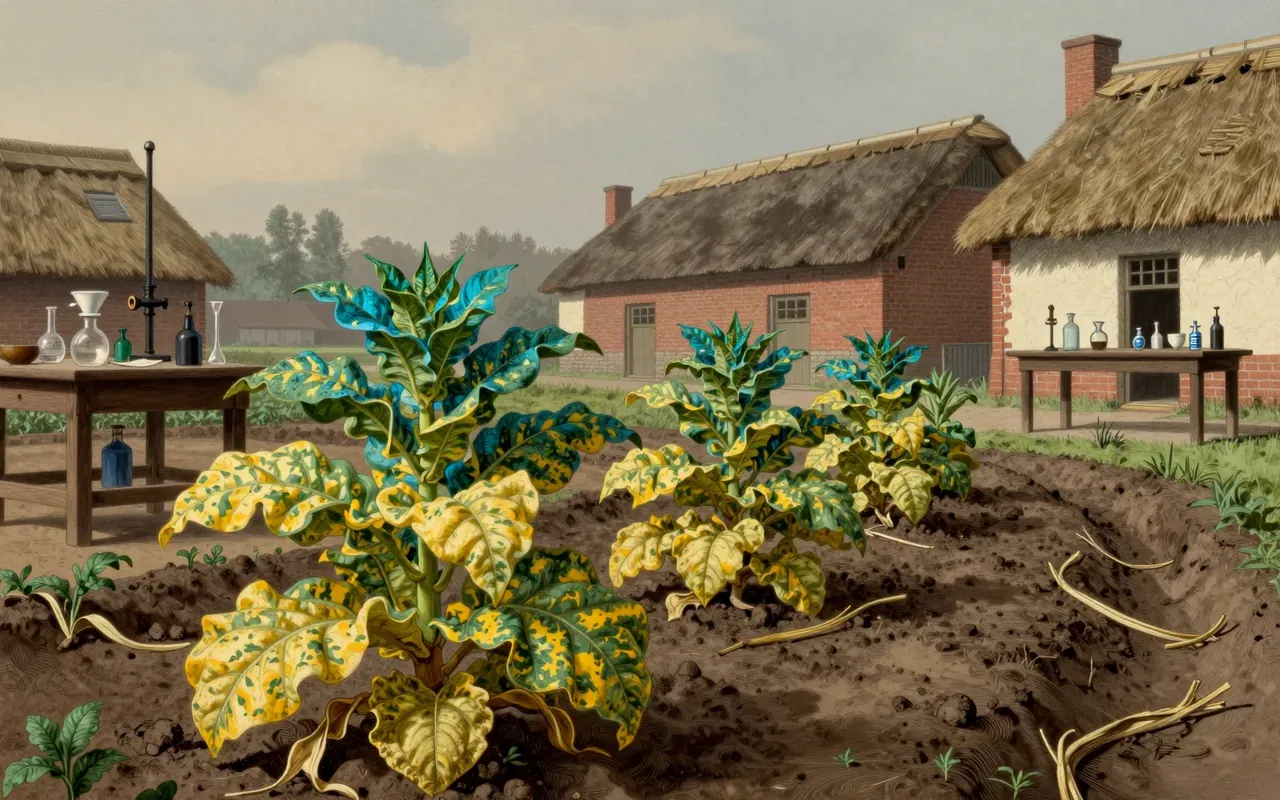
The discovery of the tobacco mosaic virus established the existence of infectious agents smaller than bacteria and dependent on living hosts for replication. Ivanovsky (1892) demonstrated filterability; Beijerinck (1898) added host-dependent multiplication and coined 'virus'. Neither observed the virus itself. Their work founded virology — but also embedded a flawed 'fluid' model that delayed recognition of viruses as particulate, genetic entities.

13:00

Vitamin A

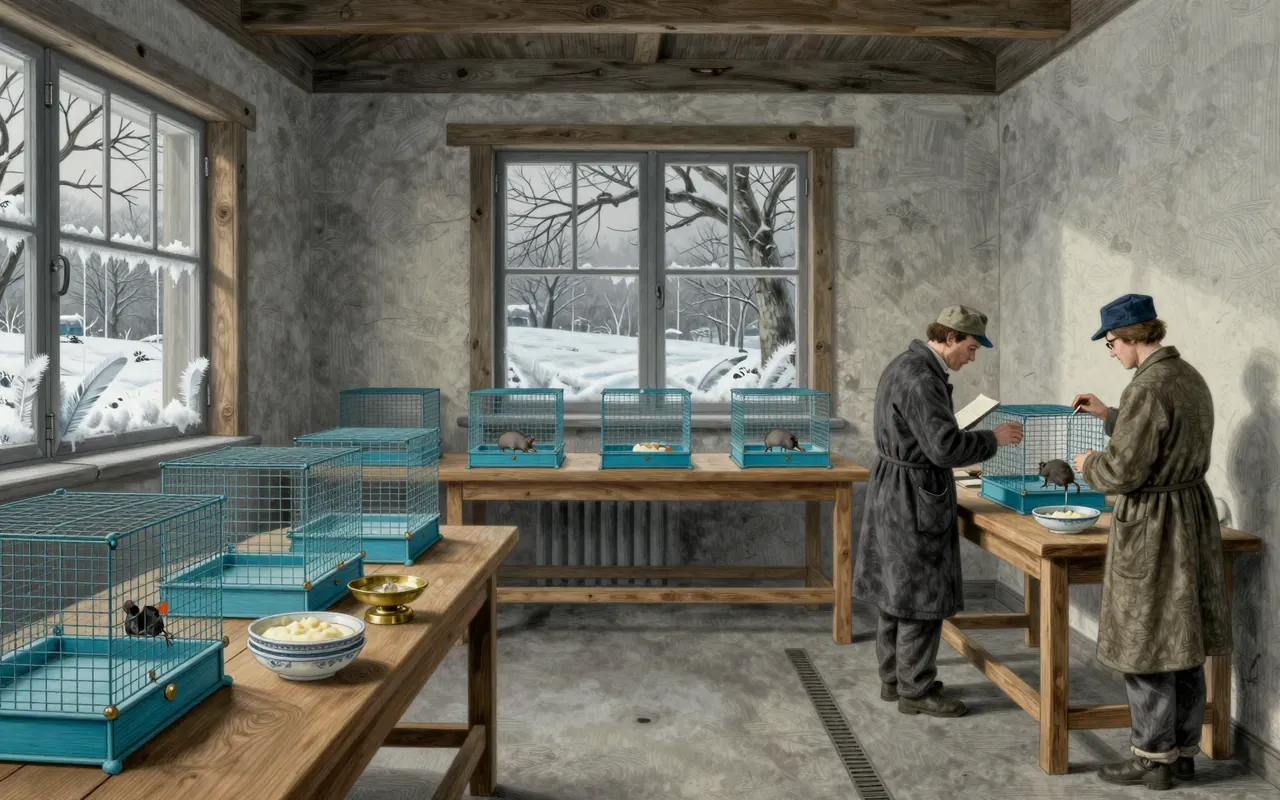
A 1913 feeding experiment on rats at a Wisconsin farm station established that fat could carry an essential nutrient — the discovery that gave nutrition science the category of vitamin, and fixed the name, vitamin A, after a decade of dispute over what to call it.
9:07

Endoplasmic reticulum

Seeing a structure is not understanding it — and the endoplasmic reticulum took 48 years just to become visible.
9:53

Galilean moons

Galileo did not prove Copernicus right — he proved Ptolemy wrong, one night at a time.
11:12

Galvanometer

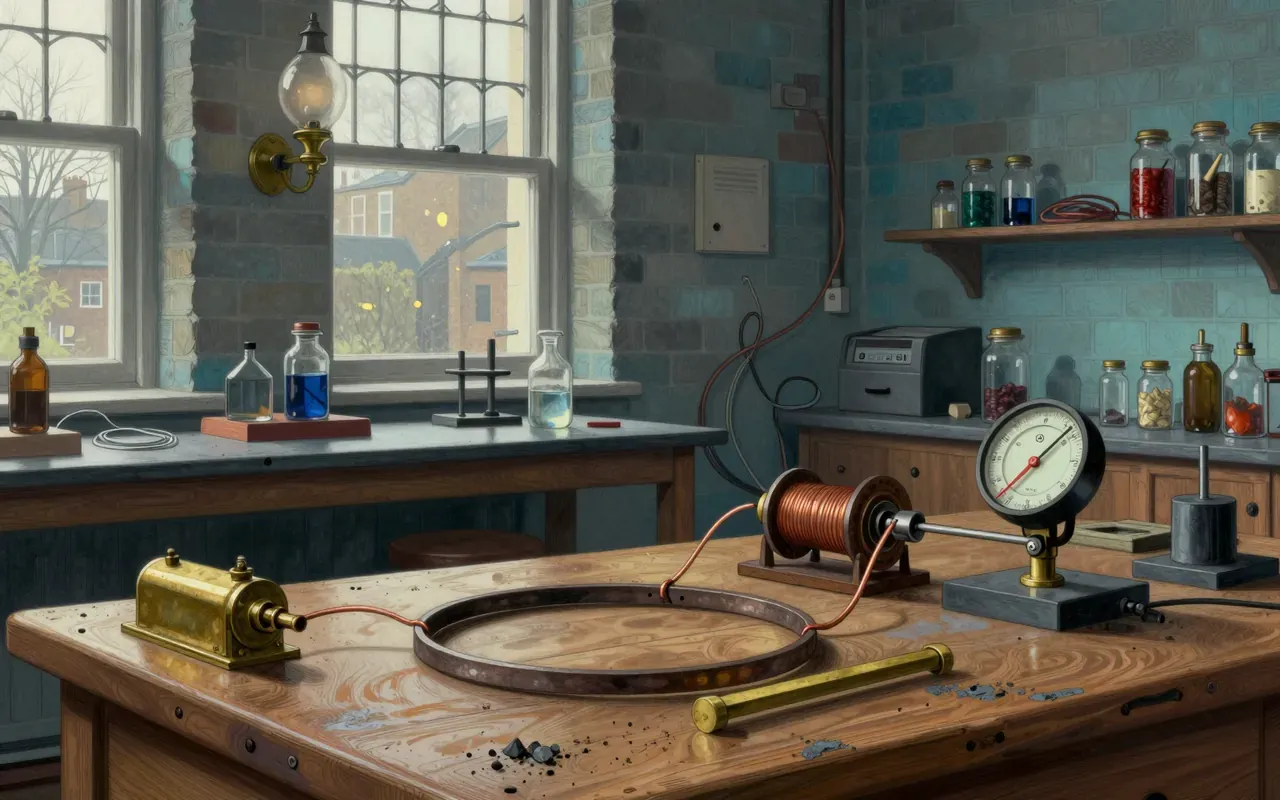
The galvanometer did not discover electromagnetism — it weaponised Ørsted’s accident into a ruler for the invisible.
9:19

Golgi apparatus

Camillo Golgi

Camillo Golgi discovered the Golgi apparatus in 1898 using osmium dichromate staining on barn owl Purkinje cells. He named it 'apparato reticolare interno' and asserted it was a real, unique cellular component. Initial scepticism held that it was an optical illusion. The finding was not firmly established until electron microscopy emerged ~50 years later. It revealed a new intracellular structure but gave no insight into its function, mechanism, or universality.

13:00

Great Debate (astronomy)

In 1920 two astronomers each gave a forty-minute talk on whether the Milky Way was the whole universe or one galaxy among many, and neither had quite enough evidence to win outright, until a third astronomer settled it a few years later.
9:06

Hershey–Chase experiment

DNA is genetic material — not because it looks right, but because it’s the only molecule that gets inside and gets copied.
11:43

Keeling Curve

Charles Keeling

The Keeling Curve is the first continuous, calibrated record of atmospheric CO₂. It shows a seasonal cycle and a monotonic rise — from 313 ppm in 1958 to 406 ppm in 2018. Its strength lies in methodological rigour: remote site selection, contamination control, and instrumental precision. It does not prove causation, but establishes an unambiguous trend correlated with fossil fuel use. It remains the gold standard for atmospheric CO₂ monitoring.

13:00

Luria–Delbrück experiment

In 1943 two scientists asked whether bacteria become resistant to a virus because the virus causes it or because a random mutation was already there waiting, and settled the question just by counting how unevenly resistant colonies turned up across separate culture tubes.
13:00

Meselson–Stahl experiment

A 1958 isotope-labelling experiment on dividing E. coli DNA ruled out two rival theories of how the double helix copies itself and confirmed the semiconservative model that Watson and Crick had only proposed.
13:00

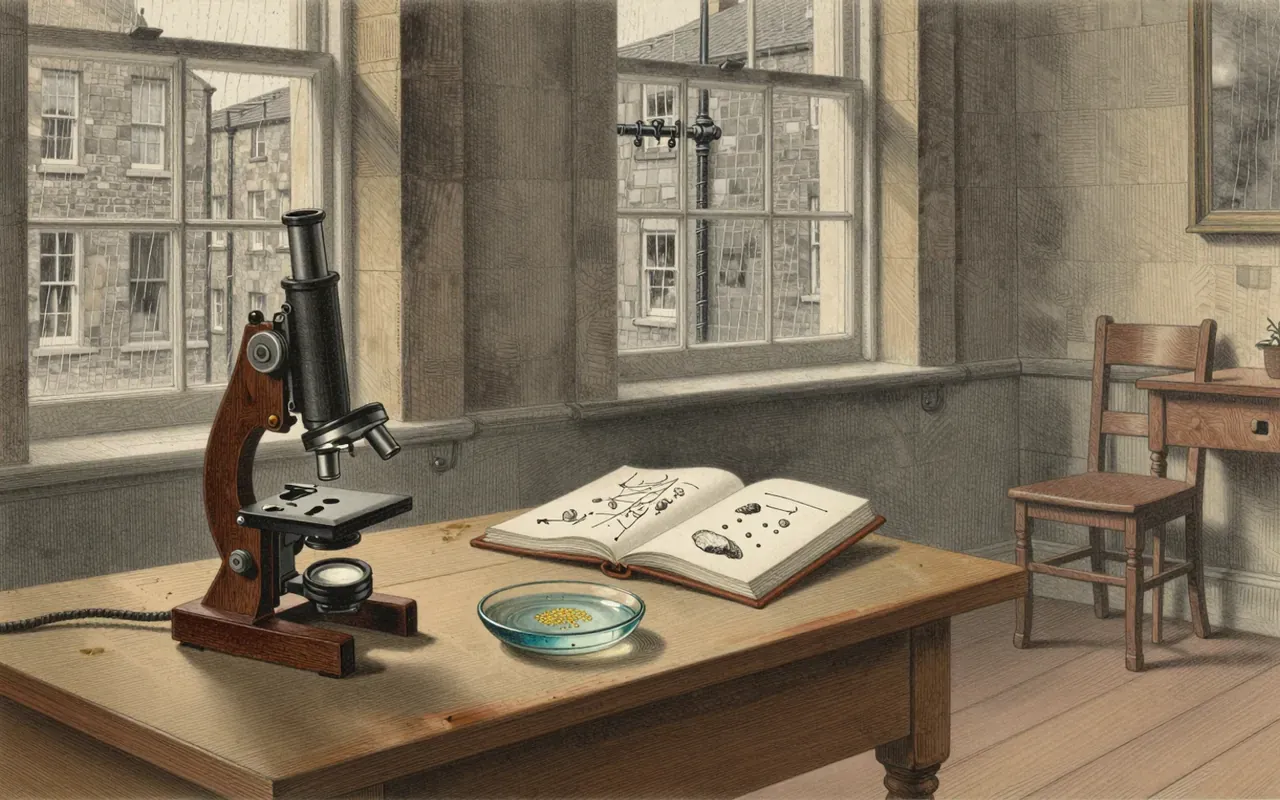
Microscope

Antonie van Leeuwenhoek, a self-taught draper who ground his own lenses to magnify up to roughly 300 times, reported in 1676 seeing living organisms too small for anyone to have observed before, a claim the Royal Society doubted until it sent people to Delft to check.
13:00

N-ray

Around 120 scientists published roughly 300 papers confirming a new radiation that did not exist, until Robert Wood quietly pulled the essential prism out of the apparatus and the readings continued anyway.
11:10

Neutral theory of molecular evolution

Motoo Kimura

The neutral theory reframed molecular evolution around stochasticity—not adaptation—as the dominant force shaping DNA change. It offered precise, falsifiable predictions about rates and variation, grounded in population genetics. It did not disprove selection; it defined its null model. Its endurance lies not in universality, but in utility: every test for selection begins here.

13:00

RECOVERY Trial

A single UK trial tested ten COVID-19 treatments in one adaptive framework, found a cheap steroid cut ventilator deaths by roughly a third, and just as firmly ruled out several drugs that had drawn far more public attention.
13:00

Replication crisis

In 2015 a coordinated effort to redo 100 published psychology experiments found only 36 per cent reproduced the original significant result, effect sizes roughly halved on average — a number that turned scattered doubts into a named crisis.
10:53

Richter scale

Richter

The Richter scale is a local, instrument-specific amplitude scale — not a universal measure of earthquake size. Its rigour lies in its narrow definition, not its breadth.

13:00

Decipherment of ancient Egyptian scripts

Thomas Young worked out that Egyptian cartouches spelled foreign kings' names phonetically; Jean-François Champollion needed one more comparison, in September 1822, to see that the same was true of native Egyptian rulers all along.
13:00

International System of Units

The metre, the kilogram and five other units used to rest on physical objects kept in a French vault. Now every one of them is fixed to a constant of nature, and the change is quieter than it sounds.
9:44

Ultracentrifuge

It didn’t reveal life’s blueprint — it gave biologists the first tool to hold molecules still enough to weigh them.
13:00

MMR vaccine and autism

A 1998 study of twelve children claiming a link between MMR vaccine and autism took thirteen years to be formally called fraud, and vaccination rates and measles cases moved in step the whole time.
10:28

Thomas Hunt Morgan

Morgan didn’t discover the gene — he pinned it to a chromosome, and proved inheritance was mechanical, not mystical.
9:42

Tycho Brahe

A naked-eye parallax measurement ended celestial immutability — not with a theory, but with a ruler held against the stars.
13:00

SN 1572

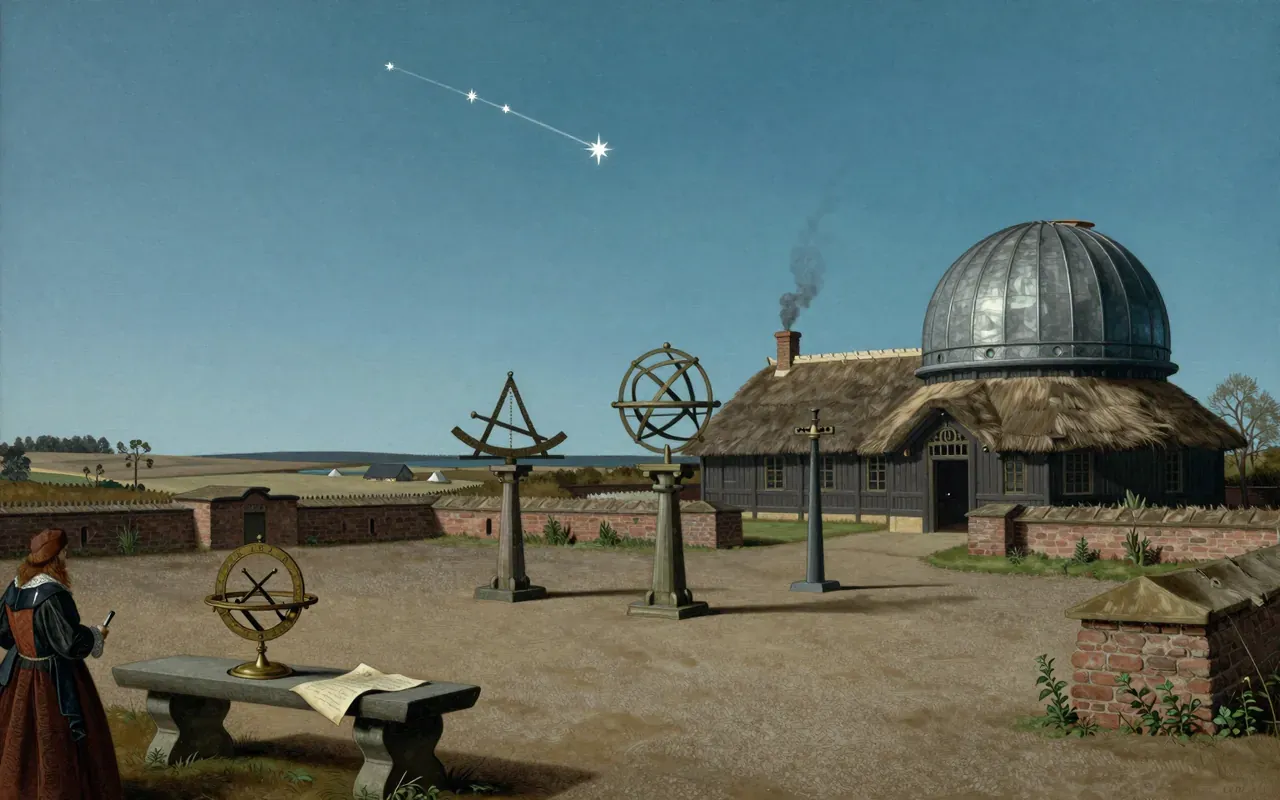
In 1572 a new star appeared in Cassiopeia and refused to shift position the way anything closer than the Moon should, and Tycho Brahe's careful measurement of that non-movement helped crack the idea that the heavens never change.
13:00

Uniformitarianism

James Hutton and Charles Lyell argued that the slow processes shaping the Earth today have always operated the same way, and reading that logic backward is what first showed the planet had to be far older than tradition allowed.
12:07

Van der Waals equation

Johannes van der Waals

Van der Waals’s 1873 equation was the first thermodynamic model to treat fluids as composed of real molecules — with finite size and mutual attraction — and it successfully described both liquid and gas phases, predicted critical-point behaviour, and yielded quantitative estimates of molecular size and attraction strength. It did not prove molecular existence, nor does it hold across all conditions. Its value lies in making molecular assumptions productive — long before they were directly observable.

8:58

Werner Heisenberg

Heisenberg didn’t discover uncertainty — he abolished the idea that particles have definite positions and momenta at all.
11:03

William Herschel

Herschel didn’t just find new things — he invented how to measure what light *does*.
9:37

Induced pluripotent stem cell

Yamanaka

iPSCs are somatic cells reprogrammed to pluripotency using four transcription factors. Demonstrated in 2006 in mouse fibroblasts via retroviral delivery and Fbx15 selection. Established direct reprogramming as possible—but only to the level of Fbx15 reactivation, not full pluripotency validation.

11:07

Zu Chongzhi

Zu Chongzhi didn’t just approximate π — he built a 24,576-sided polygon and used geometry to outcompute Europe by nine centuries.
8:27

Mass–energy equivalence

Albert Einstein · 1905

Einstein’s 1905 derivation unified mass and energy conceptually — not empirically. It replaced two conservation laws with one. It did not predict applications. It did not contain E = mc² as written. Its power lies in logical necessity, not experimental novelty.

9:33

On the Origin of Species

Charles Darwin

On the Origin of Species (1859) introduced natural selection as the mechanism for evolutionary descent with modification. It presented evidence for common descent via a branching pattern, drawn from Darwin’s Beagle expedition, research, correspondence, and experimentation. It established descent with modification as the dominant scientific explanation of natural diversification. Its proposition of universal common ancestry is now accepted—but that acceptance postdates the book and is not itself what the book established.

8:52

The Double Helix

Watson, Crick, Franklin and Wilkins

The Double Helix is not the discovery of DNA’s structure — it is Watson’s memoir of it. The real discovery is in the 1953 Nature papers. The book’s value lies in exposing how scientific credit gets assigned, not in explaining how the structure was found.

7:51

Double-slit experiment

Young · 1801

Young’s 1801 double-slit experiment established wave behaviour for visible light. Later versions with electrons (1927) extended it to matter. The interference pattern is real. The disappearance of that pattern upon path detection is real. But Young did not observe particles, nor did he claim duality — he argued for waves only. Duality emerged from later experiments combining his method with quantum detection.

7:37

Human Genome Project

A reference genome is not a human genome — it’s a mosaic scaffold, finished in stages, missing its most complex chromosome until 2023.