A brain that pushes back
REM rebound is the observation that when rapid eye movement sleep is repeatedly interrupted, the brain does not simply let the loss go: once interruptions stop, REM sleep arrives sooner, lasts longer, and takes up a larger share of the night than before. The clearest demonstration came from William Dement’s work at the University of Chicago, where volunteers were woken specifically at the onset of REM, night after night, while a comparison group was woken just as often but at random points in sleep. Only the REM-deprived group showed the rebound afterwards. The claim is narrow: a particular stage of sleep, not sleep in general, appears to be defended by the brain when it is taken away, and the body compensates for that specific loss once it is allowed to sleep undisturbed again.
Dement’s waking experiment
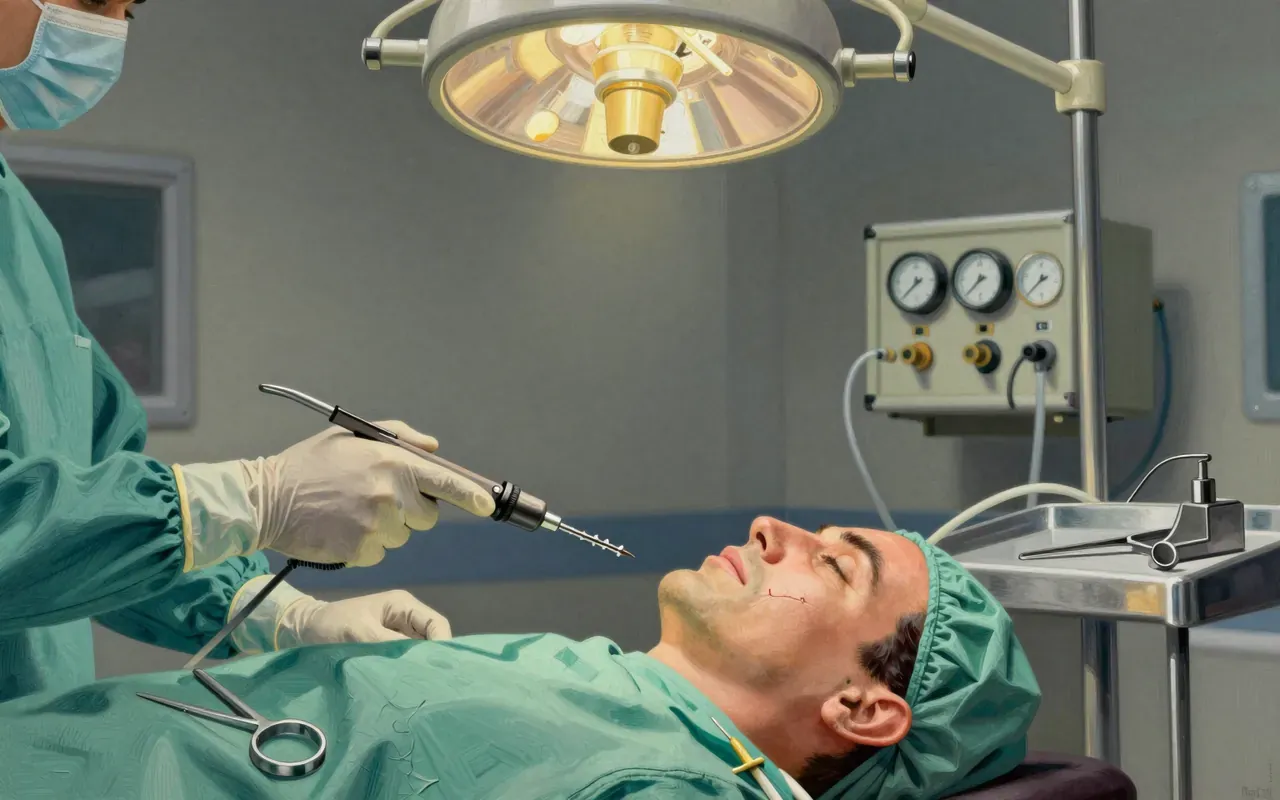
Dement’s method depended on continuous overnight recording — electroencephalogram traces and eye-movement channels watched through the night so that REM onset could be caught early rather than inferred afterwards. Subjects selectively deprived of REM were roused the moment the signature pattern appeared, before dream sleep could establish itself, then allowed to return to sleep and woken again the next time REM began. A control group matched the same number of awakenings but timed arbitrarily, so that disrupted sleep as such, rather than the loss of REM specifically, could be ruled out as the explanation for whatever followed. After several nights of this selective deprivation, subjects were left to sleep through undisturbed recovery nights, during which their REM proportion of total sleep was compared against their own earlier baseline and against the control group’s unchanged pattern.
The rebound measured
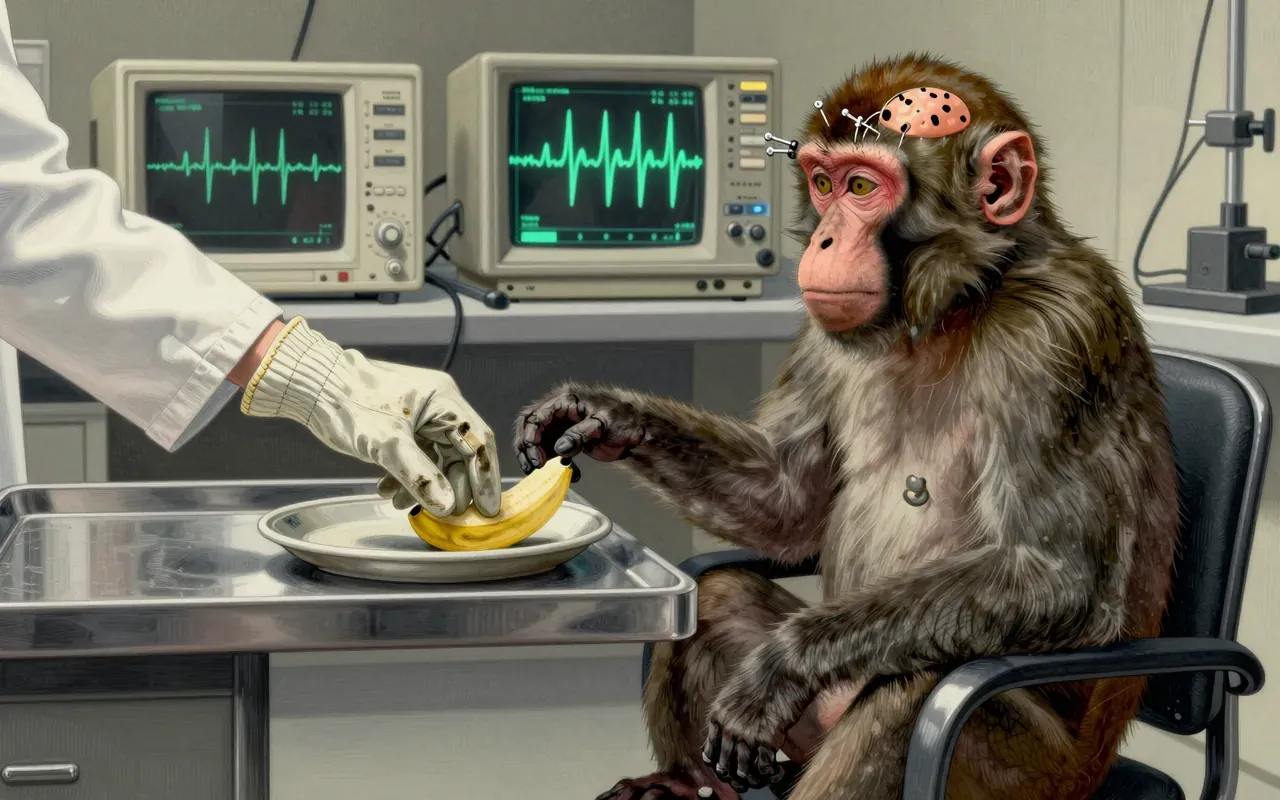
The core finding has held up well: REM specifically, not sleep generally, rebounds after selective loss, and the effect appears in more than humans. In dolphins and fur seals, which sleep with one brain hemisphere at a time, depriving only one hemisphere of REM produces rebound confined to that hemisphere while the other continues undisturbed — evidence that the mechanism sits locally in brain tissue rather than in some whole-body signal of tiredness. The pattern also recurs reliably in clinical settings unrelated to the original experiment: people starting continuous positive airway pressure treatment for sleep apnea, whose apnea had been suppressing REM for years, typically show a rebound in the first nights of treatment. That the same phenomenon turns up across species and across an entirely different clinical route to REM loss is what makes it a genuine finding rather than an artefact of one laboratory’s method.
Beyond one species and one lab
What the finding does not establish is why REM is defended in this way, or what function is being protected. The rebound demonstrates that the brain tracks and compensates for REM loss specifically; it does not by itself explain what REM does that makes this worth doing, and the material here does not resolve that question. The same caution applies to the drug-related versions of the effect: SSRIs such as citalopram and paroxetine suppress REM while being taken and produce rebound on stopping, and alcohol suppresses REM early in the night and produces a rebound later on — but these are pharmacological interferences with the same system, not independent proof of what REM rebound is for. Rebound after a withdrawn drug or after apnea treatment confirms that the mechanism exists; it does not tell us it exists because REM sleep is needed for a particular purpose.
Drugs and alcohol borrow the same mechanism
REM rebound matters clinically before it matters theoretically. Recognising it means a clinician can predict and explain a pattern patients often find alarming — vivid, unusually intense dreaming in the first nights after starting CPAP treatment, or after coming off an SSRI — rather than treating it as a sign that something has gone wrong. It also gives sleep medicine a working assumption: that REM is not a passive by-product of sleep architecture but something the brain actively tracks and restores when interrupted, which is part of why REM proportion is now a routine measurement in sleep studies rather than an incidental one. Beyond the clinic, the unihemispheric evidence in marine mammals is a reminder that whatever REM rebound reflects is a property of brain tissue itself, which is one reason sleep researchers treat it as a genuine biological signal worth building further work around.
A fact without a finished theory
This is worth understanding if the appeal is a specific, well-controlled demonstration rather than a grand theory of why we dream: Dement’s design, with its matched control group and repeated overnight recording, is a clean piece of experimental logic, and the cross-species extension to dolphins and fur seals gives it more weight than a single human study could. It will disappoint anyone hoping for an answer to what REM sleep is actually for, since the rebound shows that the brain defends the stage without explaining the defence. Read it as a well-established fact in search of a theory — the kind of result more useful for what it rules out, such as REM loss being interchangeable with any other sleep loss, than for what it proves about the purpose of dreaming sleep itself.