A formula that made no structural sense
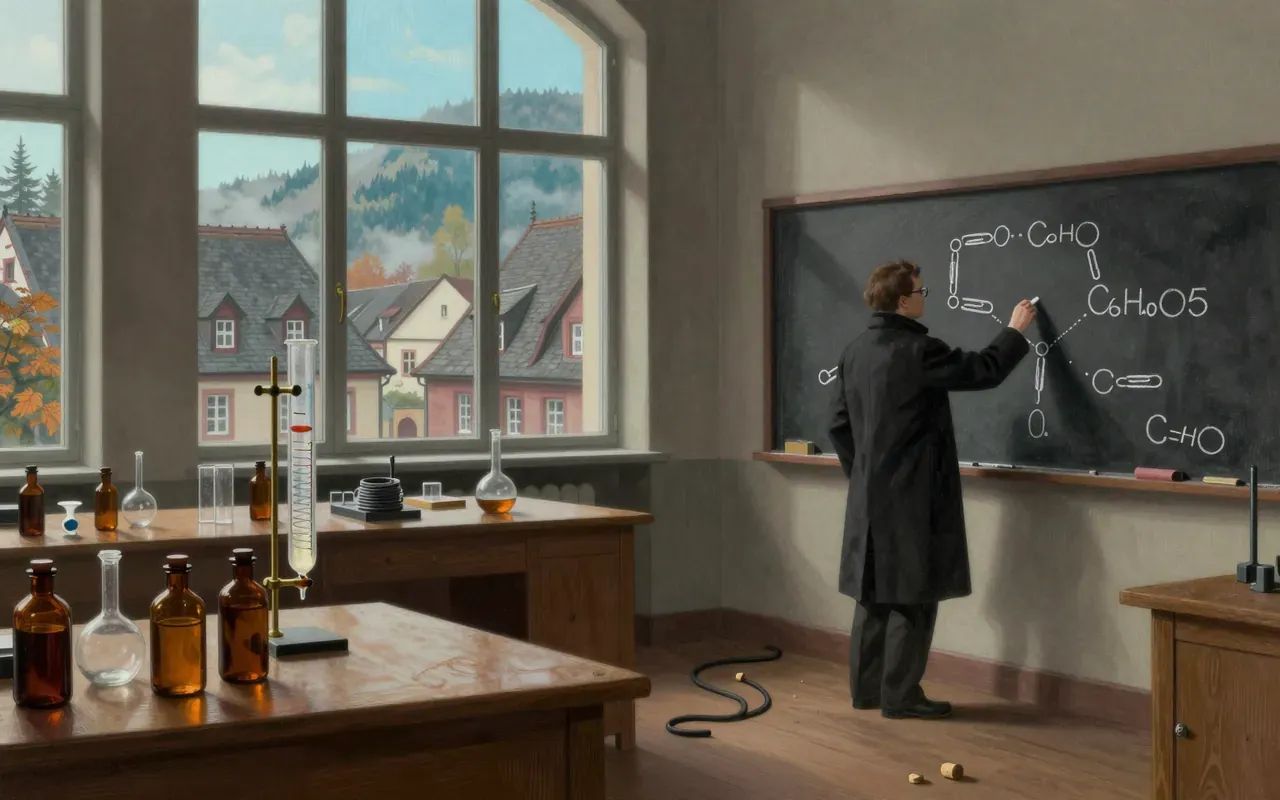
The puzzle Kekulé inherited was a genuine structural mismatch. Benzene’s formula, six carbons and six hydrogens, was well established by the 1860s, but that ratio implied a highly unsaturated molecule, and earlier proposals from Archibald Scott Couper in 1858 and Johann Josef Loschmidt in 1861, involving multiple double bonds or ring-like arrangements, lacked the supporting evidence to settle which structure, if any, was correct. Chemists had a formula without a shape, and no proposed shape yet explained the compound’s actual chemical behaviour convincingly enough to be widely accepted as more than a guess.
A ring that matched the isomer count exactly
Kekulé’s 1865 proposal, a six-membered ring of carbon atoms with alternating single and double bonds, did more than just fit the formula. It correctly predicted a specific, checkable pattern in how substituted versions of benzene behaved: replacing a single hydrogen produced only one distinct isomer, while replacing two hydrogens produced exactly three, the patterns now called ortho, meta and para. That match between a proposed structure and an independently observable chemical fact is what separated Kekulé’s ring from the earlier, less evidenced proposals, and by 1872 he had refined the idea further, suggesting the single and double bonds continually swapped positions around the ring.
The snake story arrived twenty-five years late
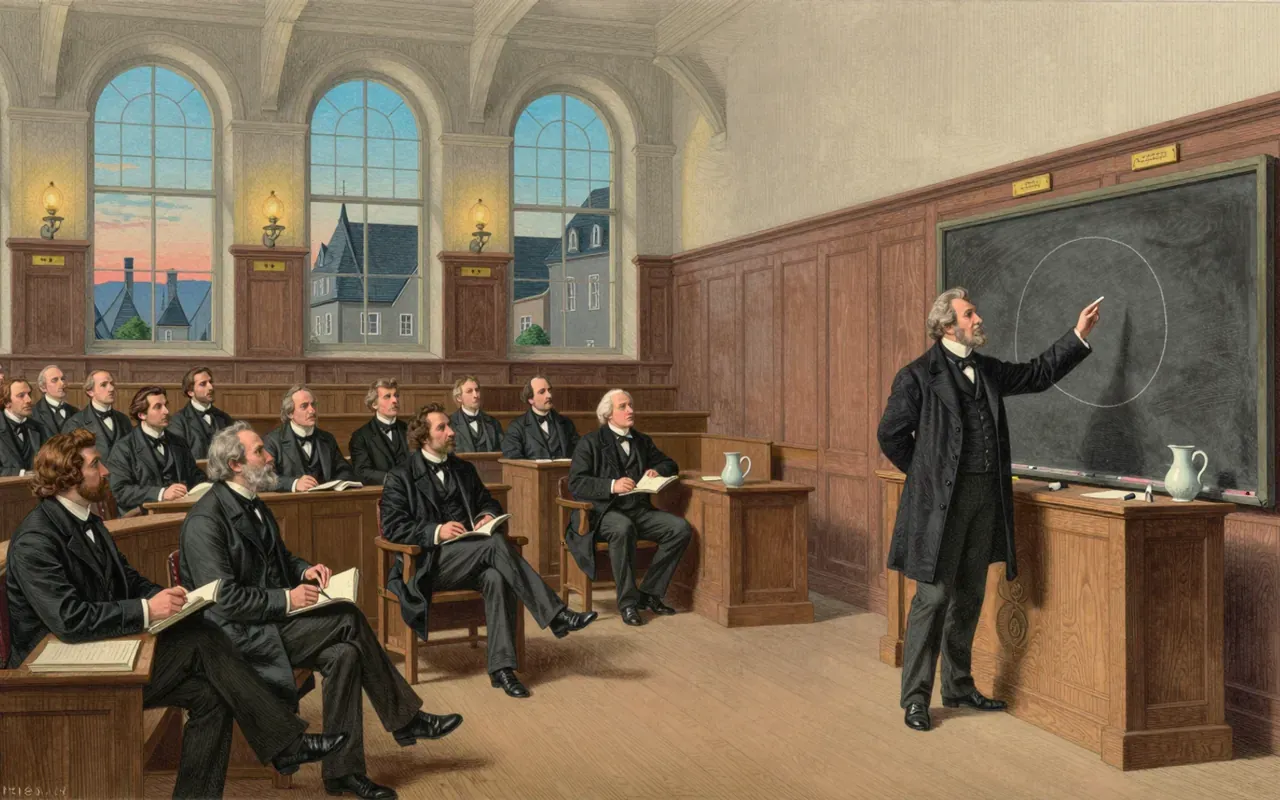
The part of the story that does not hold up under scrutiny is not the ring itself but the account of how Kekulé arrived at it. He first told the story of a dream, or day-dream, of a snake seizing its own tail, at an 1890 celebration marking the ring theory’s twenty-fifth anniversary — twenty-five years after the original publication, not at the time of the discovery itself. Historians researching the anecdote have found a published parody from 1886, depicting monkeys seizing each other in a circle, that appears to predate Kekulé’s own telling, and most now conclude the 1890 dream narrative was likely an invention rather than a genuine recollection of the moment of insight.
X-rays settle what the story never needed to
None of that uncertainty touches the chemistry, which was confirmed independently of any anecdote about how it was first imagined. Kathleen Lonsdale used X-ray diffraction on hexamethylbenzene crystals in 1929 to establish directly that the benzene ring is flat and hexagonal, measuring the actual carbon-carbon bond distances rather than relying on any structural proposal’s internal logic or its inventor’s own account of it. That direct physical measurement is what actually settled benzene’s shape for good, regardless of whether Kekulé’s own account of his reasoning process was accurate, embellished, or invented for an anniversary audience decades later.
Not alternating bonds after all
What Lonsdale’s measurements, and decades of chemistry since, actually show is more subtle than Kekulé’s original alternating-bond picture. Benzene’s carbon-carbon bonds all measure about 140 picometres, a length intermediate between a typical single bond and a typical double bond, because the electrons responsible for bonding are delocalised evenly around the ring rather than fixed in an alternating pattern. Modern chemistry describes this using three delocalised bonding orbitals, or equivalently as a blend of resonance structures, an explanation for benzene’s stability and reactivity that supersedes the literal alternating-bond drawing while still owing its basic ring shape to Kekulé’s original structure.
Why a solvent this useful is also this dangerous
Beyond the history, benzene’s chemistry has real, present-day stakes. It remains industrially central, with over half of production converted into ethylbenzene for polystyrene plastics, a large share turned into cumene for phenol and acetone, and a further portion used to make cyclohexane for nylon fibre. Set against that usefulness is a firmly established health risk: benzene is classified as a known human carcinogen, linked to leukaemia and other blood disorders, and is regulated with specific numerical limits in drinking water and workplace air rather than treated as merely a cautionary label. Reading the structural history alongside these regulated hazards makes clear why getting the molecule’s shape exactly right was never just an academic exercise.