A yellow-green gas from a sand bath
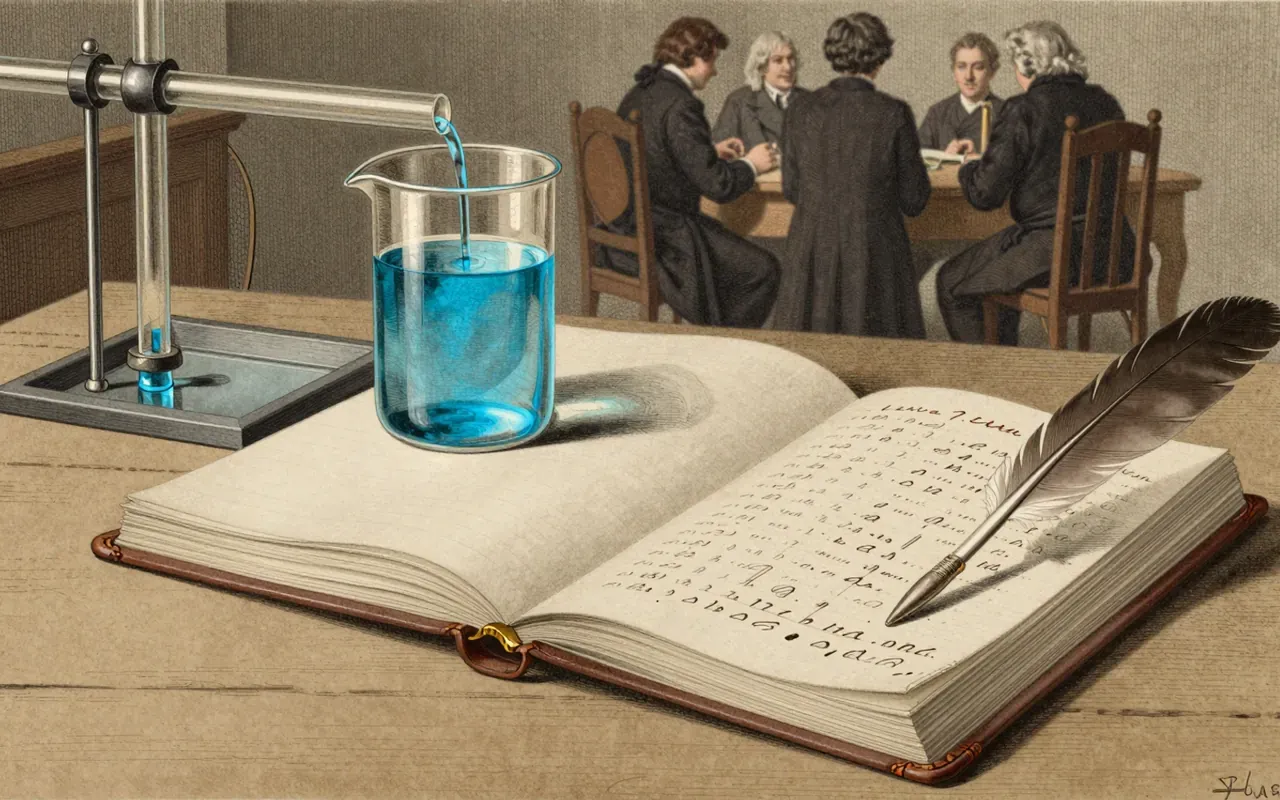
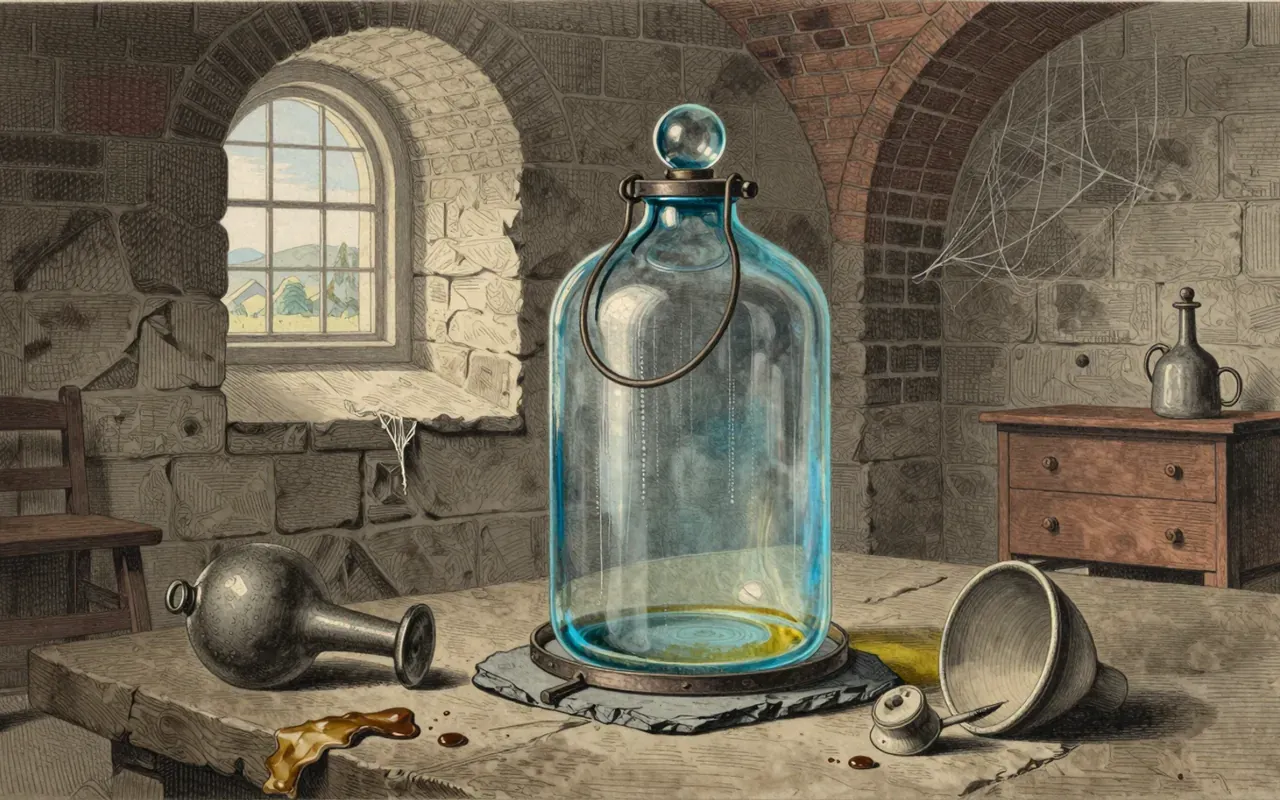
The experiment itself was straightforward and well documented. In 1774, working with manganese dioxide ore supplied by a colleague, Scheele heated it with hydrochloric acid over a warm sand bath and produced a yellow-green gas he had not encountered before. He characterised it carefully: it was denser than air and sank rather than dispersed, it did not dissolve in water, and it bleached cork and litmus paper while stripping the colour from flowers, a set of properties precise enough that the description holds up entirely against what is now known about chlorine.
The right observations, the wrong category
Where Scheele went wrong was not in what he saw but in what he thought it meant. Working within the phlogiston theory that dominated chemistry at the time, he interpreted the gas as a form of muriatic acid that had lost its phlogiston, rather than as a distinct new element in its own right. Other chemists, including Claude Berthollet, extended this misreading further, proposing the gas was actually oxygen combined with a still-undiscovered element they called muriaticum — a theoretical patch that let the compound interpretation survive without ever being directly tested against the alternative.
Thirty-six years to settle the question
It took Humphry Davy, working independently decades later, to settle the matter properly. In 1810 Davy ran decomposition experiments on the same gas and found no way to break it down into simpler substances, concluding it was in fact an element rather than a compound of oxygen and something else. He announced the finding to the Royal Society on 15 November 1810 and named the substance chlorine, from the Greek word for a green-yellow colour, fixing both its correct chemical status and the name still used today, thirty-six years after Scheele had first produced it.
A pattern that repeats in Scheele’s career
This was not an isolated stroke of bad timing in Scheele’s career. He had also isolated oxygen, independently and arguably before either Joseph Priestley or Antoine Lavoisier, sometime around 1771, but did not publish his results until 1777, by which point both other chemists had already released their own findings and claimed the credit history now generally assigns to them. The historian Isaac Asimov’s description of him as hard-luck Scheele reflects a pattern that shows up more than once across his career: correct, often prior chemistry undermined by the timing of publication rather than by any error in the underlying work.
A method that eventually killed him
Scheele’s method of investigation carried a cost that eventually became fatal. Lacking the analytical tools later chemists would use to characterise a new substance safely, he made a practice of tasting and smelling the compounds he discovered, a technique that produced genuinely useful qualitative descriptions but exposed him repeatedly to whatever he was studying. Over a career that included isolating arsenic-, mercury-, lead- and hydrofluoric acid-related compounds among his many discoveries, this cumulative exposure caught up with him: he developed symptoms of kidney disease in 1785 and died the following year, on 21 May 1786, at the age of 43.
A discovery worth separating from its label
What is worth taking from this is not a simple story of correction but a demonstration of how cleanly good observation and wrong theory can be pulled apart after the fact. Scheele’s actual measurements of chlorine’s colour, density, solubility and bleaching action needed no revision at all; only the theoretical box he placed those observations in, borrowed from a chemistry that did not yet have the concept of an element in its modern sense, turned out to be wrong. Reading his chlorine work alongside its correction is a compact lesson in exactly where the line between data and interpretation sits, and in how long a wrong interpretation can survive when the data underneath it was never actually in dispute.