A green apple at sunset
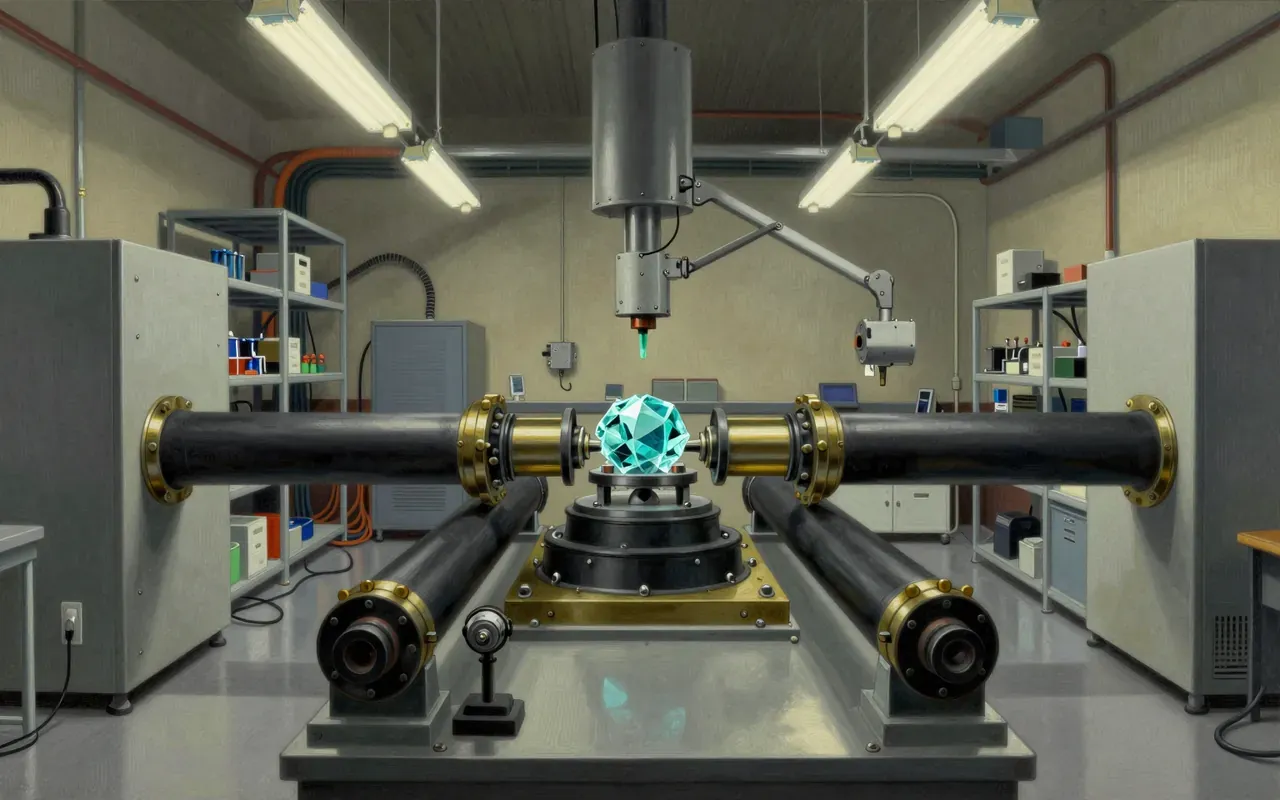
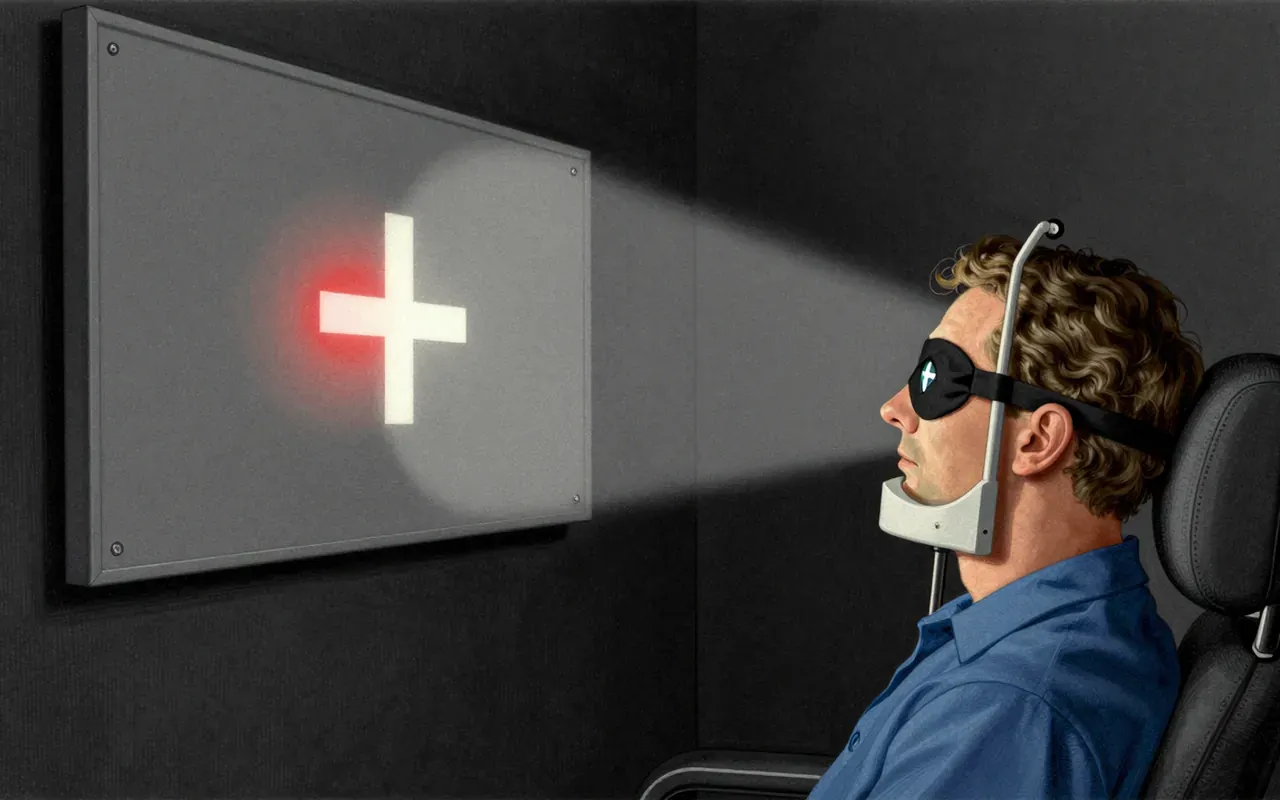
The claim is that the colour a person perceives an object to have depends on more than the wavelength of light physically reaching the eye from that object; the brain compensates for the colour of the illuminating light itself, so an object’s apparent colour stays roughly constant even as the lighting around it changes considerably. Edwin Land, the founder of Polaroid and inventor of instant photography, demonstrated a striking version of this idea in 1959, published in Scientific American, using black-and-white transparencies photographed through red and green filters and then projected using only two narrow bands of light. Observers reported seeing a wide range of colours despite the extremely limited wavelength information actually present in the projected light, a result that became known as the Land effect and that plain wavelength-detection theories of colour vision struggled to explain.
Two wavelengths, a full spectrum
Land eventually formalised his account in 1977, working with John McCann, under the name retinex theory, a blend of retina and cortex meant to signal that colour perception depends on processing at both the eye and the brain rather than the eye alone. The clearest experimental demonstration of the underlying claim is the Mondrian experiment, named for its resemblance to the painter’s grid-like compositions, in which coloured patches are lit by separately adjustable red, green and blue lights. Researchers first find the lighting level at which a given patch appears white, then adjust the lights so that a different patch reflects the exact same measured red, green and blue values that the white patch had. Observers continue to see each patch as its original colour rather than the physically identical light values now reaching their eyes, showing that judgement of colour depends on the surrounding context, not the raw signal from a single point.
Naming the theory
Later neuroscience has identified specific machinery consistent with this account. Double-opponent cells in the visual cortex compute ratios of activity between neighbouring cone signals rather than simply reporting the raw wavelength composition of light striking one location, giving a plausible cellular basis for comparing a patch against its surroundings rather than judging it in isolation. Damage to a specific cortical region, area V4, can produce cerebral achromatopsia, a loss of colour perception, indicating that region plays a genuinely necessary role in the process rather than a merely incidental one. The first systematic behavioural experiments testing colour constancy directly, conducted by Arend and Reeves in 1986, added controlled evidence to a phenomenon that had previously been argued largely from demonstrations like Land’s rather than from formal psychophysical testing.
A checkerboard that won’t behave
What has not been settled is a single unified mechanism. Two competing explanations remain in circulation: an account resting on unconscious inference, in which the visual system effectively reasons about the likely illuminant and discounts it, associated with Helmholtz and later Judd, and a rival account resting on sensory adaptation, in which retinal cone cells and downstream neurons simply adjust their sensitivity to local light levels over time, associated with Hering and Helson. Cone adaptation itself is described as incomplete, meaning it cannot by itself account for the full strength of the effect, and the material states plainly that actual human colour perception has proven more complex than the retinex model alone captures. The effect is also weaker under limited or overcast illumination than under daylight with a broad range of wavelengths, showing its dependence on specific conditions rather than being a fixed, unconditional property of vision.
Cells that compare, not just detect
Beyond the visual science, this research underpins a genuinely practical piece of everyday technology: digital cameras and displays must approximate the same illumination-discounting the human visual system performs automatically, adjusting so a white object recorded under artificial light still looks appropriately white rather than tinted, a process called white balance and directly descended from retinex-style computational models. Computer vision systems more broadly use retinex-inspired algorithms to try to recover an object’s true surface properties from an image despite unknown lighting conditions, an engineering problem that mirrors exactly what the human visual system solves without conscious effort. Understanding where this process can fail also matters for any application, from digital art to industrial colour matching, that depends on colour judgements staying reliable across different lighting setups.
Weaker under duller skies
Yes, and the appeal is partly in the unlikely pairing at its centre: the same person who built an empire on instant photography also produced one of the more genuinely surprising demonstrations in the science of vision, using only two colours of light to make people see many. The Mondrian experiment gives a reader something to actually picture and test intuitively, not just take on faith, and the honesty about competing explanations, rather than a single tidy mechanism, makes this a good example of an area of neuroscience that is well established at the level of the phenomenon but still actively argued over at the level of cause. It rewards an hour for anyone who has ever wondered why colours look so stable in a world where the light falling on them almost never is.