A monkey watches, a neuron fires
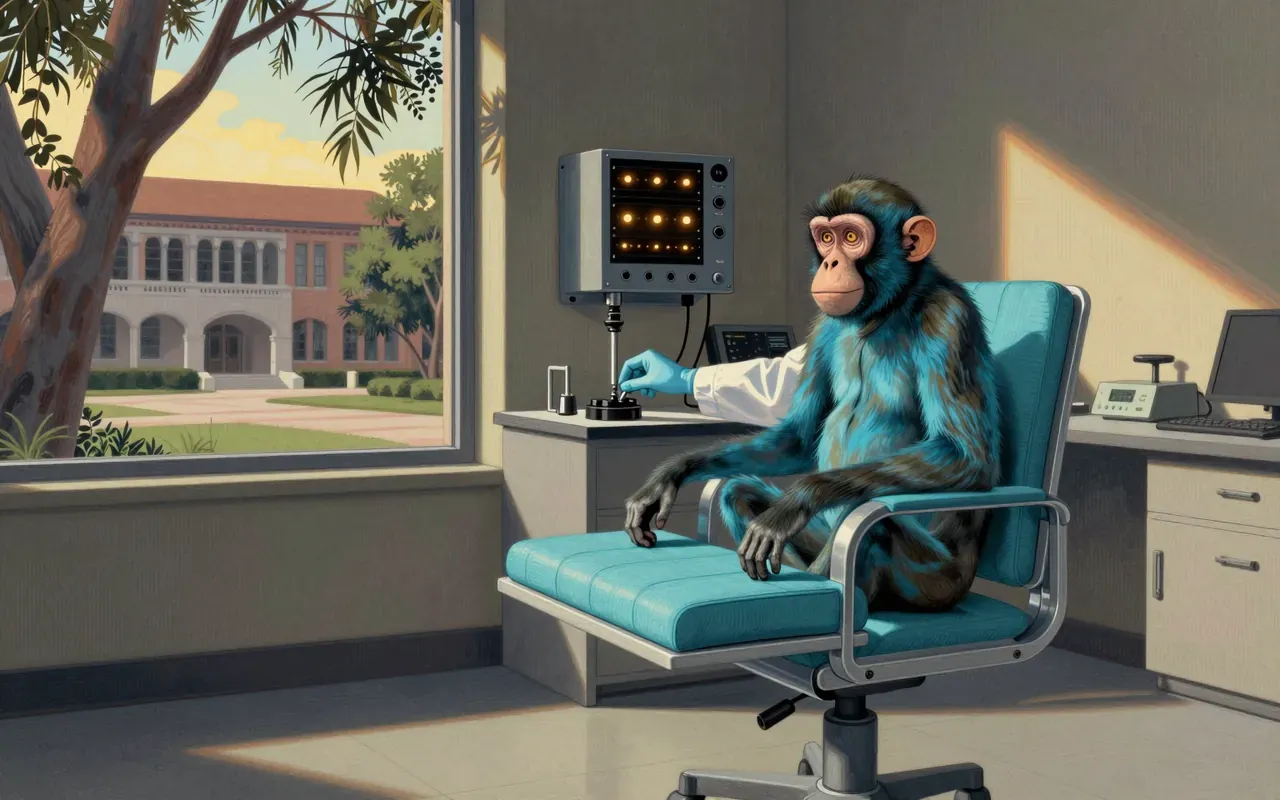
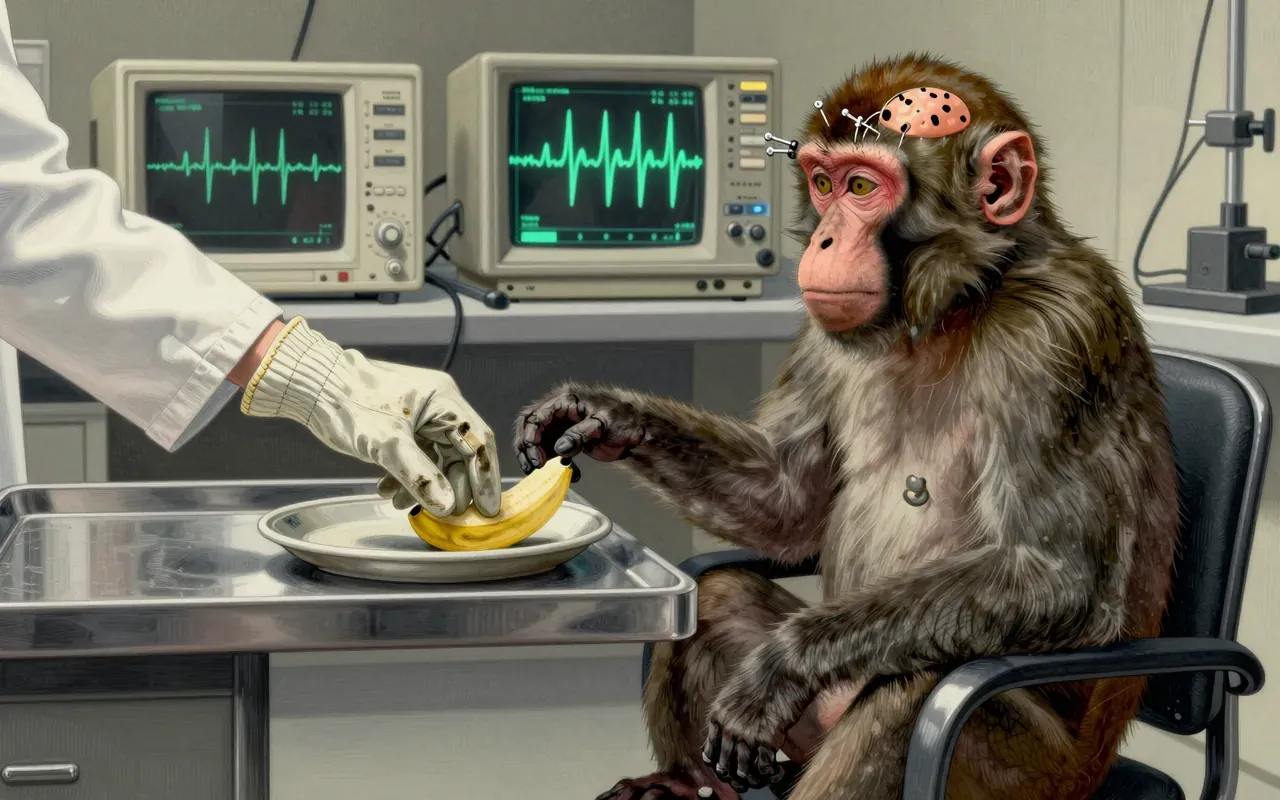
The original claim is narrow and specific: certain neurons in the premotor cortex of a macaque monkey fire both when the monkey performs a particular action and when it watches another individual perform that same action. Giacomo Rizzolatti’s team at the University of Parma, working with Giuseppe Di Pellegrino, Luciano Fadiga, Leonardo Fogassi and Vittorio Gallese, found this while recording single neurons in area F5, a region controlling hand and mouth movements, as monkeys reached for food. Some of the recorded cells responded not only when the monkey itself reached, but also when a researcher reached for the food in full view of the animal. That overlap between acting and observing gave the cells their name and, almost immediately, an appeal that reached well beyond monkey motor cortex.
A paper Nature didn’t want
The method was single-neuron electrophysiology: electrodes implanted in area F5 recorded the electrical activity of individual cells while monkeys performed grasping movements and while they watched a person or another monkey perform equivalent movements. The original paper describing this was rejected by Nature for lacking sufficiently general interest and was published in a less prominent journal instead, a detail that sits oddly against the attention the idea later received. By 1996, the same research group proposed that Broca’s area in the human brain, long associated with language production, was the anatomical equivalent of the monkey’s ventral premotor cortex, extending the mirror concept to a much broader claim about the human brain. A 2005 study by Fogassi and colleagues recorded 41 candidate mirror neurons in the macaque parietal lobe, finding some responded differently depending on an action’s ultimate goal, such as grasping to eat versus grasping to place an object elsewhere.
From one cell type to a grand theory
What has held up is the basic cellular observation in monkeys: cells in the regions studied do respond to both the execution and the observation of matching actions, and this is not seriously disputed even by the theory’s critics. The 2005 finding that some parietal neurons distinguish between different intended outcomes of a superficially similar grasp, firing more for grasping to eat than for grasping to place, has been read as evidence that these cells track something about the goal of an action, not merely its visible motion. Human brain imaging, using fMRI, does show overlapping activity in inferior frontal and parietal regions during both the execution and observation of actions, broadly consistent with a human mirror system existing in some form, even if it cannot be pinned to individual neurons the way the monkey work can.
The broken mirror idea for autism
What has not held up is most of the theory built on top of the original finding. The broken mirror hypothesis, which proposed that faulty mirror neurons explain autism, gained early support from EEG studies of reduced motor suppression in autistic children, but a later fMRI study by Ilan Dinstein found normal mirror-related activity in autistic individuals, and a 2010 review concluded the neurological evidence was insufficient; few researchers now treat autism as an all-or-nothing mirror system failure. Direct recording in humans, achieved in 2010 using electrodes implanted in 21 epilepsy patients for unrelated clinical reasons, found candidate mirror neurons in different brain regions than the monkey work had identified. Critics including Cecilia Heyes argue the cells more likely reflect ordinary associative motor learning than a system evolved to understand others, and a 2009 study by Lingnau and colleagues failed to find a predicted cross-modal adaptation effect, though a separate study that same year found it under different conditions.
Critics push back on the mechanism itself
Even stripped of its more speculative extensions, the finding matters because it reframed a basic question in neuroscience: how does a brain represent another individual’s action as meaningful rather than as raw visual movement. Theories of imitation, empathy and language acquisition all depend on some answer to that question, and mirror neurons offered a concrete, cellular-level candidate rather than a purely psychological one. The autism debate shows both the appeal and the risk of that move: a specific, testable neural hypothesis was proposed, tested with better imaging, and substantially disconfirmed, which is a normal and useful outcome for a scientific claim even though it disappointed hopes for a simple biological explanation of a complex condition. The episode is a useful case study in how quickly a narrow physiological finding can be recruited to explain far more than the data supports.
Overblown, by the field’s own admission
Yes, precisely because it is a live argument rather than a closed case. The value here is not a tidy answer about what mirror neurons do, but a clear view of how the claim expanded from a specific and well-supported finding in monkey motor cortex into a broad account of human social cognition that the current evidence does not cleanly support, according to the sources’ own summary of scientific opinion as widely overblown. Readers who enjoyed hearing that mirror neurons explain empathy will find that claim complicated rather than confirmed, and readers sceptical of neuroscience overreach will find the specific objections, from Heyes, Hickok, Dinstein and others, laid out with enough detail to judge for themselves rather than simply asserted.