12:03in productionCh. 1 · Where and when/ 12:03 · ceiling 15 min
Physics · Engineering
Michelson–Morley experiment
1887
A failed experiment that succeeded by saying nothing — and forced physics to abandon its most cherished medium.
The Michelson–Morley experiment measured light speed in perpendicular directions to detect Earth's motion through the aether. It found no significant difference — a null result so precise it undermined core assumptions of classical physics and helped catalyse special relativity.
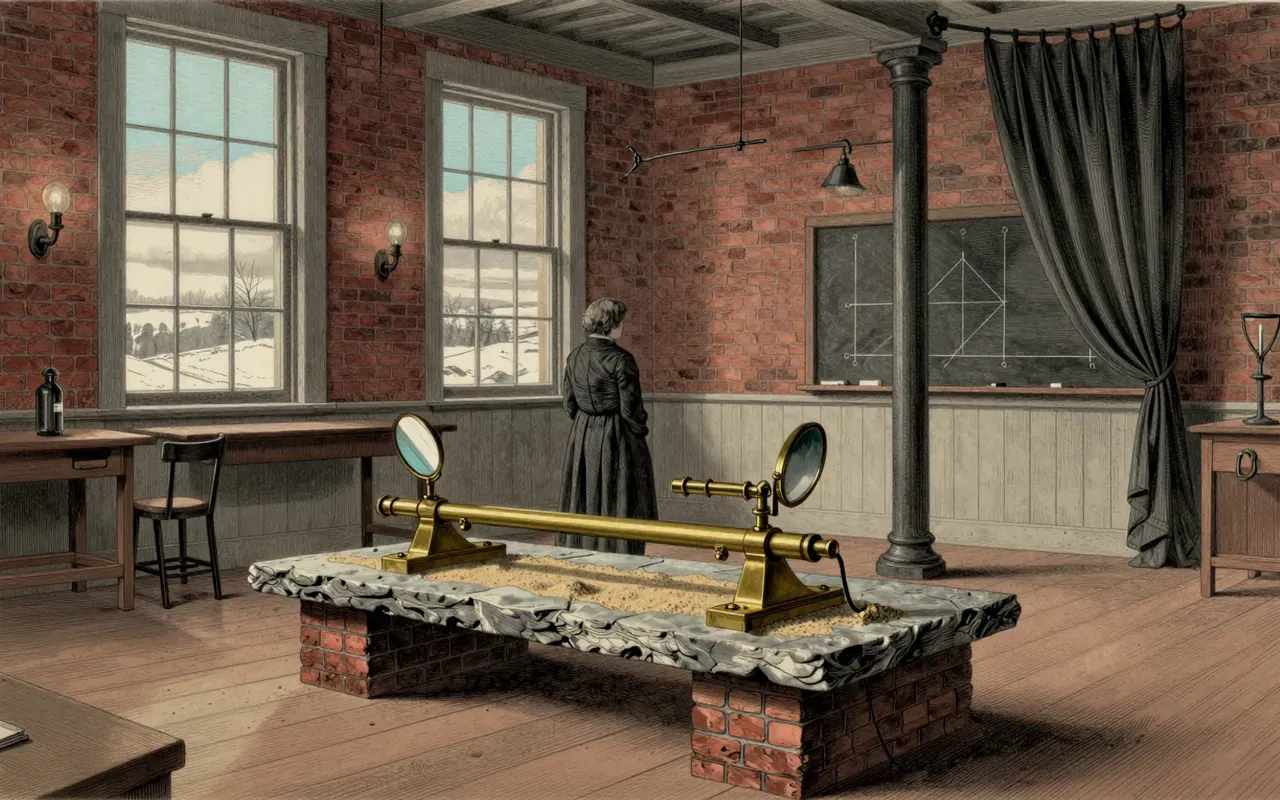
It was done in Cleveland, Ohio, between April and July 1887 — not in a vacuum, but on solid ground, with Earth moving at 30 km/s.
1:56
What they measured
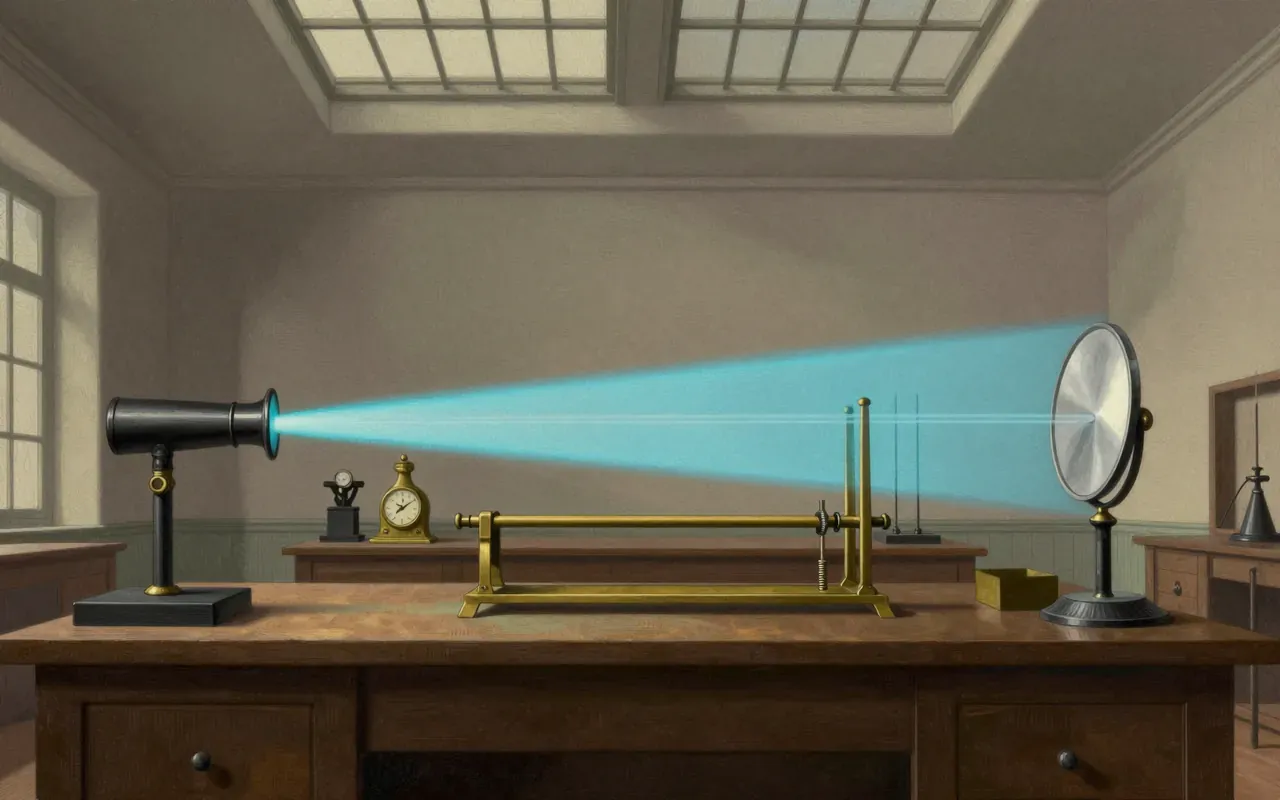
They compared light speed in perpendicular directions — not to measure light itself, but to feel the aether wind.
3:06
How small the signal really was
The displacement was less than one-fortieth of what the aether predicted — meaning the aether drift velocity was less than one-sixth of Earth’s orbital speed.
4:43
What it started
It didn’t kill the aether overnight — but it started the chain of work that ended with special relativity.
6:10
Why silence speaks
A null result is not failure — it is data that rules out whole classes of explanation.
8:04
No replication needed — just precision
Every number, every claim, every implication came from one instrument, one lab, one paper — published November 1887.
Worth your time?
Yes. Study the whole thing.
4.5/ 5
What works
as a decisive test of aether-drift predictions
as the first strong evidence against stationary aether models
as the catalyst for the research line leading to special relativity
What does not
disprove all aether models
establish special relativity
measure the speed of light
Study it if
anyone who thinks experiments must produce positive signals to matter
anyone who conflates 'no effect found' with 'no effect exists'
Skip it if
those seeking confirmation of modern relativistic predictions
those looking for statistical significance beyond what the source reports
The written brief1 min read
What the work claims
The experiment claimed to detect Earth’s motion through the luminiferous aether by measuring differences in light speed across orthogonal directions.
How it was done
Michelson and Morley used an interferometer to compare the speed of light along two perpendicular paths between April and July 1887 in Cleveland, Ohio.
What holds up
The null result holds: no statistically significant difference was found between light speeds parallel and perpendicular to Earth’s motion. The measured displacement was as small as one-fortieth of the expected value.
What does not
It did not disprove all aether models outright. Some modified theories (e.g., Lorentz–FitzGerald contraction) accommodated the null result without abandoning the aether.
Why it matters beyond the lab
It provided the first strong evidence against stationary or partially dragged aether theories and initiated the line of research that led to special relativity — which eliminates the aether entirely.
Is it worth your time
Yes. It is the first high-precision null result that directly challenged a foundational assumption of 19th-century physics — and it remains the archetype of how experimental silence can reshape theory.
Trillions of microbes live on and in every human body, and genetic sequencing has replaced old guesses about their numbers and roles — but most links between the microbiome and disease remain correlations, not proven causes.