A nitrogen sample that weighed too much
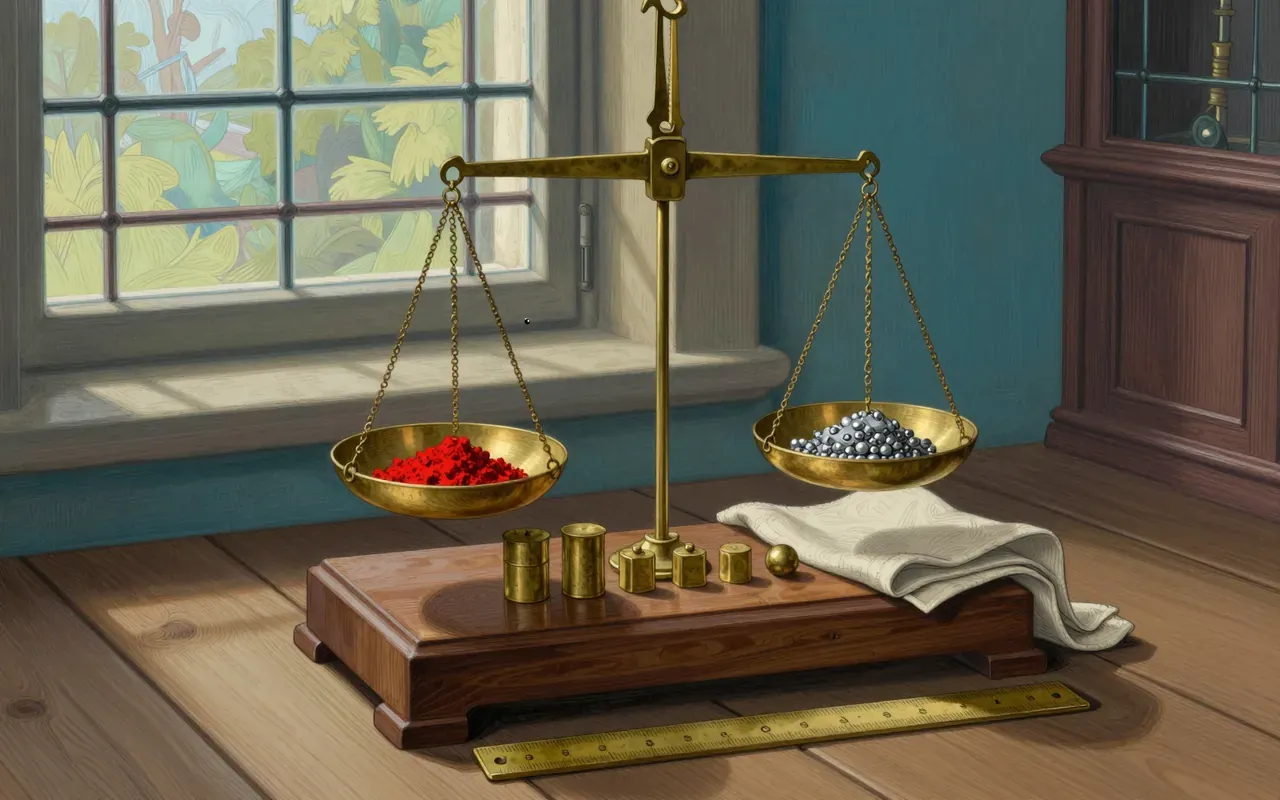
The story starts from a discrepancy small enough to be easy to ignore. Lord Rayleigh noticed that nitrogen gas extracted from air was consistently slightly denser than nitrogen produced through chemical reactions, and rather than treat the difference as an error, he and William Ramsay investigated it directly. Working together at University College London from 1894, they isolated a previously unknown, chemically inert component of ordinary air and named it argon, from a Greek word meaning lazy or idle, in recognition of how little it seemed to react with anything else they tried.
Distilling the missing column
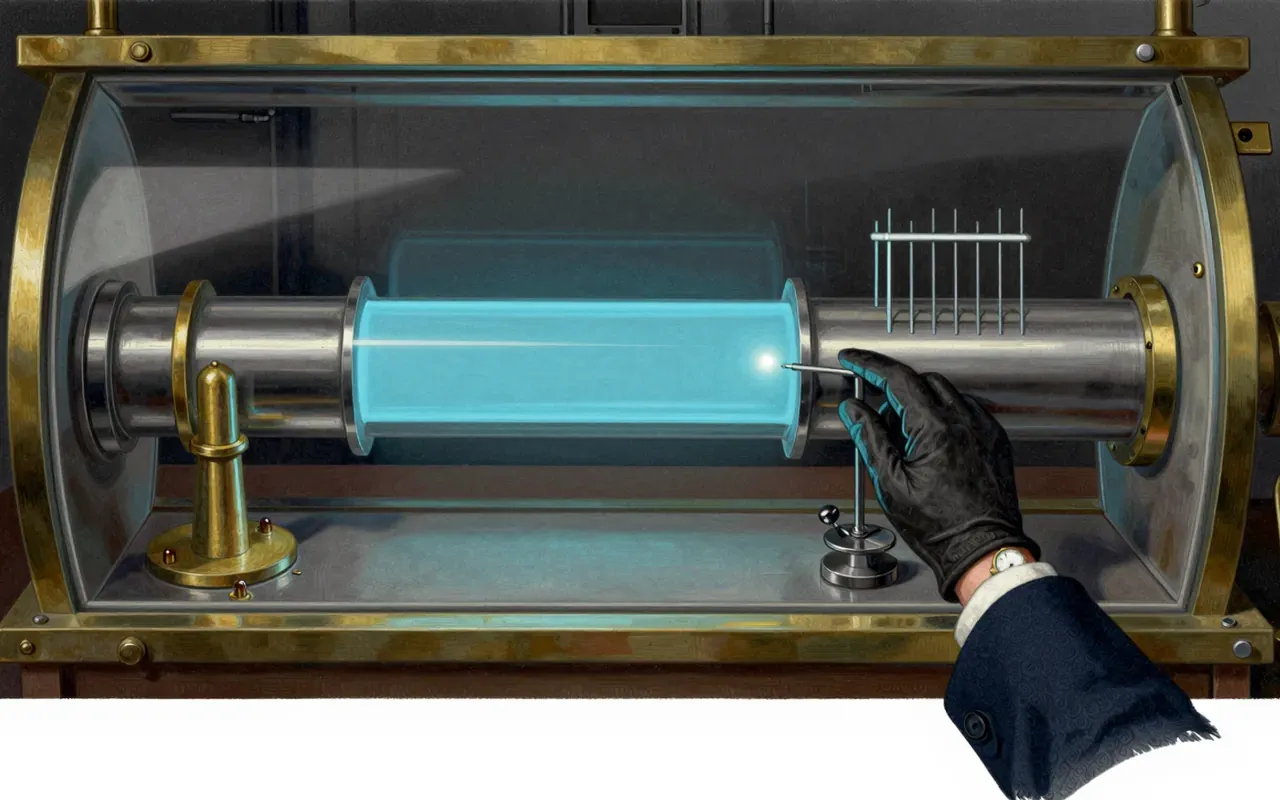
Argon’s isolation immediately suggested there was a whole missing column of the periodic table still to be found, and Ramsay pursued it with Morris Travers using fractional distillation of liquid air, a technique that separates gases by their different boiling points as the liquid slowly warms. In 1898 this single approach yielded neon, krypton and xenon in rapid succession, named respectively from Greek words for new, hidden and stranger — names that describe how each gas presented itself during the search rather than any property of the finished element itself.
A gas found in the Sun before it was found on Earth
Helium took a different, and in some ways more striking, route to discovery. Astronomers Pierre Janssen and Joseph Norman Lockyer had already detected it spectroscopically in the Sun’s chromosphere on 18 August 1868, identifying a spectral line that matched no known element, decades before anyone found the gas on Earth. Ramsay eventually isolated helium terrestrially by heating a uranium-bearing mineral called cleveite, closing the gap between an element known first from starlight and the same element sitting, in small quantities, inside rock. Rayleigh and Ramsay shared the 1904 Nobel Prizes, in physics and chemistry respectively, for the inert gases their work had uncovered.
Why chemists assumed they were unreactive
The label these gases earned, inert, followed directly from their electron structure: each one has a complete outer shell of electrons, eight for every member of the group except helium, whose full shell holds only two. A complete outer shell gives an atom no obvious incentive to gain, lose or share electrons with another atom, which is the standard chemical explanation for why noble gases resist forming compounds far more strongly than almost any other element on the periodic table. For decades this was treated less as a strong tendency than as an absolute rule.
The assumption that broke in 1962
That rule did not survive contact with better chemistry. In 1962 Neil Bartlett synthesised xenon hexafluoroplatinate, a genuine chemical compound built around a noble gas atom, and the finding opened the door to further compounds soon after, including radon difluoride and krypton difluoride the following year. Chemists have since catalogued around five hundred xenon compounds, mostly bonded to strongly electronegative partners like fluorine or oxygen, and even argon, the least willing of the lighter noble gases to react, was shown to form a stable compound by 2000. The word inert has stuck around by habit, but it describes a strong reluctance rather than an impossibility.
From lighting bulbs to spacecraft engines
The same low reactivity that made these elements so hard to isolate in the first place turns out to be exactly what makes them useful now: argon shields metal from the air during welding and delicate chemical synthesis, helium cools superconducting magnets in MRI scanners at temperatures near 4.2 kelvin and replaces nitrogen in diving mixtures to avoid narcosis, and xenon’s inertness is precisely why it is favoured as the propellant in spacecraft ion engines, where reacting with the engine’s own components would be a serious design flaw rather than a curiosity. It is a satisfying case of a property first noticed as an obstacle to discovery becoming the entire reason the elements matter afterward, and worth the time for that shape of story alone.