A problem of propriety
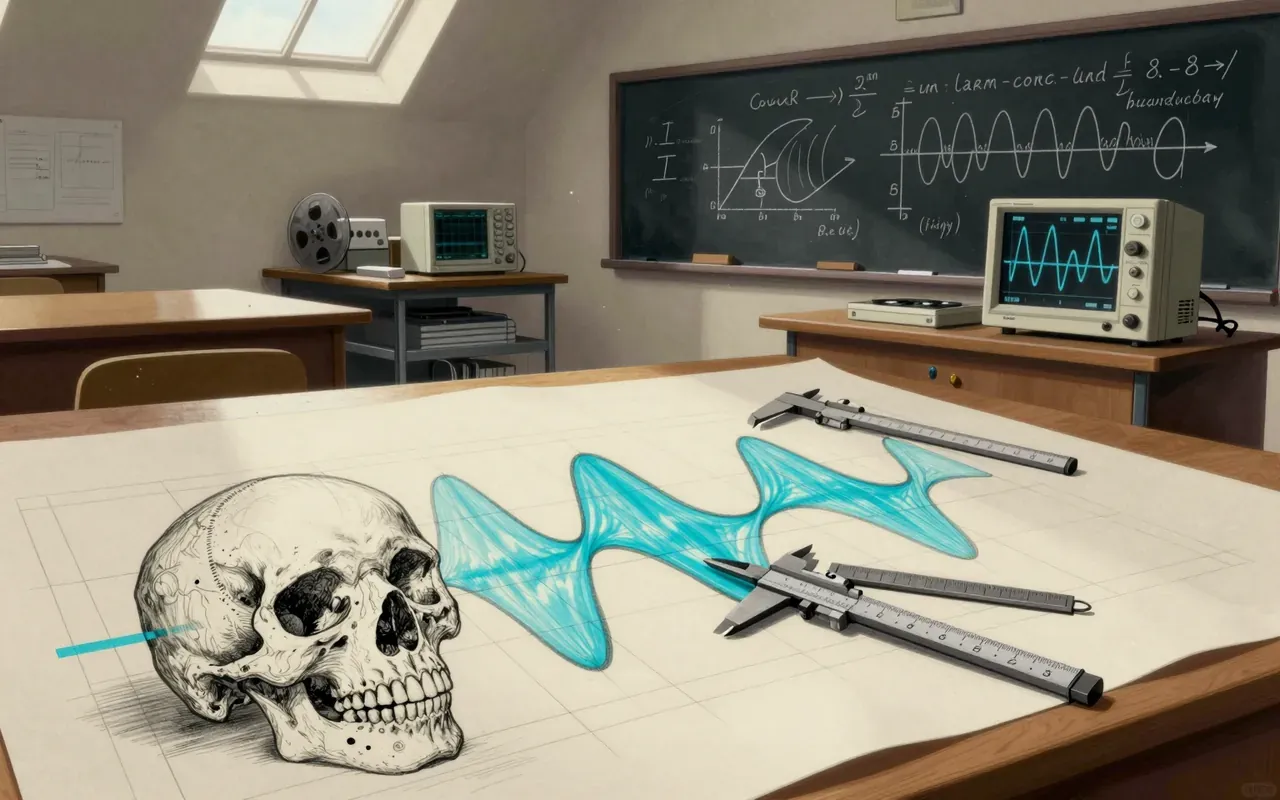
In 1816, at the Hopital Necker in Paris, Rene Laennec was examining a young woman he suspected of having heart disease. Direct examination by placing an ear against the chest, the standard method at the time, was awkward given the patient’s sex and Laennec’s sense of what was appropriate, and her weight made the older technique of tapping the chest and listening for changes in sound less useful as well. Recalling that sound carries well through solid wood, Laennec rolled a sheet of paper into a cylinder, placed one end against the woman’s chest and the other to his own ear, and was struck by how much more clearly he could hear her heartbeat than he expected.
A rolled sheet of paper
Laennec developed the improvised paper tube into a proper instrument: a hollow wooden cylinder roughly 25 centimetres long and 2.5 centimetres across, built in detachable sections and eventually fitted with a funnel-shaped opening to help gather sound. He named the device the stethoscope, combining Greek words for chest and to look, and called the technique of listening through it mediate auscultation, distinguishing it from the older method of listening with the ear placed directly on the body. The design carried sound through a single channel to one ear, a monaural instrument rather than the two-eared version familiar today.
From paper to a wooden cylinder
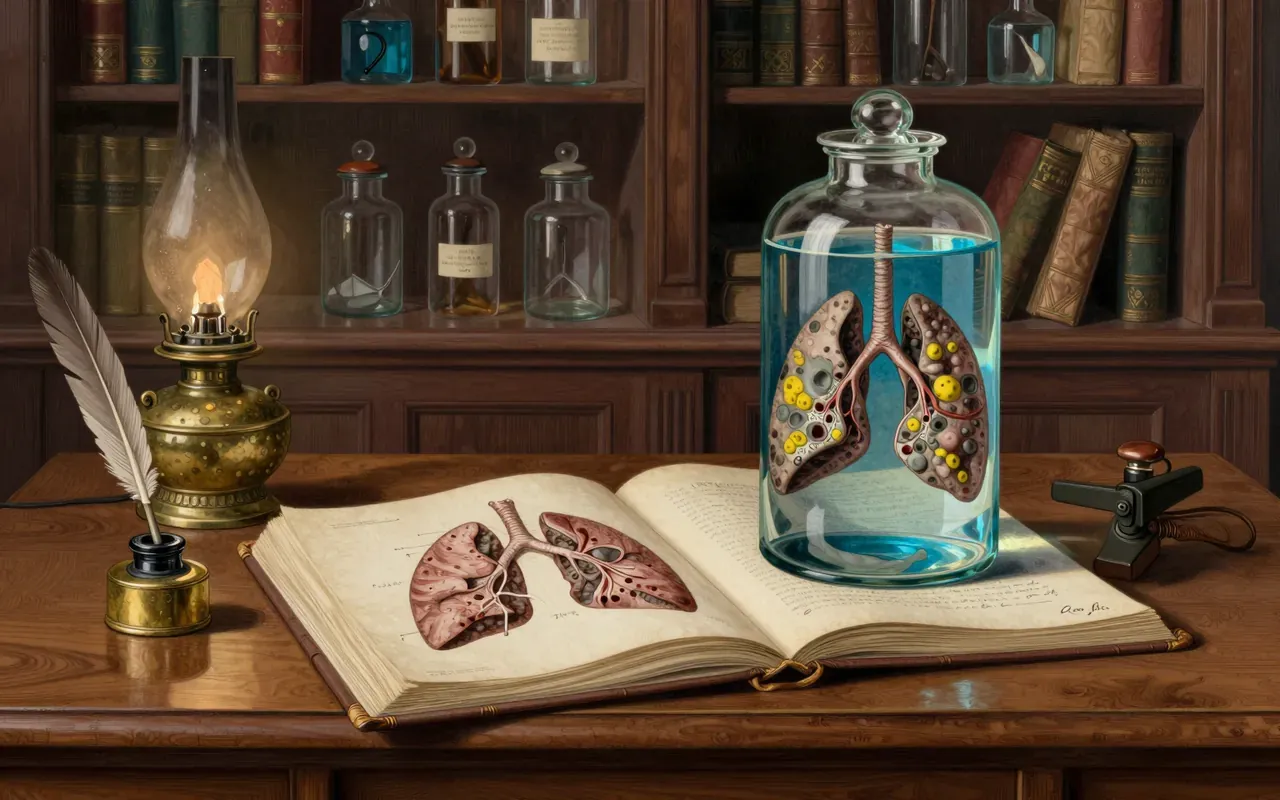
What turned the stethoscope from a clever accessory into a diagnostic method was Laennec’s systematic follow-through: he tracked patients from their bedside examinations to their eventual autopsies, comparing the specific sounds he had heard in the chest with the specific changes he then found in the lungs and heart tissue after death. This careful correlation let him connect particular sounds, for which he coined terms still used today such as rales and rhonchi, with particular diseases, including tuberculosis, giving physicians for the first time a way to infer what was happening inside the chest without opening it. He published the resulting method and findings in 1819 as De l’Auscultation Mediate.
Matching sound to disease at the autopsy table
Laennec’s original wooden, single-eared design was not the end point of the instrument’s development; it was superseded within a few decades by binaural versions, developed by other physicians including Arthur Leared in 1851 and refined commercially by George Cammann the following year, which delivered sound to both ears and became the basis for the stethoscope’s modern form. Nor was the method’s acceptance immediate: translations of Laennec’s book spread across Europe in the early 1820s, but resistance to the technique persisted among some physicians for decades afterward, well beyond his own lifetime.
Two ears instead of one
The broader significance of the stethoscope lay in what it represented rather than the specific wooden tube itself: a shift toward diagnosing disease by directly investigating what was happening inside the body, using an instrument and a documented, repeatable set of sound patterns, rather than relying only on a patient’s reported symptoms or a physician’s general impression. That shift toward instrument-assisted, internally focused diagnosis became a template that later technologies, from the X-ray to the stethoscope’s own electronic descendants, extended in different ways, but auscultation of the chest with some form of stethoscope remains routine in medical examinations today.
An irony worth sitting with
This is worth understanding for the irony sitting at the end of it: Laennec, whose careful matching of chest sounds to autopsy findings had done so much to sharpen the diagnosis of tuberculosis in his patients, died of tuberculosis himself in 1826 at the age of forty-five, the same disease that had also killed his mother when he was a child. That closing detail does not diminish the instrument’s value, since the basic method of listening to the chest to infer what is happening inside it remains standard practice two centuries later, but it is a useful reminder that even a diagnostic breakthrough does not guarantee its discoverer any personal advantage against the disease it identifies.