What the work claims
That computation can be formalised as mechanical symbol manipulation. That no general algorithm can decide whether an arbitrary Turing machine halts. That pattern formation in biology arises from reaction–diffusion dynamics. That statistical inference can break real-world ciphers.
How it was done
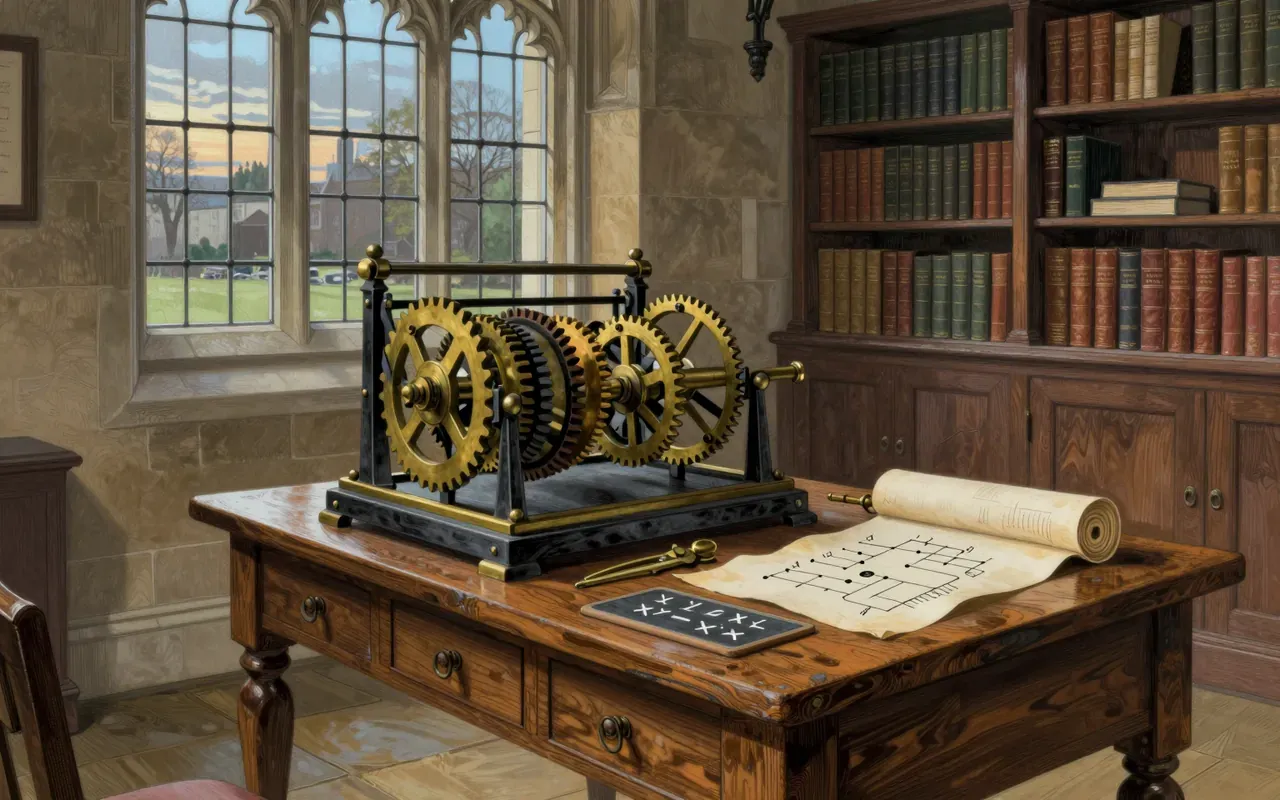
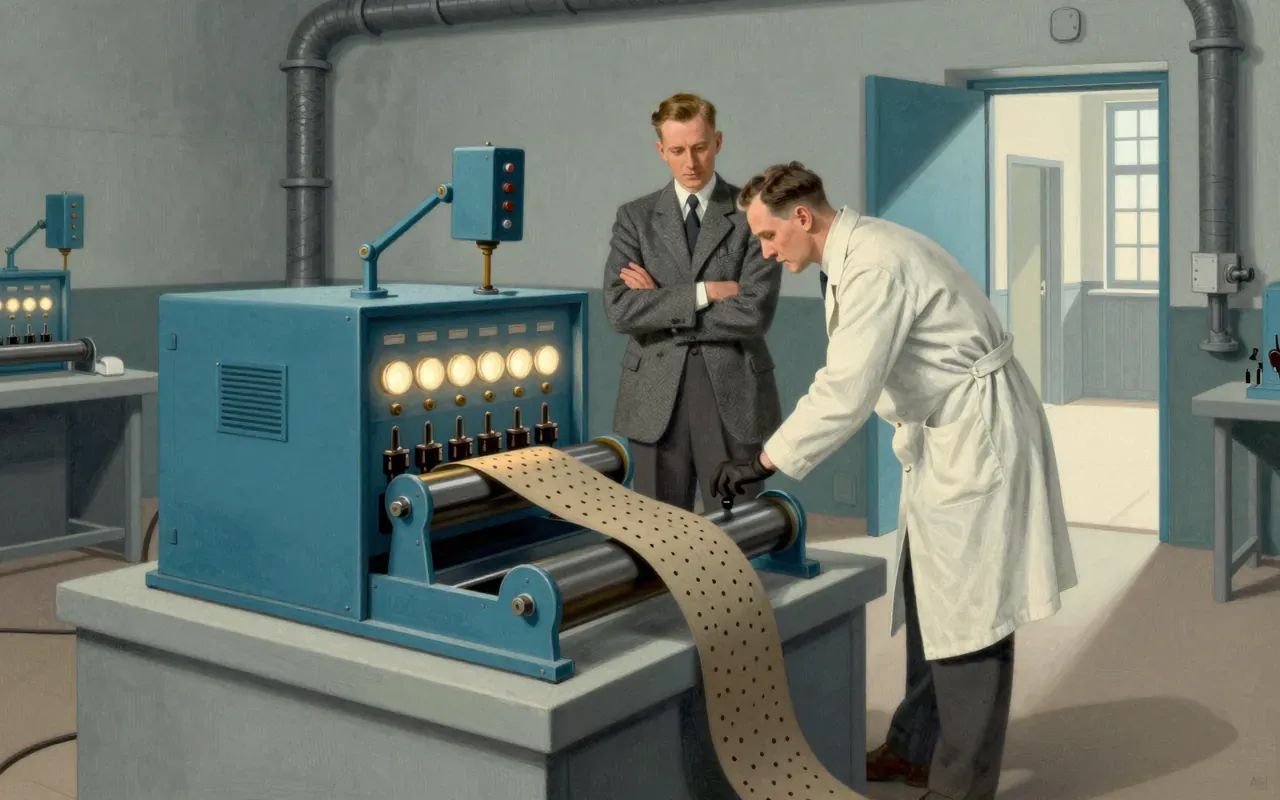
Turing formalised computation using the Turing machine. He improved the Polish bomba into the bombe to break Enigma cipher settings. He applied statistical and probabilistic methods to cryptography. He proposed reaction–diffusion systems to model morphogenesis.
What holds up
His proof that a universal computing machine can perform any algorithmically representable computation holds. The undecidability of the halting problem holds. His improvement of the Polish bomba method to break Enigma holds. His morphogenesis work is confirmed as seminal in mathematical biology.
What does not
The material does not establish that Turing built a working universal machine, proved incompleteness (that was Gödel), invented digital computers (he designed but did not construct the ACE), or solved the Entscheidungsproblem — he proved it unsolvable.
Why it matters beyond the lab
It matters because it sets hard boundaries on what algorithms can do — relevant to AI safety, software verification, and cryptography. It redefined mathematics as process rather than truth. It showed physical systems (like embryos) obey computable laws — bridging physics, biology and information theory.
Is it worth your time
Yes. His formalisation of computation remains foundational for computer science. His cryptanalytic work shortened the Second World War. His morphogenesis theory is still cited in mathematical biology. His proofs on decidability define limits of algorithmic reasoning.