sciencebriefs
Topic

Computing

The machine that ate every other machine.
30
in science
11:11
average
336 min
in total
309
across the network
Computing across the network →
All briefs30
10:30

Alan Turing

Turing didn’t invent the computer — he proved what computation *is*, and where it must stop.
10:16

AlexNet

Depth won the 2012 ImageNet challenge—not cleverness, not data, not theory, but raw, GPU-fuelled layer count.
9:31

Arieh Warshel

He did not explain enzymes—he built the first working computational microscope for them.
13:00

Boolean algebra

George Boole wrote down an algebra for pure logic in 1854 with no interest in machinery; Claude Shannon's 1937 thesis is why every digital computer runs on it anyway.
13:00

Cellular automaton

Von Neumann built a grid of simple cells following fixed local rules to answer a question about machines copying themselves, and the idea outgrew its original purpose entirely.
9:03

Claude Shannon

Shannon didn’t invent the computer — he proved electricity could think.
13:00

Hamming code

Richard Hamming got tired of his weekend calculations being thrown out over an error the machine could detect but not fix, so in 1950 he built a code that could do both.
10:00

George Boole

Boole didn’t invent computing — he invented the grammar that lets silicon speak.
9:34

Grace Hopper

She didn’t invent the compiler—but she proved code didn’t need to speak machine to get work done.
13:00

Seven Bridges of Königsberg

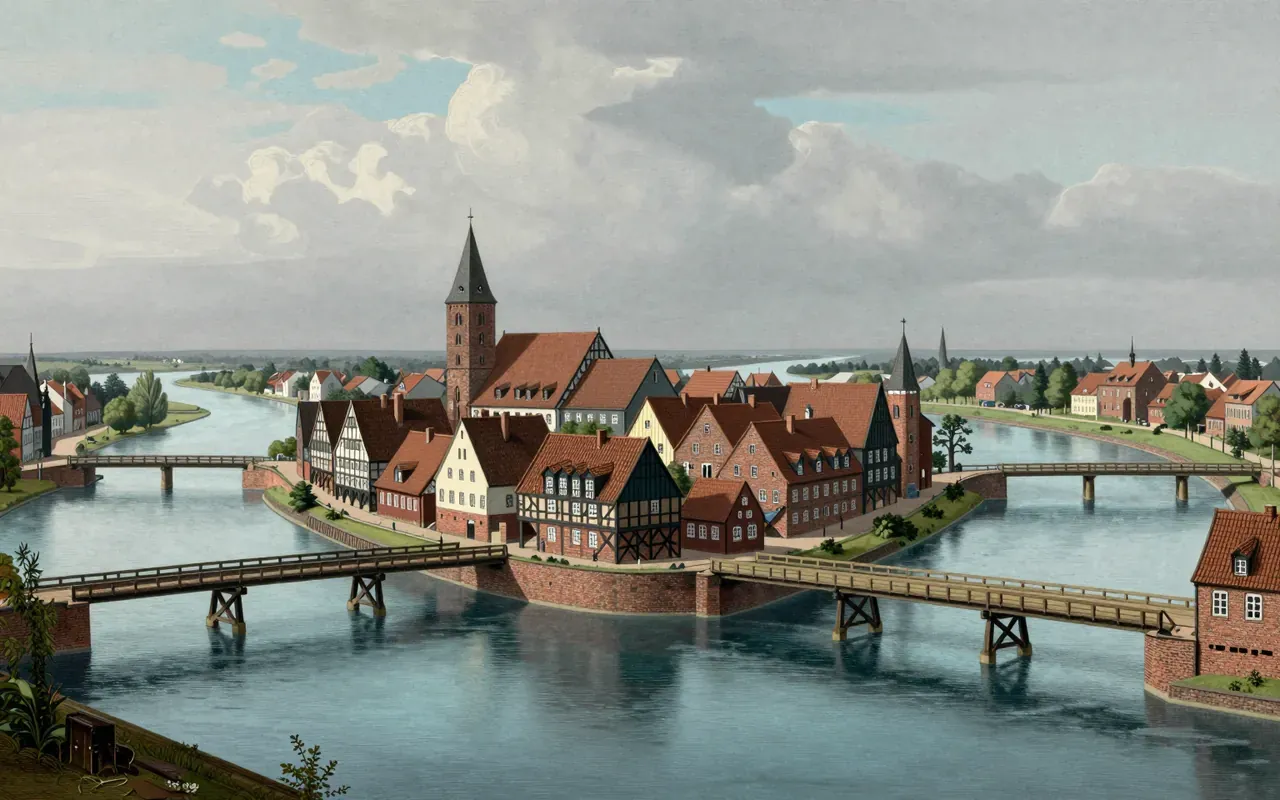
In 1735 Leonhard Euler proved that no walk through Königsberg could cross all seven of its bridges exactly once, by throwing away the map entirely and reducing the city to dots and lines — the first proof in what became graph theory, and arguably the birth of topology.
11:29

Entropy (information theory)

Claude Shannon

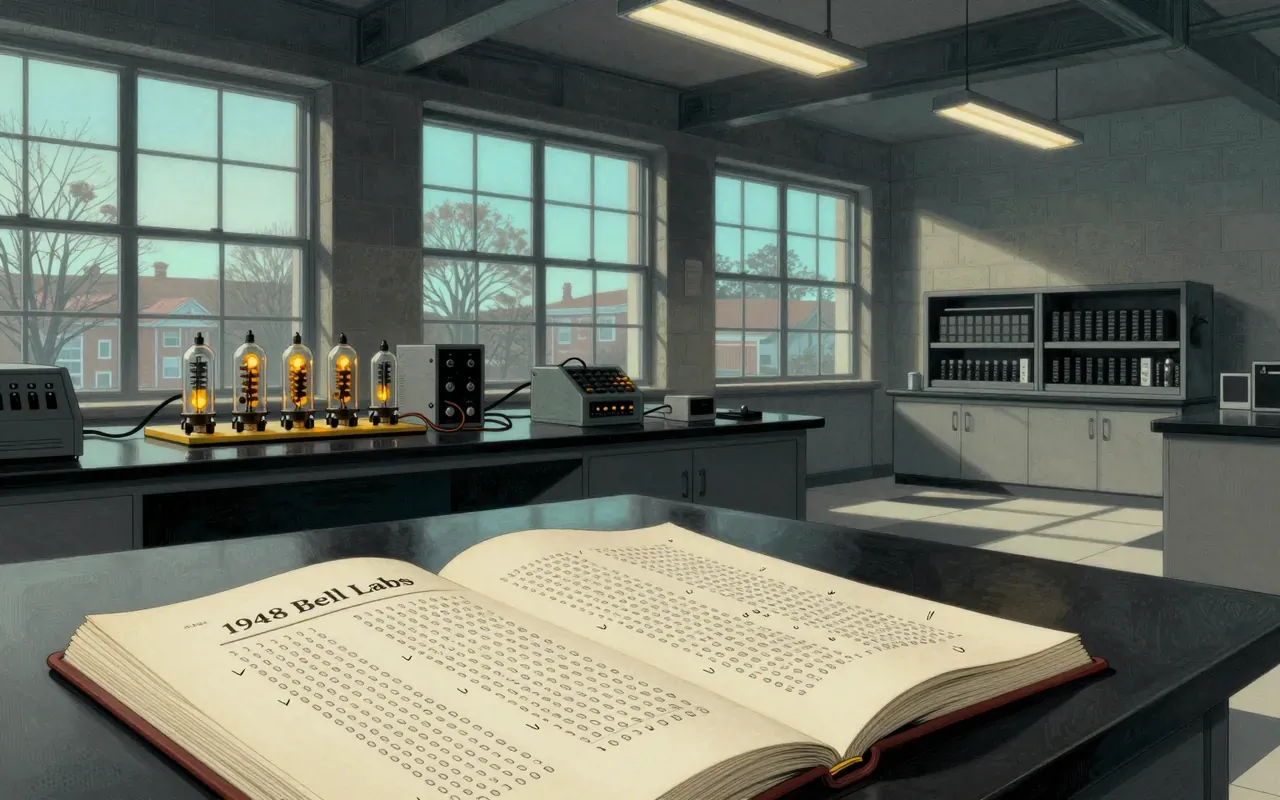
Shannon’s 1948 theory redefined communication as a mathematical problem of uncertainty reduction. He proved entropy is the irreducible cost of lossless encoding — not a metaphor, not a heuristic, but a bound. It applies only where messages are statistically structured, and only to syntactic information — never semantics. Its power lies in its narrowness.


10:04

Kurt Gödel

Gödel didn’t break mathematics — he mapped its borders with surgical precision.
13:00

Lambda calculus

Alonzo Church built computation from three constructs and one substitution rule in the 1930s, a system minimal enough that its equivalence to Turing machines still defines what "computable" means, and specific enough to have real blind spots.
13:00

Perceptron

A 1958 Navy press conference promised a machine that would walk, talk and think; what Frank Rosenblatt had actually built was a simple trainable classifier, and a decade later a single technical proof about it nearly ended neural-network research.
9:44

Shor's algorithm

Shor · 1994

Shor’s algorithm is a quantum algorithm for integer factorisation, developed by Peter Shor in 1994. It runs in polynomial time in log N and places factorisation in BQP. It is asymptotically faster than the general number field sieve.

8:32

Antikythera mechanism

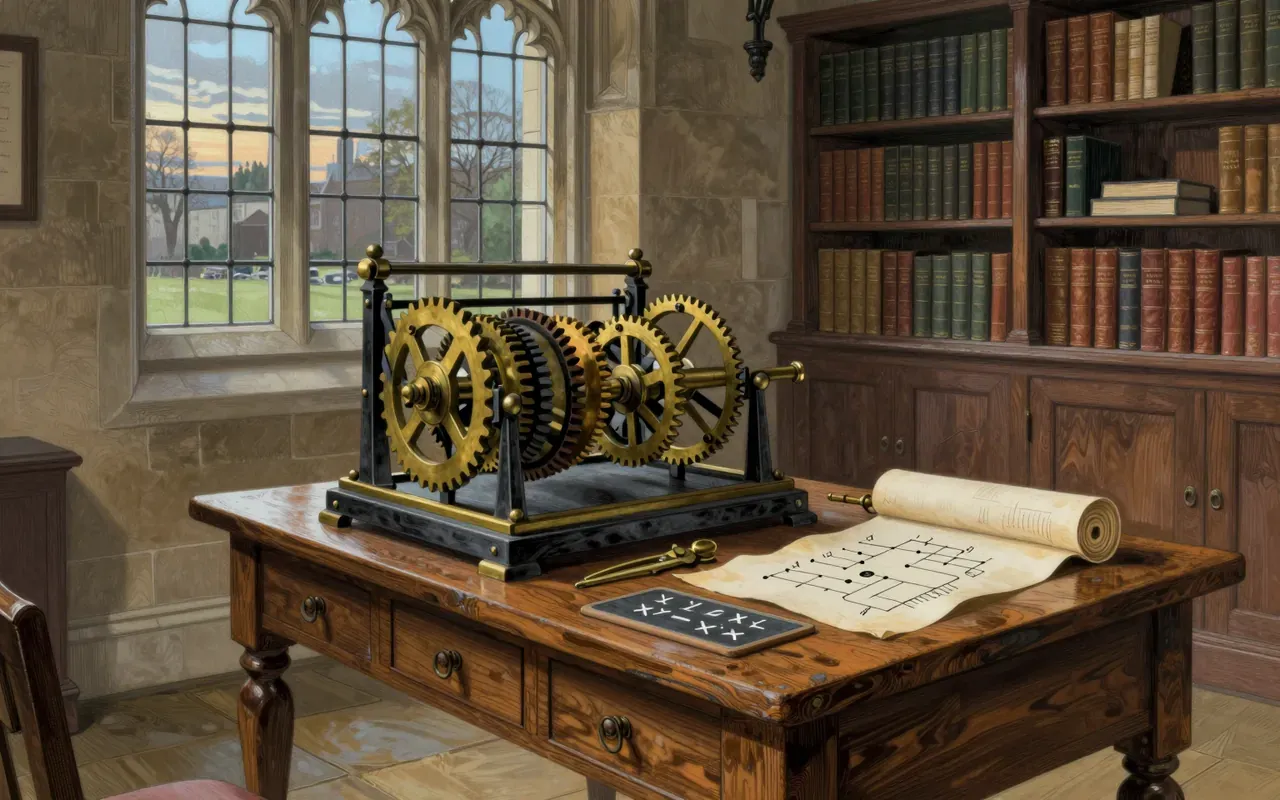
The Antikythera mechanism proves ancient Greeks built analogue computers — not myth, not reconstruction, but physical evidence.
11:03

Church–Turing thesis

Alonzo Church and Alan Turing

The Church–Turing thesis is not a theorem but a foundational assumption — one that equates human-effective calculation with machine computation. It holds because no counterexample exists, not because it is proven. Its endurance is its strength — and its limitation.
13:00

Colossus computer

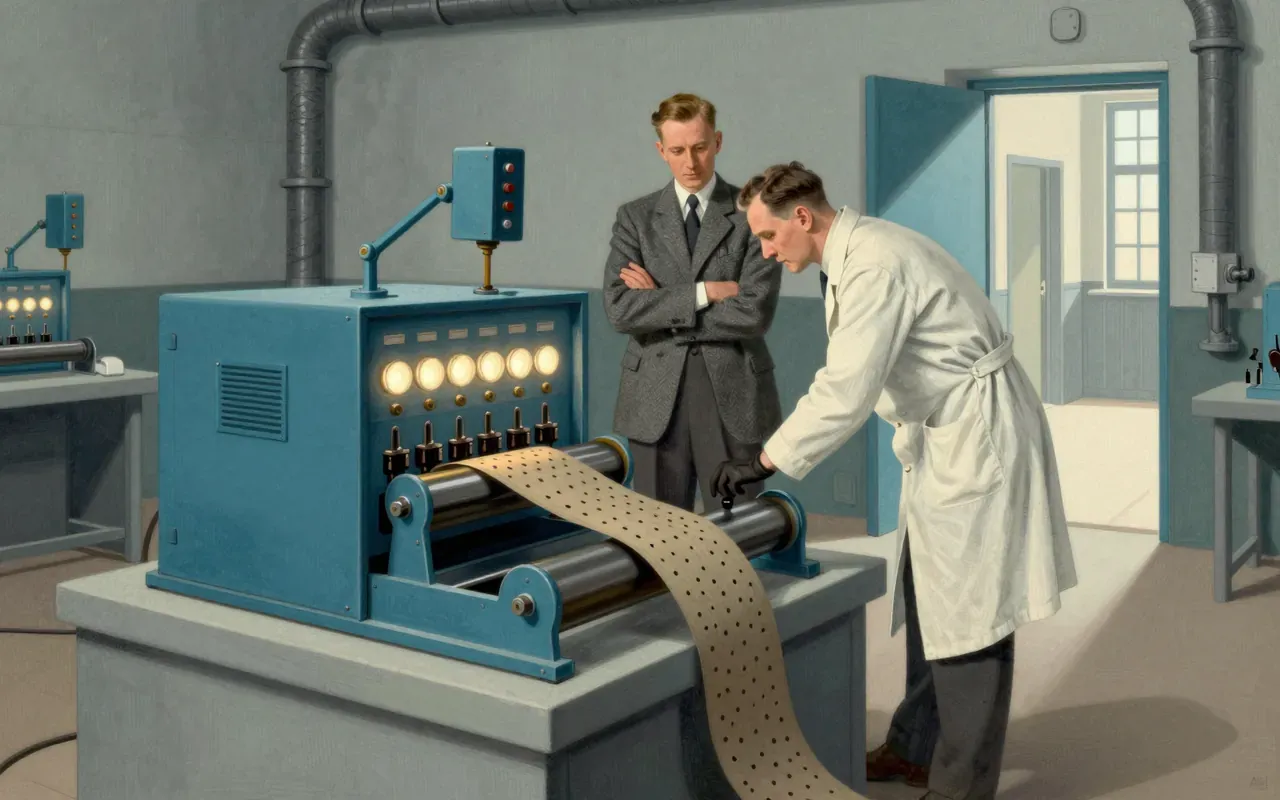
Tommy Flowers built Colossus on a bet that thousands of valves could run reliably where convention said hundreds was the limit. It worked, breaking Lorenz traffic through the war's final years — then vanished into thirty years of secrecy.
9:52

Dartmouth workshop

The Dartmouth workshop didn’t build AI — it invented the idea that AI could be built.
13:00

ENIAC

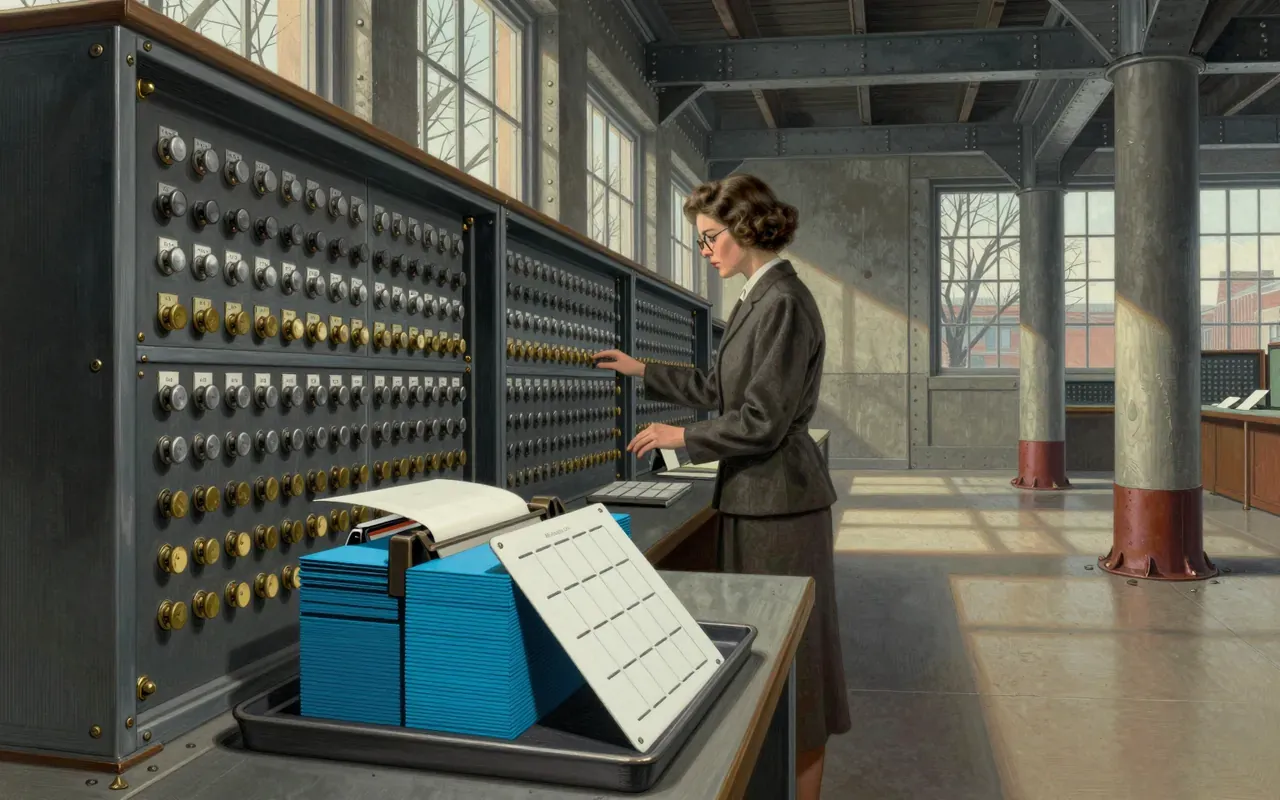
ENIAC filled a room, ate 150 kilowatts, needed weeks to reprogram by rewiring plugboards, and was legally stripped of its patent in 1973 when a court ruled its core idea had come from a machine most people had never heard of.
13:00

Numerical weather prediction

Richardson's 1922 hand-calculated weather forecast was correct in method but wildly wrong in result, and it took until a 1950 computer at ENIAC to finally calculate weather faster than the weather itself changed.
13:00

Halting problem

Turing's 1936 proof that no algorithm can tell, for every program and input, whether that program will ever stop running set a permanent boundary on what computation can decide.
11:07

Mandelbrot set

Benoit Mandelbrot

Mandelbrot visualised a known mathematical object with unprecedented clarity — making topology legible through computation.
13:00

P versus NP problem

Stephen Cook's 1971 paper didn't solve P versus NP — it proved one problem could stand for all of them, which is why the question cryptography rests on is still open.
9:04

Turing test

Alan Turing

The Turing test is a precise, behaviour-first redefinition of intelligence—not proof of thought, but a standard for functional equivalence in dialogue. It endures because it is simple, testable, and ruthlessly limited.
13:00

Transformer (deep learning)

A 2017 Google paper argued attention alone, without the recurrent processing every prior language model relied on, could handle sequences better and in parallel, and that architectural bet underlies essentially every large language model built since.
13:00

Turing machine

Alan Turing's 1936 paper described a machine that never got built, made of an infinite tape and a table of rules, to answer a narrow question about mathematical logic — and in doing so proved some problems can never be solved by any computer at all.
7:37

Human Genome Project

A reference genome is not a human genome — it’s a mosaic scaffold, finished in stages, missing its most complex chromosome until 2023.