What the work claims
ALMA claims to enable variable-resolution imaging of cold interstellar matter at millimetre and submillimetre wavelengths — specifically to probe star and planet formation locally and star birth in the early Stelliferous era.
How it was done
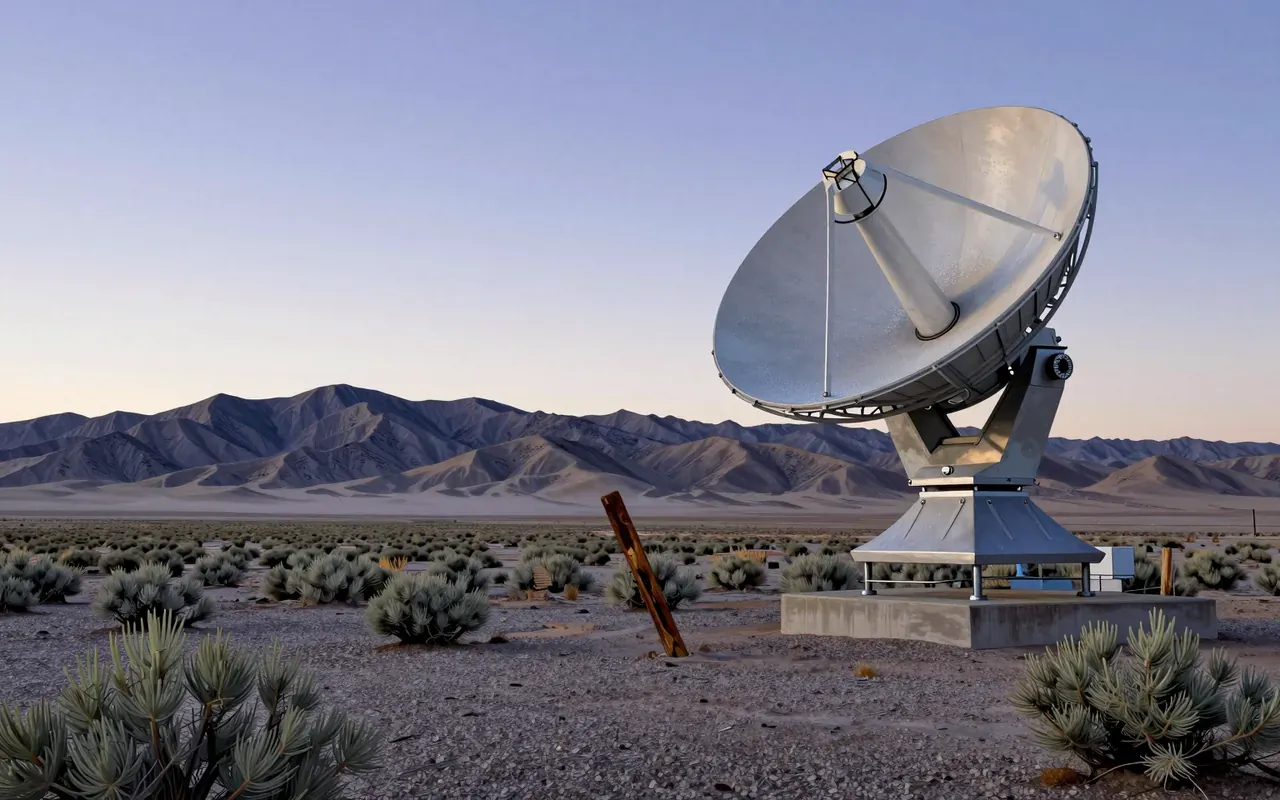
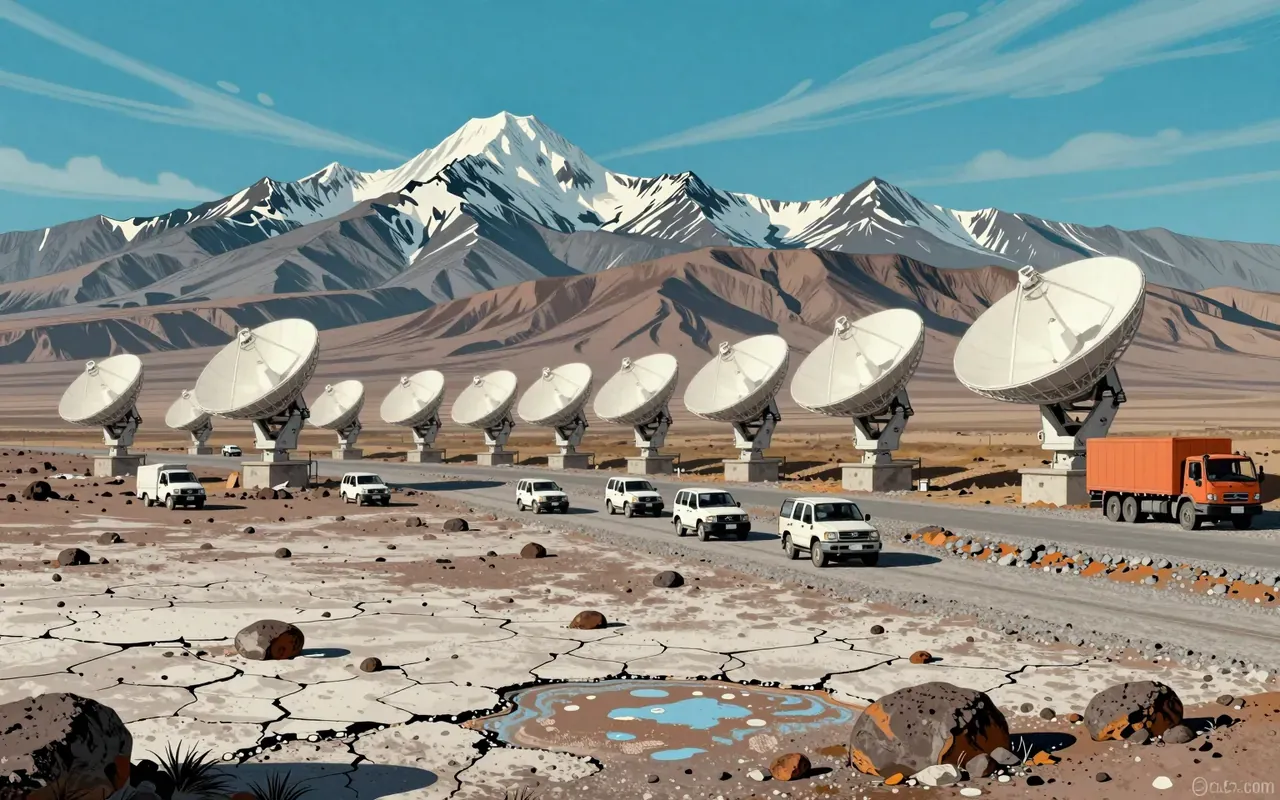
ALMA is an interferometer of 66 radio telescopes operating at wavelengths from 3.6 to 0.32 millimetres. It was built on the 5,000 m Chajnantor plateau in Chile for its high elevation and low humidity. The antennae are movable across distances from 150 m to 16 km to vary resolution. Its high sensitivity comes from the number of antenna dishes.
What holds up
ALMA delivers higher sensitivity and resolution than earlier submillimeter telescopes including the James Clerk Maxwell Telescope, the Submillimeter Array and the IRAM Plateau de Bure facility. It provides insight into star birth during the early Stelliferous era and detailed imaging of local star and planet formation.
What does not
ALMA does not image optical light, nor does it observe exoplanets directly, detect biosignatures, measure cosmic expansion rates, or resolve features smaller than its diffraction limit allows. It establishes no new physical laws, mechanisms or constants.
Why it matters beyond the lab
It matters because star and planet formation governs the distribution of mass, chemistry and habitability in galaxies. ALMA’s data constrain models of how molecular clouds collapse, how protoplanetary discs evolve, and how early galaxies assembled stars — but only within its wavelength, resolution and redshift limits.
Is it worth your time
Yes — if you need millimetre- and submillimetre-wavelength imaging of star and planet formation, or early-universe star birth. No — if your work operates outside those bands, epochs or physical scales.