sciencebriefs
Topic

Cosmology

The universe as a whole, reconstructed from very old light.
22
in science
10:47
average
237 min
in total
31
across the network
Cosmology across the network →
All briefs22
11:02

Nuclear fusion

Fusion was solved for stars in 1939—not for power plants, and not by engineers.
9:36

Space

Space is not empty. It bends, ripples, expands—and you’re standing inside a four-dimensional object you can’t see.
9:49

Albert Einstein

Einstein didn’t prove relativity — he rebuilt physics from scratch using pens, paper and postulates.
13:00

Cosmic inflation

Alan Guth's 1980 fix for three specific puzzles about the early universe made a precise prediction that satellites later confirmed, and it also implies an eternally inflating multiverse that one of the theory's own inventors now argues against.
11:03

Edwin Hubble

Hubble didn’t prove the universe is expanding — he proved galaxies are islands, and that they flee each other in proportion to distance.
9:50

Georges Lemaître

Lemaître didn’t discover the Big Bang — he built its first mathematical scaffold, and it still holds.
13:00

Hubble's law

Hubble's 1929 pairing of galaxy distances with their redshifts became the observational basis for cosmic expansion, though his own constant was wrong by nearly a factor of seven and its modern successor is still disputed.
10:15

Roger Penrose

Penrose didn’t find black holes—he proved they’re unavoidable if Einstein was right.
9:49

Stephen Hawking

Hawking didn’t prove black holes radiate—he proved they must, if quantum theory and gravity coexist at all.
13:00

Large-scale structure of the universe

Mapping galaxy positions in three dimensions revealed a vast web of filaments and voids, a structure dark-matter simulations had already anticipated, though the largest structures found still test how uniform the universe is supposed to be.
13:00

Holographic principle

A puzzle about black hole entropy scaling with surface area, not volume, led to the idea that a region of space might be fully described by information on its boundary, and Juan Maldacena's 1997 conjecture gave that idea its clearest, still unproven, form.
11:40

Hubble Deep Field

The Hubble Deep Field didn’t reveal the early universe — it revealed how little we knew about galaxy assembly before we counted them properly.
10:16

Vera Rubin

Rubin didn’t find dark matter — she proved galaxies shouldn’t hold together without it.
9:30

Wendy Freedman

She pinned down how fast the Universe expands — not with theory, but with stars as rulers.
7:40

Accelerating expansion of the universe

Perlmutter, Riess and Schmidt · 1990

The 1998 supernova measurements established cosmic acceleration via distance–redshift mismatch — not theory, not analogy, but empirical inference from standard candles. It overturned the assumption of gravitational deceleration. It did not identify dark energy. It did not prove Λ. It remains the strongest direct evidence for accelerated expansion — and the clearest signal of our ignorance about 70% of reality.
8:28

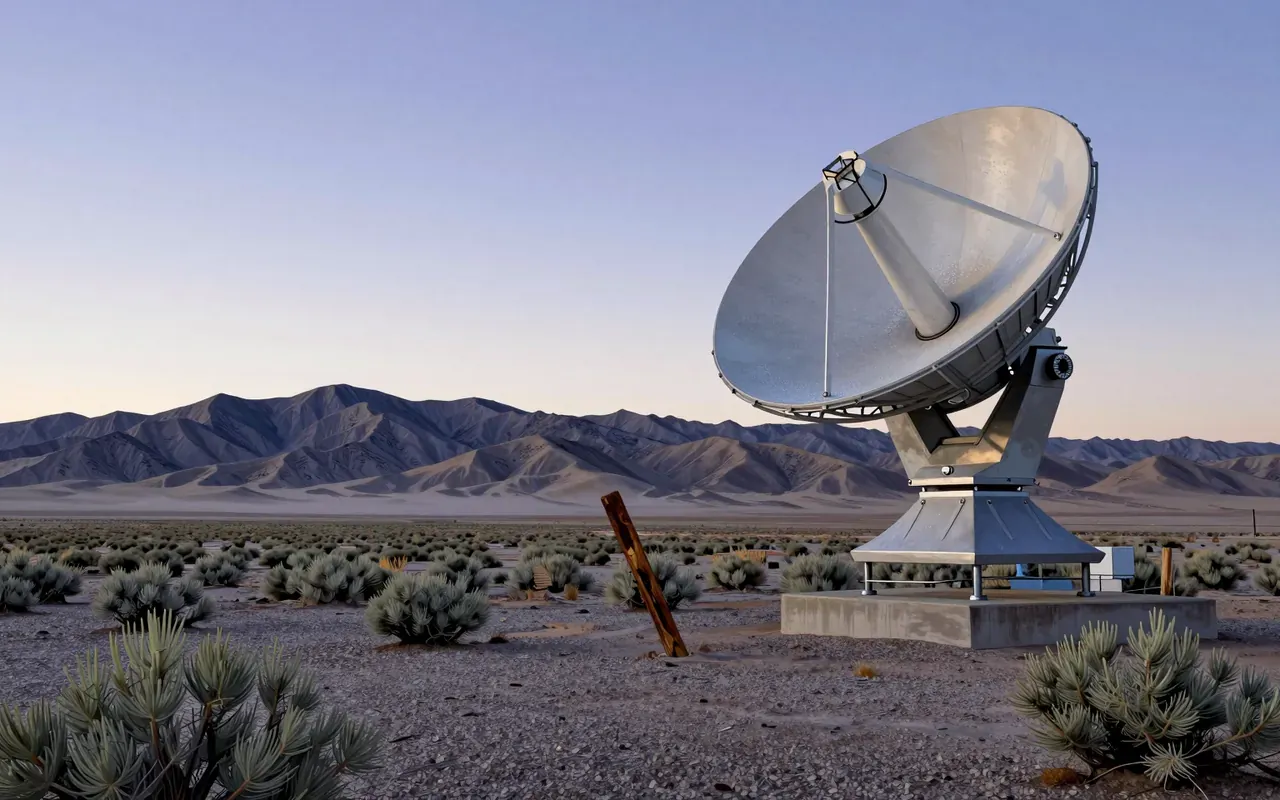
Discovery of cosmic microwave background radiation

Penzias and Wilson

Penzias and Wilson discovered a 3.5 K isotropic microwave background in 1964 using the Holmdel Horn Antenna at Bell Labs. They eliminated local interference — including pigeon droppings — and confirmed the signal originated outside the Milky Way. Its match to Dicke’s prediction prompted interpretation as the Big Bang’s remnant. But the work itself claimed only a persistent, unexplained antenna temperature — not cosmology.