sciencebriefs
all subjects →
8:28in productionCh. 1 · The number/ 8:28 · ceiling 15 min
Astronomy & space · Physics

Discovery of cosmic microwave background radiation

They didn’t find the Big Bang — they found stubborn noise, cleaned out pigeons, and handed cosmology its first hard number.

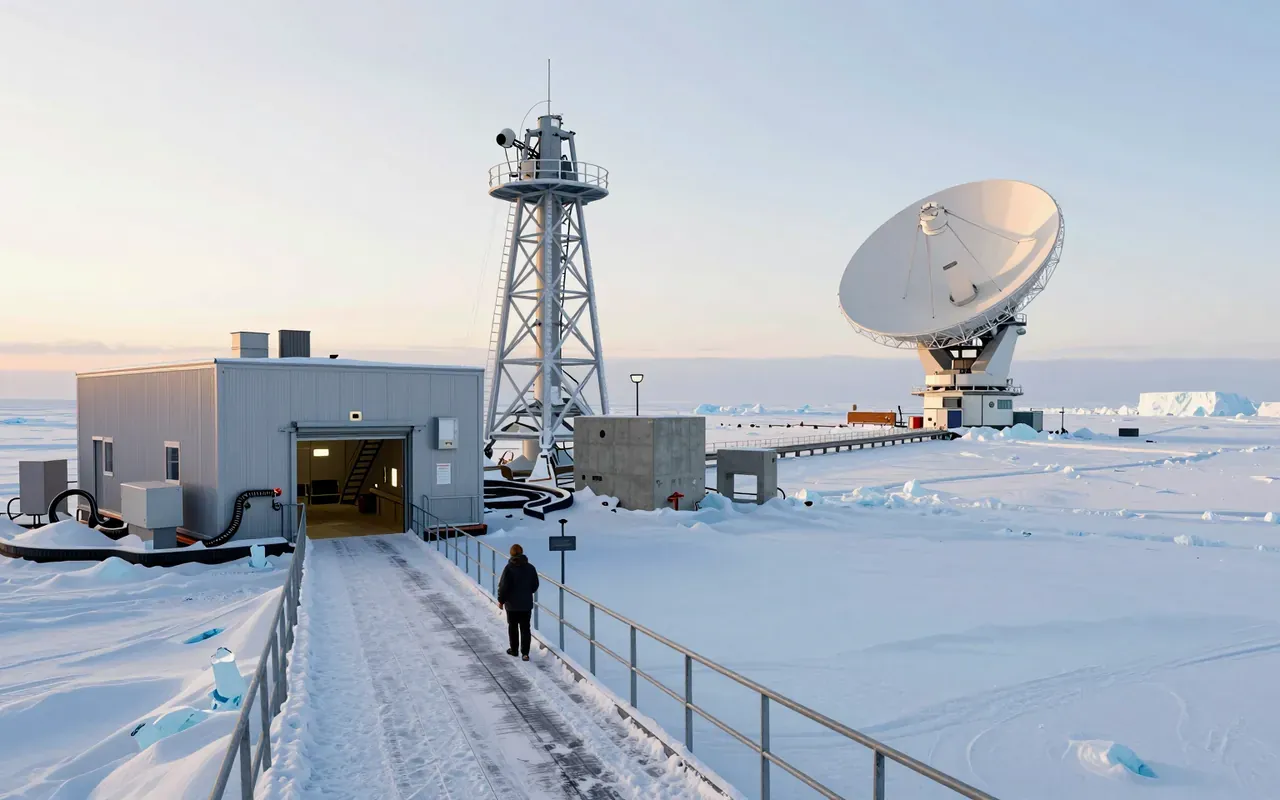
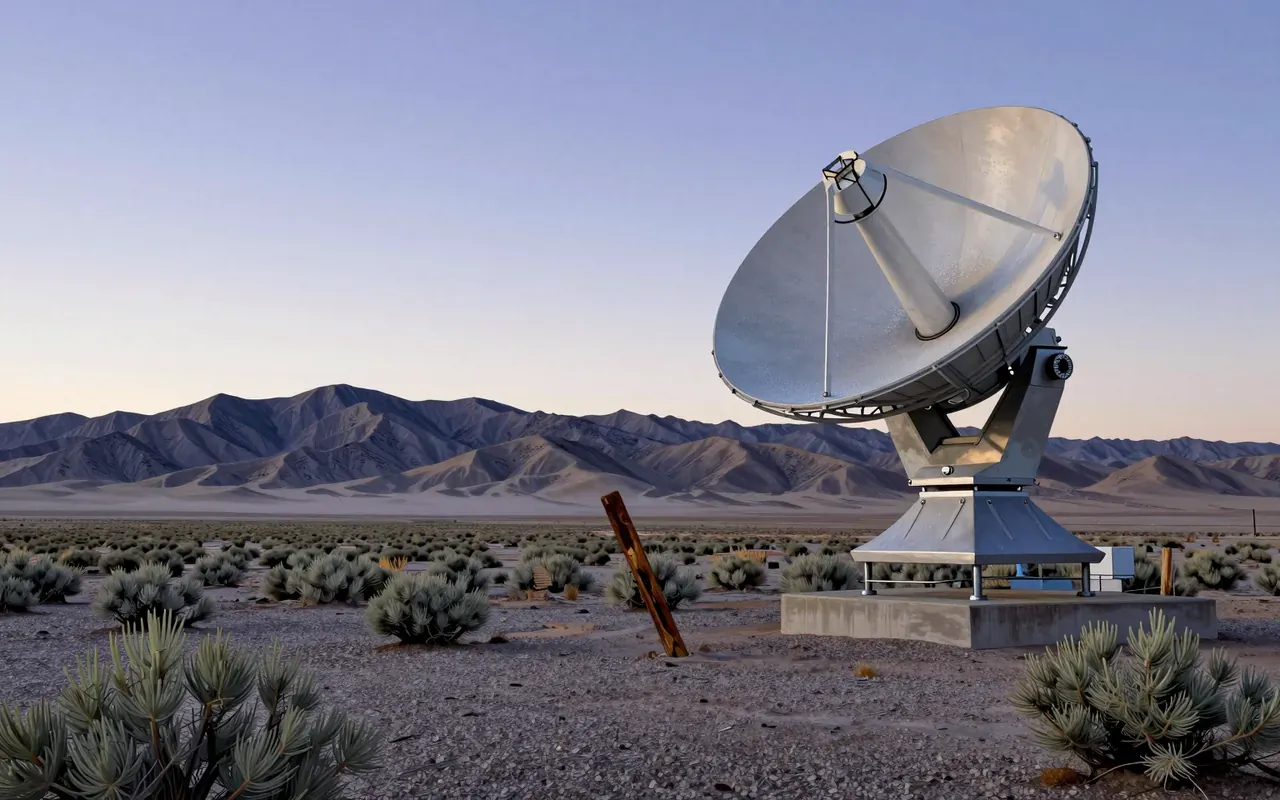
Penzias and Wilson discovered a 3.5 K isotropic microwave background in 1964 using the Holmdel Horn Antenna at Bell Labs. They eliminated local interference — including pigeon droppings — and confirmed the signal originated outside the Milky Way. Its match to Dicke’s prediction prompted interpretation as the Big Bang’s remnant. But the work itself claimed only a persistent, unexplained antenna temperature — not cosmology.

Chapters & takeaways6
  1. 0:47
    The number

    They measured 3.5 K of unexplained antenna temperature at 4080 MHz — after subtracting 2.3 K from sky absorption and 0.9 K from instrument noise.

  2. 1:37
    The signal

    The noise was 100 times stronger than expected, isotropic, and far weaker than Milky Way emission — ruling out galactic origin.

  3. 2:27
    The pigeons

    They ruled out interference by cleaning pigeon and bat droppings — 'white dielectric material' — and confirming the noise remained.

  4. 3:28
    The match

    The radiation came from outside the Milky Way, matched Dicke’s prediction exactly, and had no known astrophysical source.

  5. 4:30
    The interpretation

    Dicke, Peebles, Wilkinson and Roll interpreted it as the Big Bang’s remnant; Penzias and Wilson published observations only, side-by-side in the Astrophysical Journal.

  6. 5:35
    The apparatus

    They built the most sensitive antenna/receiver system of its kind in 1964 — cryogenic, microwave-optimised, and purpose-built for radio astronomy.

Worth your time?

Yes. Study the whole thing.

4.5/ 5
What works
  • established the first empirical anchor for hot Big Bang cosmology
  • transformed cosmology into a quantitative, testable science
  • demonstrated how meticulous instrumentation and elimination of error can yield foundational insight
What does not
  • prove the Big Bang
  • measure recombination
  • confirm Alpher–Herman–Gamow’s 5 K prediction quantitatively
  • rule out all alternative cosmologies on its own
Study it if
  • anyone who treats data as evidence, not authority
  • anyone who wants to see how a single calibrated measurement can anchor decades of theory
Skip it if
  • those expecting narrative closure or definitive proof
  • those who conflate detection with interpretation
The written brief1 min read

What the work claims

Penzias and Wilson claimed only to have measured a 3.5 K residual antenna temperature — an unexplained, isotropic, low-energy background noise — and suggested it might be cosmologically significant. They did not claim discovery of the Big Bang remnant; that interpretation came from Dicke, Peebles, Wilkinson and Roll in the companion letter.

How it was done

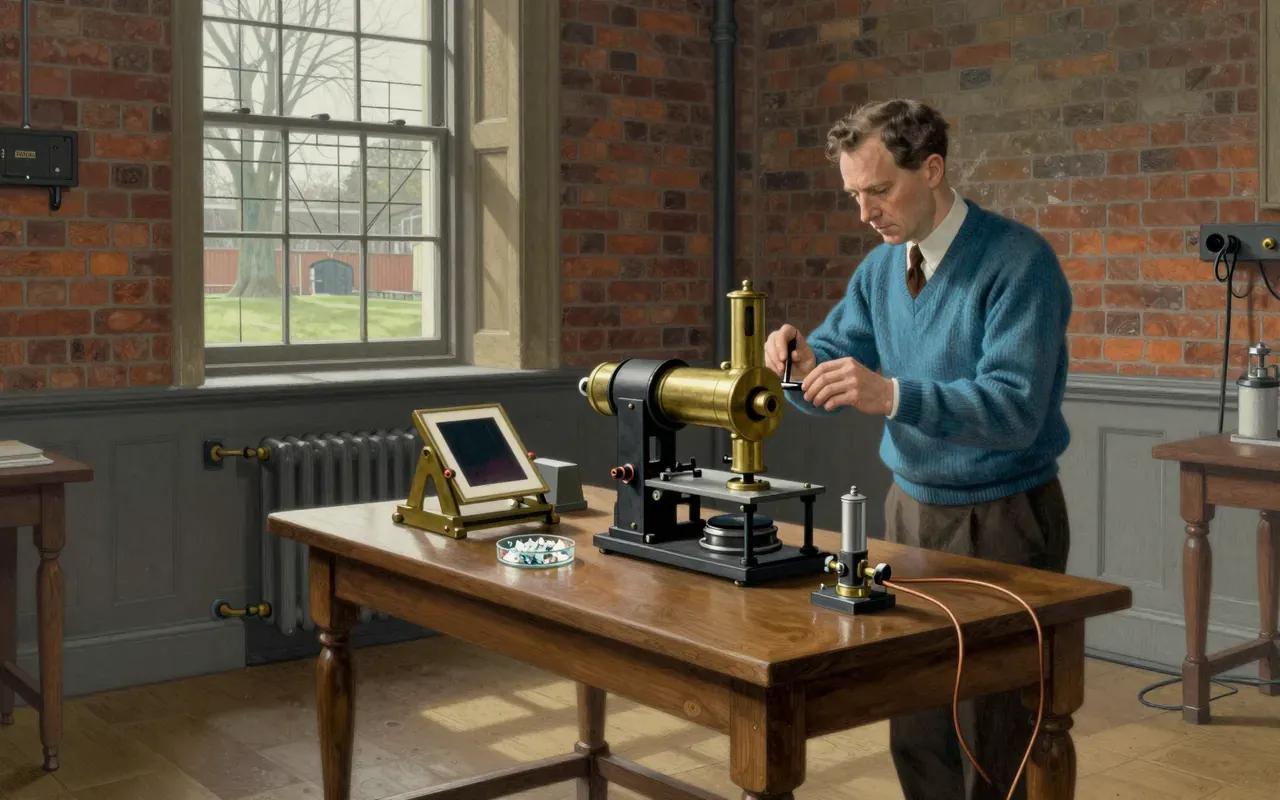
Penzias and Wilson used the Holmdel Horn Antenna and ultra-sensitive cryogenic microwave receivers at Bell Telephone Laboratories in 1964. They measured isotropic radio noise at 4080 MHz (7.35 cm wavelength), after eliminating local interference—including pigeon and bat droppings—and subtracting instrumental (0.9 K) and atmospheric (2.3 K) components.

What holds up

The detection is robust: isotropic, extragalactic, unexplained by terrestrial, solar, or galactic sources, and persistent after exhaustive removal of contamination and calibration corrections. Its match to Dicke et al.’s predicted spectrum and temperature alignment was exact enough to prompt immediate cosmological interpretation.

What does not

It does not prove the Big Bang. It does not measure expansion, nucleosynthesis, or recombination. It does not confirm Alpher–Herman–Gamow’s 1940s prediction quantitatively — their estimate was ~5 K; Penzias and Wilson reported 3.5 K — and the material does not state whether this discrepancy was resolved, reconciled, or acknowledged in the joint publication.

Why it matters beyond the lab

It shifted cosmology from speculation to empirical testability. The CMB became a quantitative probe — not just of origin, but of geometry, composition, and evolution — enabling precision tests that later missions (COBE, WMAP, Planck) would extend, all rooted in this single calibrated measurement.

Is it worth your time

Yes. It is the first direct observational evidence consistent with a hot, dense early universe — not proof of the Big Bang, but a decisive constraint that ruled out steady-state alternatives at the time.
Same field · Astronomy & space2 of 2
Up next in Science

The Double Helix

Watson, Crick, Franklin and Wilkins · 8:52

Watson and Crick’s story isn’t the discovery — it’s the first spin-off.

8:52