Killing germs already present
By the 1870s, Joseph Lister’s antiseptic method, built around applying carbolic acid to surgical instruments, dressings, hands and the wound itself, had become an established, if still not universally accepted, way of reducing surgical infection. The approach worked by killing microorganisms that were already present at the site of an operation, using a chemical agent as its main tool, and it represented a major improvement over surgical practice that had ignored contamination altogether. It did not, however, address contamination that had not yet occurred, since its entire logic assumed germs would be present and needed to be destroyed rather than kept away in the first place.
A shift toward keeping germs out
A related but distinct approach began developing from the late 1870s: rather than treating contamination once present, some surgeons started working to prevent it from occurring at all. Giuseppe Ruggi published work moving in this direction in 1879, and in 1883 Gustav Adolf Neuber introduced sterile surgical gowns and caps, extending the goal of contamination prevention from the wound and instruments to the clothing worn by the surgical team itself. This shift in emphasis, from chemically destroying germs to physically excluding them, laid the groundwork for what became known as aseptic technique, as distinct from Lister’s antisepsis.
Steam instead of chemicals
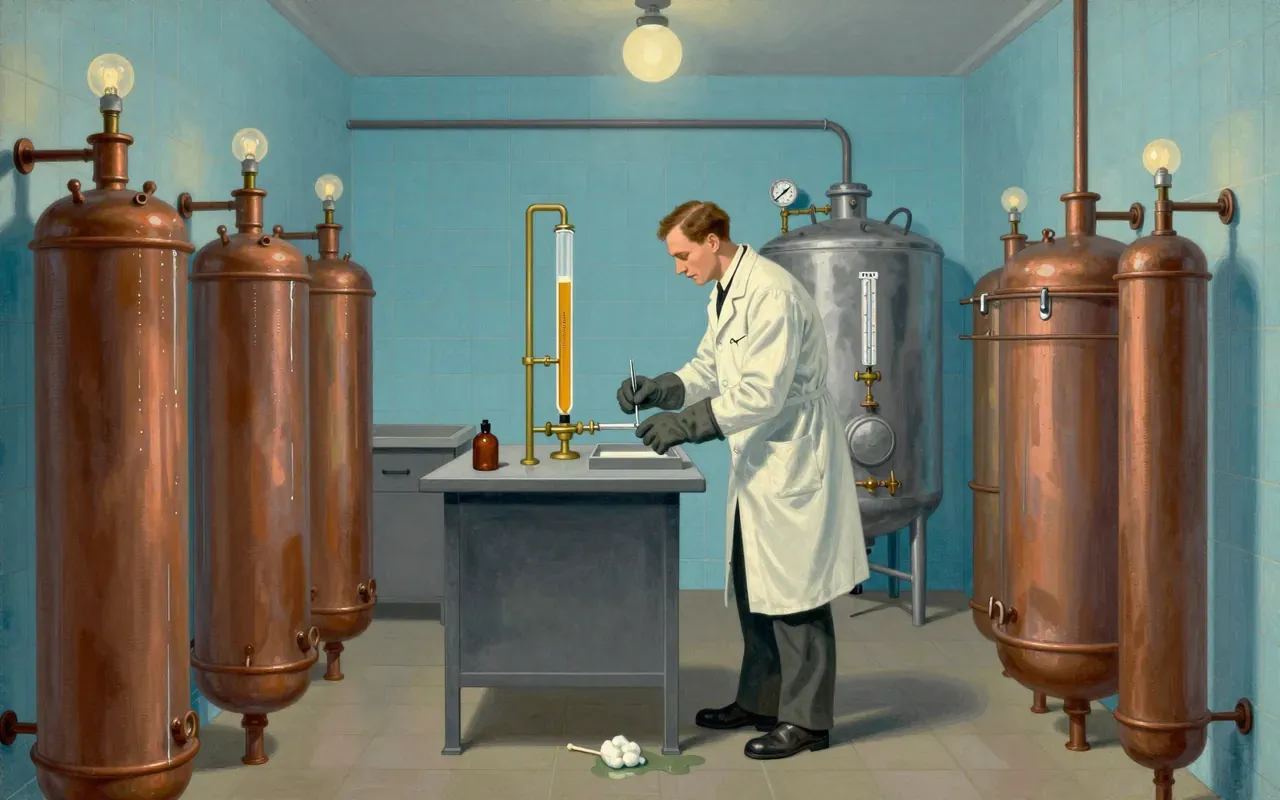
The decisive step in that direction came in 1891, when Ernst von Bergmann, a surgeon who had by then become professor of surgery in Berlin, introduced steam sterilization of surgical instruments and dressings using heat-based equipment that became known as the autoclave. Steam sterilization killed microorganisms more thoroughly and reliably than carbolic acid treatment could, and because it prepared instruments and materials before an operation began rather than during it, it addressed contamination at its source rather than intervening after exposure had already occurred, a genuinely different strategy from Lister’s chemical approach rather than merely an improved version of it.
Gowns, gloves, and a fuller protocol
Asepsis was extended further through the 1890s beyond instruments and dressings to the people performing surgery. William Halsted, working at Johns Hopkins Hospital, introduced rubber surgical gloves after recognising that the harsh chemicals used for hand disinfection, including permanganate and mercury bichloride solutions, were themselves damaging his staff’s skin, and he also required all-white sterile uniforms and strict handwashing routines. Standardisation of glove use in aseptic surgery followed from further work by Joseph Colt Bloodgood and colleagues, completing a protocol that addressed instruments, dressings, clothing and hands as a single, coordinated system rather than separate problems.
A more complete but not a perfect defence
Aseptic technique, once fully assembled from these separate contributions, reduced surgical infection substantially and became the standard framework for how operating theatres are run today, combining sterilisation of equipment, protective clothing, sterile drapes, and controlled surgical fields maintained by dedicated staff. It has not, however, eliminated surgical infection altogether: even with modern aseptic protocols in place, surgical site infections still occur in an estimated one to three percent of operations, commonly caused by bacteria such as Staphylococcus aureus and Escherichia coli, a reminder that asepsis reduces risk substantially without reducing it to zero.
Why the antisepsis-to-asepsis shift is worth knowing
This history is worth understanding because it corrects a common oversimplification, that Lister single-handedly solved surgical infection with carbolic acid, by showing that his antiseptic method was itself superseded by a more thorough aseptic approach built from several separate contributions over subsequent decades. Watching the field move from killing germs already present to preventing their presence altogether, and from a single chemical intervention to a coordinated set of practices covering instruments, clothing and hands, gives a clearer sense of how surgical safety actually improved: not through one final breakthrough, but through a sequence of increasingly complete solutions to the same underlying problem.