sciencebriefs
all subjects →
8:44in productionCh. 1 · The funny colony/ 8:44 · ceiling 15 min
Medicine · Life sciences

Alexander Fleming

Fleming didn’t discover a drug — he discovered a warning system built into microbial ecology.

Fleming’s 1928 observation was narrow, unreplicated in vivo, and clinically inert at the time — yet it encoded three durable truths: microbes can inhibit each other selectively; that inhibition fails if deployment is incomplete; and the agent responsible is both unstable and taxonomically specific. Nothing he did translated directly to therapy. Everything he saw framed the problem correctly.

Chapters & takeaways4
  1. 0:58
    The funny colony

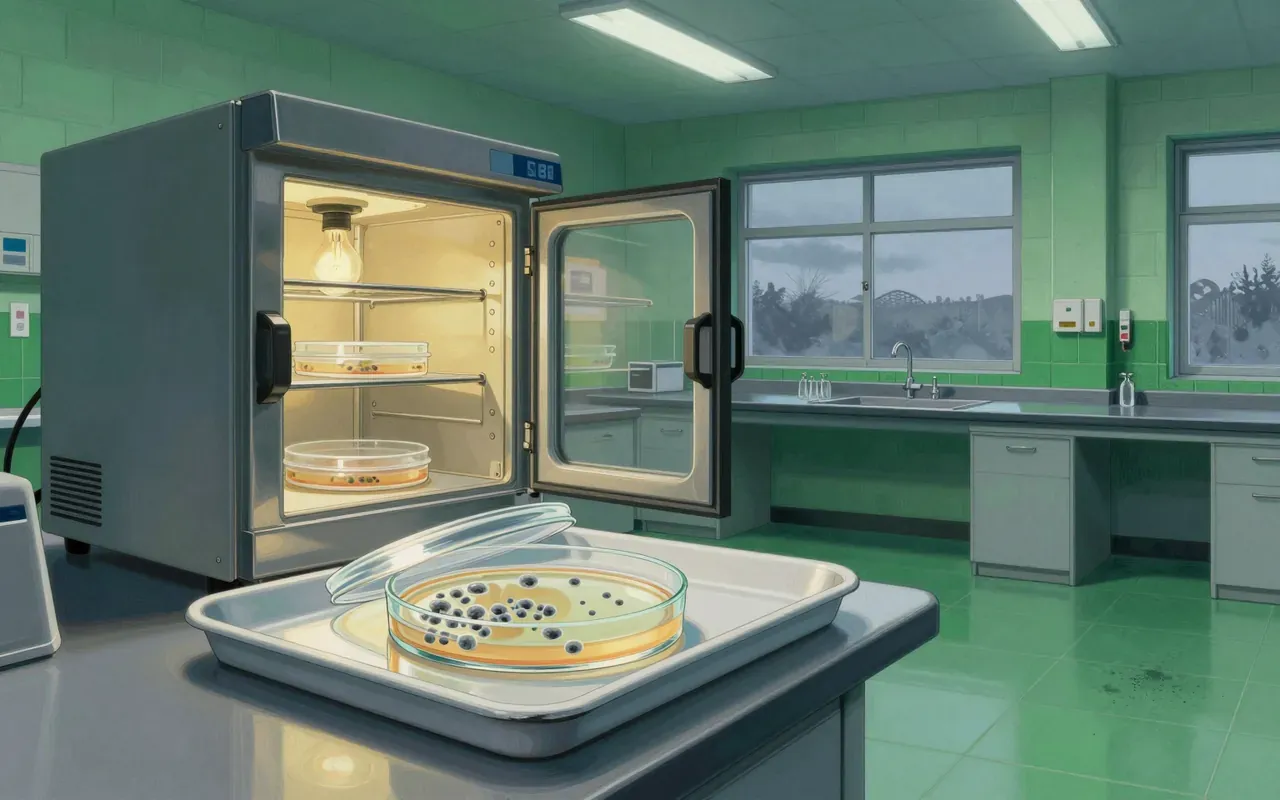
    A contaminated petri dish revealed bacterial lysis — not by chance, but by attentive observation.

  2. 2:10
    The right mould

    The mould was correctly identified as Penicillium rubens — not P. chrysogenum, not P. notatum, but the species now accepted as correct.

  3. 3:34
    Selective, not universal

    Penicillin worked on Gram-positive bacteria and Neisseria gonorrhoeae — but failed against typhoid and paratyphoid bacilli.

  4. 5:03
    The first resistance alert

    Fleming warned in 1929 that low doses and short treatment durations would breed resistance — before penicillin was ever used clinically.

Worth your time?

Yes. Study the whole thing.

4.5/ 5
What works
  • established selective antibacterial activity
  • identified resistance conditions
  • named penicillin
  • characterised spectrum
What does not
  • clinical application
  • purification
  • human trials
  • pharmacokinetics
Study it if
  • historians of science
  • microbiologists
  • antibiotic policy makers
Skip it if
  • patients seeking treatment history
  • general readers expecting a 'discovery-to-cure' narrative
The written brief1 min read

What the work claims

That a substance secreted by Penicillium rubens selectively kills certain bacteria without harming human cells, that this effect is concentration- and duration-dependent, and that misuse invites resistance.

How it was done

Fleming observed a Penicillium rubens contaminant on an agar plate and noted lysis of adjacent Staphylococcus aureus colonies; he isolated the active substance from mould broth, tested it against bacterial cultures, and named it ‘penicillin’ on 7 March 1929.

What holds up

The observation of zone-of-inhibition lysis around P. rubens is directly verified. Penicillin’s selective activity against Gram-positive bacteria (including staphylococci) and Neisseria gonorrhoeae — but not Salmonella typhi or Paratyphi — is confirmed. Fleming’s early warning about subtherapeutic dosing and short duration inducing resistance is documented and prescient.

What does not

Fleming did not purify penicillin to clinical grade. He did not treat human patients with it. He did not establish pharmacokinetics, dosing regimens, or scalable production. His work did not demonstrate efficacy in vivo, nor did it overcome instability or toxicity barriers.

Why it matters beyond the lab

It established the conceptual scaffold for antibiotic discovery: contamination as clue, selective toxicity as goal, and resistance as inevitable consequence of incomplete suppression. Every subsequent antibiotic programme inherits this logic — not its success, but its constraints.

Is it worth your time

Yes — it is the first documented observation of targeted antibacterial activity by a fungal metabolite, and the first identification of conditions that induce resistance. It is foundational to antibiotic science, not because it cured disease, but because it revealed a principle: selective microbial inhibition and its fragility.
Same field · Medicine4 of 23
Up next in Science

AlexNet

· 10:16

Depth won the 2012 ImageNet challenge—not cleverness, not data, not theory, but raw, GPU-fuelled layer count.

10:16