sciencebriefs
all subjects →
10:37in productionCh. 1 · Orbiting Saturn/ 10:37 · ceiling 15 min
Astronomy & space · Physics

Cassini–Huygens

Cassini didn’t just visit Saturn — it proved icy moons can be wet, wild, and chemically alive.

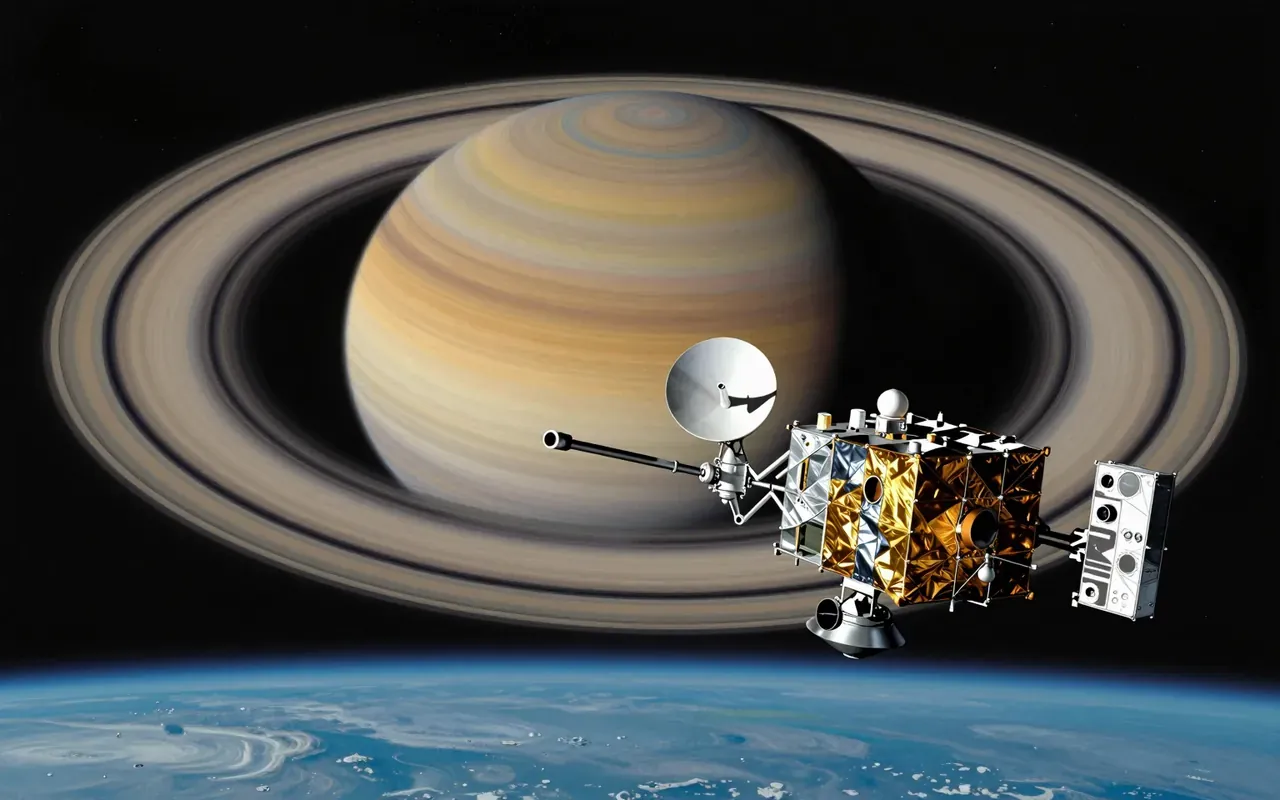
Cassini–Huygens delivered the first orbital survey of Saturn and the first landing in the outer Solar System. It discovered seven new moons, geysers and a salty ocean on Enceladus, and hydrocarbon lakes on Titan. It measured magnetic field deflections, imaged surfaces, and tracked atmospheric composition — but made no claims about life, habitability thresholds, or chemical synthesis. Its legacy is empirical: proving that tidal heating sustains liquid water and surface liquids far from the Sun.

Chapters & takeaways5
  1. 1:08
    Orbiting Saturn

    Cassini was the first spacecraft to orbit Saturn — ending decades of flyby-only exploration.

  2. 2:21
    First Landing Beyond Jupiter

    Huygens landed on Titan on January 14, 2005 — the first and only landing in the outer Solar System.

  3. 3:56
    Enceladus: Geyser Moon, Ocean World

    Cassini saw water-ice geysers on Enceladus and later reported evidence of a large salty internal ocean.

  4. 5:25
    Titan’s Hydrocarbon Lakes

    Radar images from July 21, 2006, revealed liquid hydrocarbon lakes on Titan — the first lakes found beyond Earth.

  5. 7:12
    Seven Moons and an Atmosphere

    Cassini discovered seven new moons and detected a thin but significant atmosphere on Enceladus.

Worth your time?

Yes. Study the whole thing.

4.5/ 5
What works
  • first orbital mission at Saturn
  • first landing in outer Solar System
  • first detection of extraterrestrial hydrocarbon lakes
  • first evidence of subsurface ocean on Enceladus
What does not
  • proof of life
  • measurement of ocean depth or salinity concentration
  • analysis of hydrocarbon composition beyond methane and ethane
  • confirmation of habitability
Study it if
  • planetary scientists
  • astrobiologists
  • space mission designers
Skip it if
  • climate modellers
  • geneticists
  • neuroscientists
The written brief1 min read

What the work claims

Cassini–Huygens claimed orbital access to Saturn, in situ exploration of its moons, and evidence for active planetary processes: atmosphere on Enceladus, subsurface ocean, geysers, and extraterrestrial hydrocarbon lakes.

How it was done

Cassini orbited Saturn from 2004 to 2017. Huygens separated from Cassini on December 25, 2004, and landed on Titan by parachute on January 14, 2005.

What holds up

Cassini was the first spacecraft to orbit Saturn. Huygens achieved the first landing in the outer Solar System and on a moon other than Earth’s Moon. It discovered seven new Saturnian moons. It observed water-ice geysers at Enceladus’s south pole. It found evidence of a large salty internal ocean on Enceladus. It imaged liquid hydrocarbon lakes on Titan — the first such lakes confirmed beyond Earth.

What does not

The mission did not confirm life, habitability, or surface conditions beyond Titan’s lakes and Enceladus’s ocean. It did not measure ocean depth, salinity concentration, or hydrocarbon composition beyond identifying methane and ethane.

Why it matters beyond the lab

It redefined where liquid water and organic chemistry coexist in the Solar System — shifting astrobiological focus from Mars to icy moons. It demonstrated that small, distant bodies can sustain internal heat, geysers, and global oceans without stellar proximity.

Is it worth your time

Yes. It delivered direct measurements from Saturn’s system — including the first landing beyond the inner Solar System — and transformed Enceladus and Titan from icy dots into geophysically active worlds with liquid reservoirs.

Same field · Astronomy & space4 of 50
Up next in Science

Charles Darwin

· 10:48

Darwin did not discover evolution — he discovered how it works, and why it must be true.

10:48