Gravity without a force
General relativity’s claim is that gravity is not a force pulling objects toward each other but a consequence of geometry: matter and energy curve spacetime, and objects moving through that curved spacetime follow paths that look, locally, like the effect of a gravitational pull. Einstein built the theory on the equivalence principle, the observation that acceleration and gravity are locally indistinguishable, illustrated by an observer in free fall feeling no gravity at all. The field equations he presented to the Prussian Academy in November 1915 tie the curvature of spacetime directly to the energy, momentum and stress present within it. The often-quoted summary is that spacetime tells matter how to move, and matter tells spacetime how to curve.
An anomaly Newton could not explain
The theory’s first success was explaining something already known but unexplained: the perihelion of Mercury, the point in its orbit closest to the sun, advances slightly more with each orbit than Newtonian gravity predicts. Einstein showed that general relativity accounted for this anomalous advance without introducing any adjustable parameter to force the fit, a result that suggested the theory was more than a mathematical curiosity. Karl Schwarzschild found the first exact solution to Einstein’s equations in 1916, describing the spacetime around a single spherical mass, work done while serving on the German front during the First World War. For several years afterward, though, the theory remained a marginal, mostly theoretical interest within physics.
A war-delayed eclipse expedition
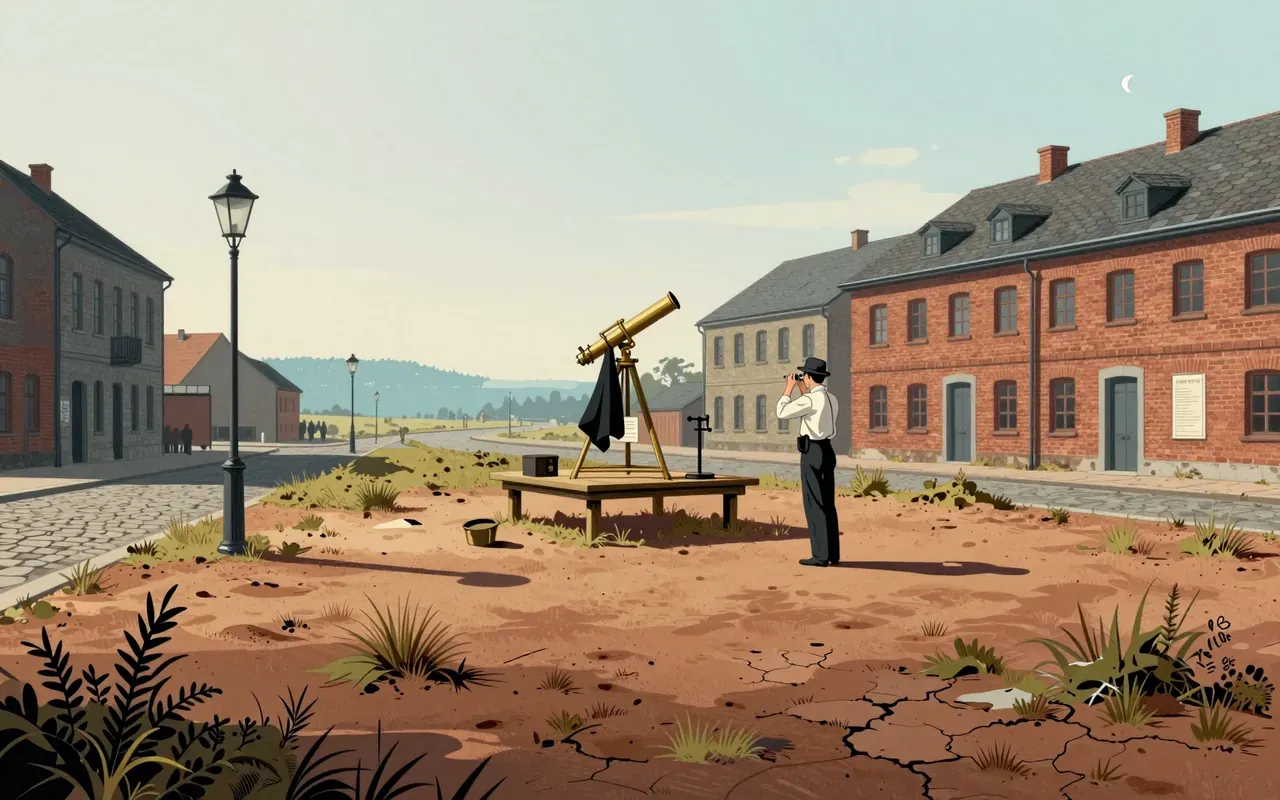
What has held up is the theory’s central prediction that massive objects bend the path of light passing near them. In 1919, an expedition led by Arthur Eddington observed stars near the sun during a total solar eclipse and found their apparent positions shifted by an amount matching general relativity’s prediction rather than the smaller Newtonian estimate. The result was presented jointly to the Royal Society and the Royal Astronomical Society that November and made Einstein famous well beyond physics. Later decades, sometimes called relativity’s golden age, added gravitational redshift measured both in the laboratory and astronomically, gravitational time dilation confirmed with atomic clocks, and tests using binary pulsars that probe stronger gravitational fields than the solar system offers.
A century of further tests
The theory’s most direct and recent confirmation came from LIGO’s detection of gravitational waves, ripples in spacetime itself, produced by violent events such as merging black holes, with results consistent with general relativity’s predictions. None of these tests, across more than a century and vastly different physical regimes, has found a contradiction that would force the theory to be abandoned. What general relativity does not do is connect cleanly to quantum mechanics: no consistent theory of quantum gravity yet exists, and the physical meaning of the singularities the equations predict inside black holes, points of infinite curvature, remains unresolved. The theory is complete in the sense of being unfalsified, not in the sense of being finished.
The problem Einstein did not solve
Beyond physics, the practical reach of general relativity is easy to underestimate because it operates invisibly. GPS satellites experience weaker gravity and higher relative speed than receivers on the ground, and without correcting for the resulting time dilation predicted by both relativity theories, positioning would drift by a significant margin within a day. The theory also underlies modern astrophysics’ account of black holes, the expansion of the universe, and the bending of light by galaxies used to map dark matter through gravitational lensing. What began as an abstract claim about geometry replacing force has become a working part of engineering and observational astronomy, applied routinely by people who never touch the field equations themselves.
A theory still doing daily work
Worth the time, because the theory’s confirmations are more varied and more surprising in combination than the phrase spacetime curvature suggests on its own: a planetary orbit’s stubborn anomaly, a wartime eclipse expedition, atomic clocks, and gravitational waves detected a century after they were predicted. The honest ending is that general relativity is not a closed chapter. It has passed every test thrown at it and still cannot be joined to quantum mechanics, and it predicts singularities whose physical reality it cannot itself explain. Readers who want a triumphant, finished story should adjust their expectations; readers who want to see a theory that keeps being tested and keeps holding, without yet being complete, will find this exactly that.