What the work claims
Fossey claimed mountain gorillas were sapient, socially complex, and imperilled by poaching—not tourism alone—and that direct intervention, including anti-poaching patrols and habituation-based observation, could alter their trajectory.
How it was done
Fossey founded the Karisoke Research Center in Ruhengeri province in 1967. She habituated gorillas by mimicking their actions, making grunting sounds, displaying submissive behaviour, and eating local celery. She used noseprint identification—first by sketching, later by camera—and attributed her success to occupational therapy experience with autistic children.
What holds up
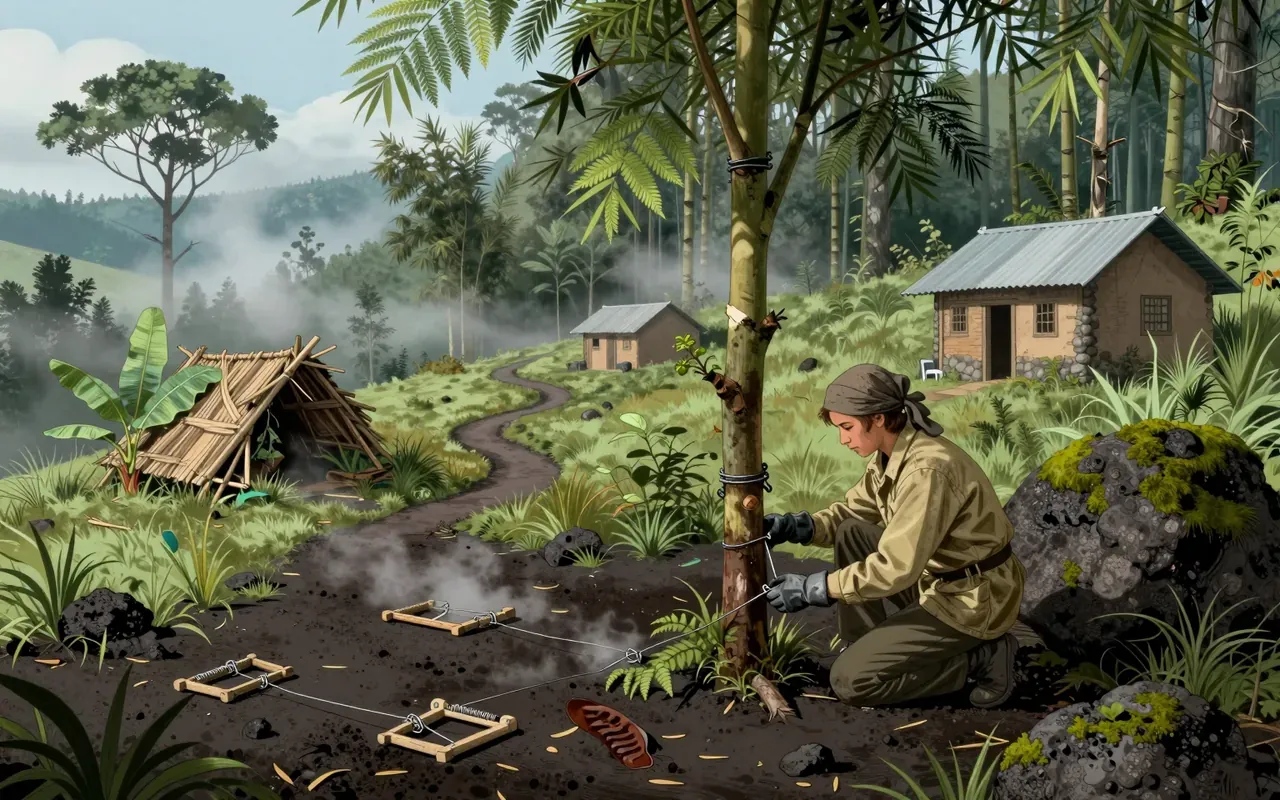
Female transfer between groups, vocalisation patterns, social hierarchies, rare infanticide, diet, nutrient recycling, and trap destruction (987 in four months, 1979) are all verified claims. The reduction in downward population trend is stated as an outcome of her research and conservation work.
What does not
The material does not establish that Fossey proved gorilla sapience, quantified long-term population recovery, or demonstrated the efficacy of anti-tourism policy. It does not report replication of her behavioural findings, nor does it confirm infanticide frequency beyond ‘rare’.
Why it matters beyond the lab
Her ‘active conservation’ model—linking field science to on-the-ground enforcement—reshaped how endangered species work is funded and conducted. It shifted conservation from passive observation to integrated protection, influencing policy in Rwanda and beyond.
Is it worth your time
Yes. Her methods established field protocols still used in primate research. Her conservation interventions produced a measurable reduction in population decline. The work is foundational for ecology and applied conservation—but only where its narrow scope and unreplicated claims are acknowledged.