sciencebriefs
all subjects →
11:05in productionCh. 1 · The Blank Species/ 11:05 · ceiling 15 min
Ecology

Biruté Galdikas

Fieldwork isn’t quaint — it’s the only way to document what no camera trap or genome ever will.

Biruté Galdikas’s fieldwork established the first major scientific understanding of wild orangutans — transforming them from the least understood great ape into a well-documented species through the world’s longest continuous mammal study led by a single investigator.

Chapters & takeaways4
  1. 1:08
    The Blank Species

    Before Galdikas, orangutans were scientifically invisible.

  2. 2:56
    From Myth to Measurement

    She turned speculation into documentation — one observation, one birth, one eight-year cycle at a time.

  3. 5:15
    The Longest Lens

    Her dataset is not just long — it’s among the most comprehensive for any wild great ape.

  4. 7:20
    Forty Years, One Scientist

    No other mammal study has run longer under a single lead investigator.

Worth your time?

Yes. Study the whole thing.

4.5/ 5
What works
  • redefined baseline knowledge of a great ape
  • set a new standard for longitudinal field data
  • proved duration matters more than scale in some behavioural studies
What does not
  • proves conservation efficacy
  • measures genetic variation
  • establishes causality in behaviour
  • quantifies population trends
Study it if
  • ecologists
  • conservation biologists
  • field methodologists
Skip it if
  • geneticists
  • policy analysts
  • climate modellers
The written brief1 min read

What the work claims

That sustained field observation could generate foundational knowledge about an entire great ape species — its reproductive rhythm, social structure, and ecological niche — where none existed before.

How it was done

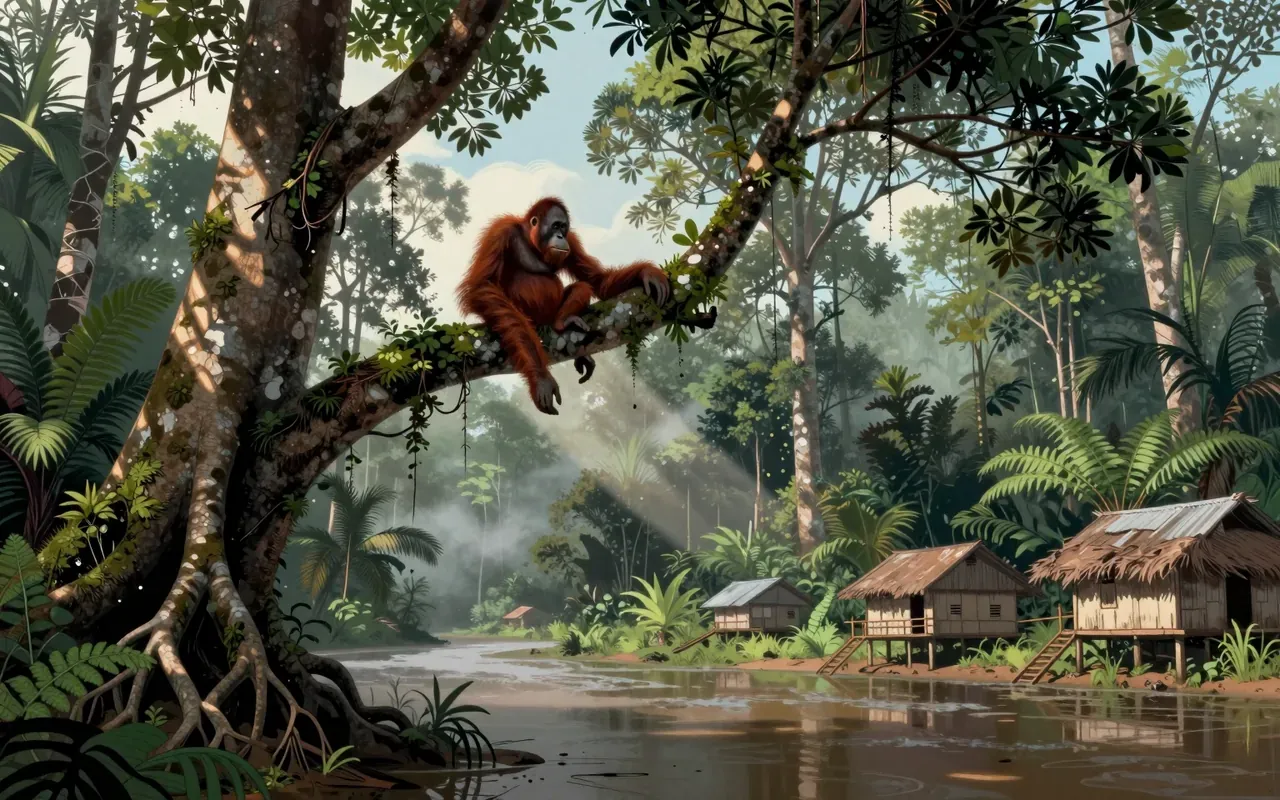
Biruté Galdikas conducted the first major field study of orangutans at Camp Leakey in Borneo. She worked as a primatologist affiliated with Simon Fraser University. Her research was observational and longitudinal, carried out continuously over decades.

What holds up

Her study transformed orangutans from the least understood great ape into a well-documented species. It produced one of the most comprehensive longitudinal datasets on a wild great ape population. It was the world’s longest continuous mammal study led by a single principal investigator.

What does not

The material does not establish that her work proved evolutionary relationships, changed conservation policy, identified genetic mechanisms, or measured population decline. It says nothing about habitat loss, extinction risk, or intervention outcomes.

Why it matters beyond the lab

It demonstrated that long-term, site-specific fieldwork remains irreplaceable for understanding complex animal behaviour — especially for solitary, low-density species ignored by short-term studies.

Is it worth your time

Yes. It redefined what is knowable about a great ape through sustained, on-the-ground observation — not lab work, not theory, but endurance in the forest.


Same field · Ecology4 of 16
Up next in Science

Brahmagupta

· 10:08

Brahmagupta didn’t invent zero — he made it calculate.

10:08