What the work claims
Fermi claimed to have synthesised new elements beyond uranium by neutron bombardment of thorium and uranium.
How it was done
Fermi bombarded thorium and uranium with slow neutrons. He used neutron irradiation to induce radioactivity. He developed the Fermi age equation to model neutron diffusion.
The route into neutron work was indirect. In January 1934 Irène Joliot-Curie and Frédéric Joliot announced that they had induced radioactivity with alpha particles, and Fermi decided to switch to experimental physics using the neutron, which Chadwick had discovered in 1932. Neutrons carry no electric charge, so they are not deflected by the positively charged nucleus and need much less energy to penetrate it than charged particles do. That mattered because the Rome group had no particle accelerator.
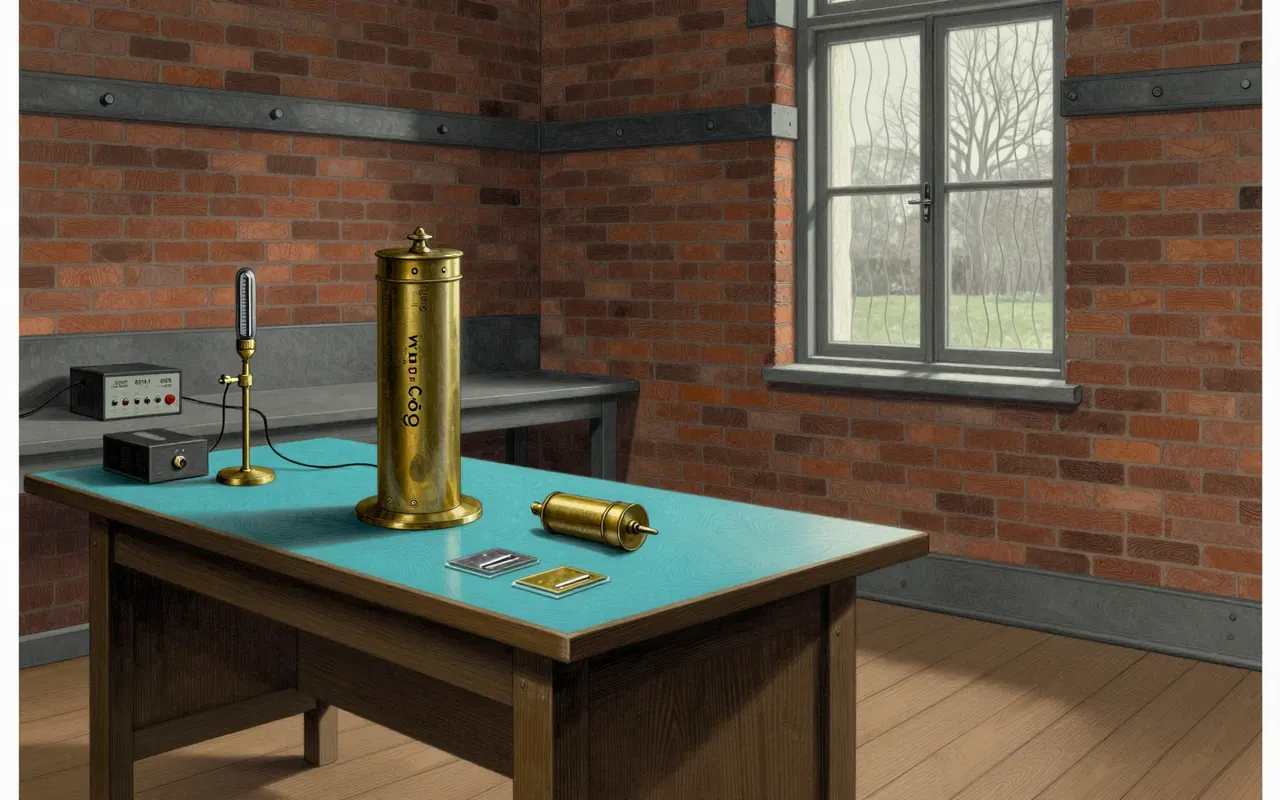
Fermi made a stronger source by filling a glass bulb with beryllium powder and adding 50 mCi of radon gas, an arrangement whose effectiveness declined with the radon’s 3.8-day half-life. He tried platinum and lead without success, but aluminium and fluorine worked, and in all induced radioactivity in 22 different elements. He reported neutron-induced radioactivity in La Ricerca Scientifica on 25 March 1934.
The slow neutrons followed from an unexplained effect: the experiment seemed to work better on a wooden table than on a marble one. Remembering that paraffin wax was known to slow neutrons, Fermi tried it, and neutrons passed through paraffin induced a hundred times as much radioactivity in silver. He guessed the hydrogen atoms were responsible, and repeating the effect with water confirmed it.
What holds up
Slow neutrons are more readily captured by atomic nuclei than fast ones. This enables induced radioactivity and nuclear reactions. The Fermi age equation correctly models neutron diffusion.
Collisions with hydrogen slow neutrons, and the lower the atomic number of the nucleus a neutron hits, the more energy it loses per collision and so the fewer collisions are needed to slow it. The Nobel citation in 1938 named both his demonstrations of new radioactive elements produced by neutron irradiation and his discovery of nuclear reactions brought about by slow neutrons. His work on the effects of slow neutrons has stood the test of time.
What does not
Fermi did not create new transuranic elements. His conclusion that he had done so was incorrect. The observed products were fission fragments, not heavier elements.
After eliminating elements lighter than uranium but heavier than lead, Fermi concluded he had created new elements, which he called ausenium and hesperium. The chemist Ida Noddack suggested some of the products could be lighter elements rather than heavier ones. Her suggestion was not taken seriously at the time: her team had done no experiments with uranium, and fission was thought improbable if not impossible on theoretical grounds. Nobody expected neutrons to have enough energy to split a heavy atom into two light fragments.
Fermi had dismissed the possibility of fission on the basis of his calculations, without taking into account the binding energy that appears when a nuclide with an odd number of neutrons absorbs an extra neutron. He learned of the discovery of fission in January 1939, soon after reaching New York, following the detection of barium by Otto Hahn and Fritz Strassmann and its interpretation by Lise Meitner and Otto Frisch. The news was a profound embarrassment, since the transuranic elements he had partly been awarded the Nobel Prize for had been fission products. He added a footnote to this effect to his Nobel acceptance speech.
Why it matters beyond the lab
This work enabled controlled nuclear chain reactions. It underpins nuclear energy and weapons. But the initial interpretation obscured fission for years, delaying its recognition.
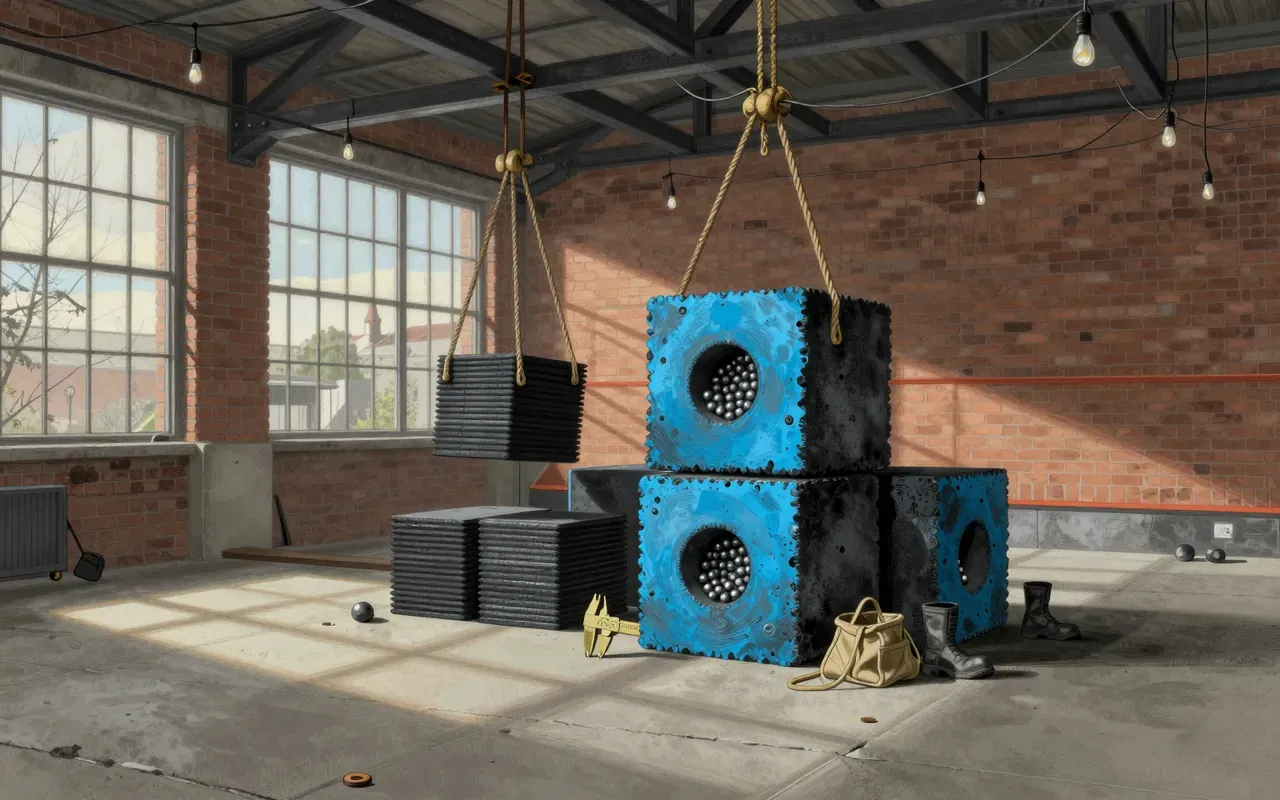
Fermi led the team at the University of Chicago that built Chicago Pile-1, which went critical on 2 December 1942 and demonstrated the first human-created, self-sustaining nuclear chain reaction. Working with Szilárd, he suggested, from his work with neutrons, that uranium oxide blocks with graphite as the moderator rather than water could make a self-sustaining reaction possible. He was also on hand when the X-10 Graphite Reactor at Oak Ridge went critical in 1943.
Is it worth your time
Yes — it is foundational to nuclear physics and reactor design. But its historical interpretation hinges on a misidentification that was only corrected years later.