sciencebriefs
all subjects →
10:18in productionCh. 1 · The First Criticality/ 10:18 · ceiling 15 min
Energy · Physics

Chicago Pile-1

It wasn’t a power plant — it was a proof that humanity could start, stop, and steer the nucleus.

Chicago Pile-1 proved a self-sustaining nuclear chain reaction was possible using natural uranium and purified graphite — nothing more, nothing less.

Chapters & takeaways4
  1. 1:09
    The First Criticality

    CP-1 achieved the first human-made, self-sustaining nuclear chain reaction — a fact, not a claim.

  2. 3:00
    Why Graphite Worked

    Graphite purity and geometry — not just mass — made criticality possible.

  3. 4:50
    Control at Half a Watt

    Control was demonstrated at 0.5 W — no shielding, no cooling, no delay.

  4. 6:30
    From Lab to Bomb Factory

    This experiment directly enabled the plutonium path of the Manhattan Project.

Worth your time?

Yes. Study the whole thing.

4.5/ 5
What works
  • It established controllability of chain reactions.
  • It confirmed graphite as a viable moderator for natural uranium.
  • It enabled the plutonium production path of the Manhattan Project.
What does not
  • It did not generate electricity.
  • It did not test radiation containment.
  • It did not validate reactor longevity or fuel burnup.
Study it if
  • Nuclear historians
  • Physics educators
  • Engineering students studying first-principles design
Skip it if
  • Energy policy analysts seeking modern reactor insights
  • Materials scientists studying contemporary moderators
  • Anyone expecting data on efficiency or safety margins
The written brief1 min read

What the work claims

That a self-sustaining nuclear chain reaction could be initiated, sustained, and controlled using natural uranium and purified graphite — and that such a reaction was physically realisable in practice.

How it was done

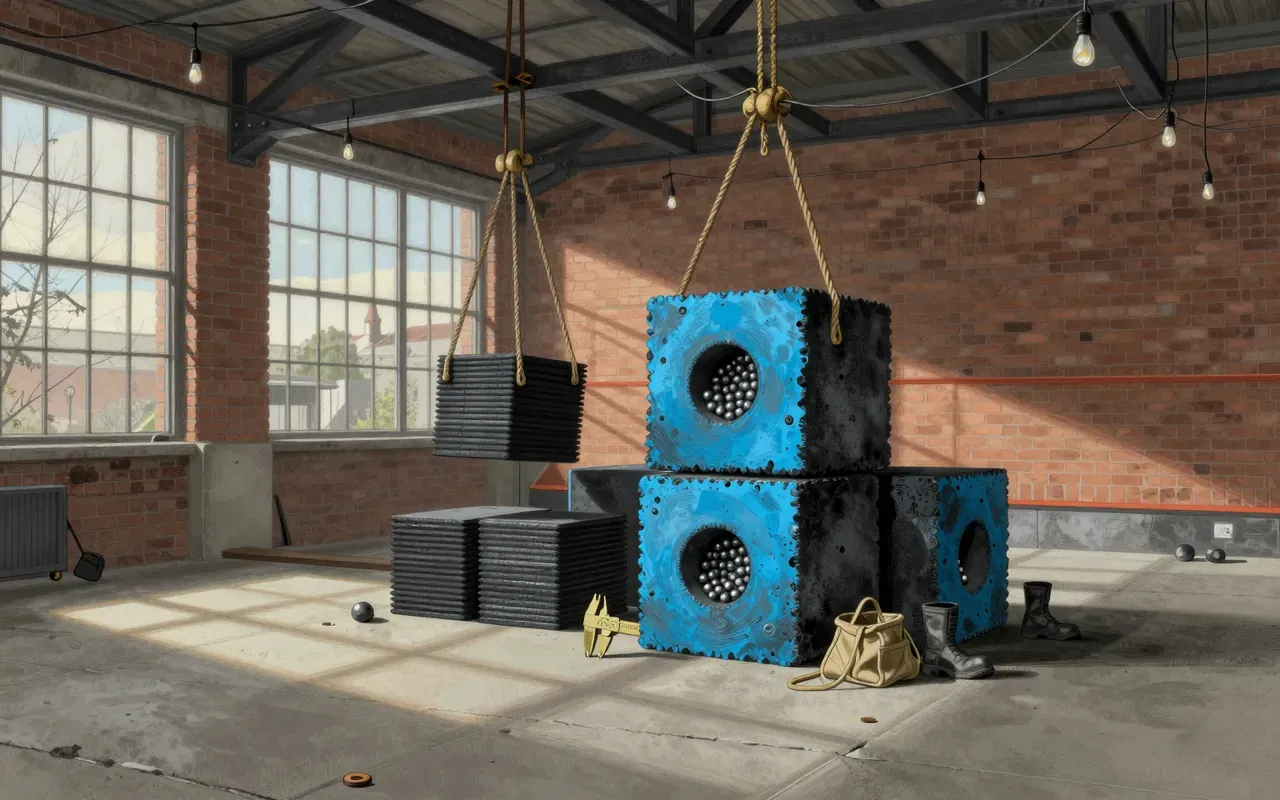
Fermi’s team built a spherical pile of 45,000 ultra-pure graphite blocks — boron- and cadmium-free — and embedded 5.4 short tons of uranium metal and 45 short tons of uranium oxide. Construction began on 6 November 1942. Criticality was reached at 15:25 on 2 December 1942, before the pile was fully completed.

What holds up

It achieved a self-sustaining chain reaction at ~0.5 W. It confirmed graphite’s efficacy as a neutron moderator. It validated Fermi’s k-factor prediction (~1.04) and demonstrated real-time control of neutron multiplication.

What does not

It did not produce usable energy. It had no shielding or cooling. It did not test reactor safety, fuel cycles, or long-term operation. It did not prove scalability, efficiency, or practical power generation.

Why it matters beyond the lab

Its success enabled the Manhattan Project’s plutonium production path. It exposed the German program’s fatal error in rejecting graphite — due to impure samples — cementing graphite’s role in Allied nuclear strategy.

Is it worth your time

Yes. It is the only verified instance of the first human-made self-sustaining nuclear chain reaction — a singular, unrepeatable milestone in applied physics and engineering.

Same field · Energy4 of 5
Up next in Science

Christiaan Huygens

· 10:10

Huygens didn’t just see further—he built the tools, derived the maths, and insisted on mechanism: the first true theoretical physicist.

10:10