From one reaction to millions at once
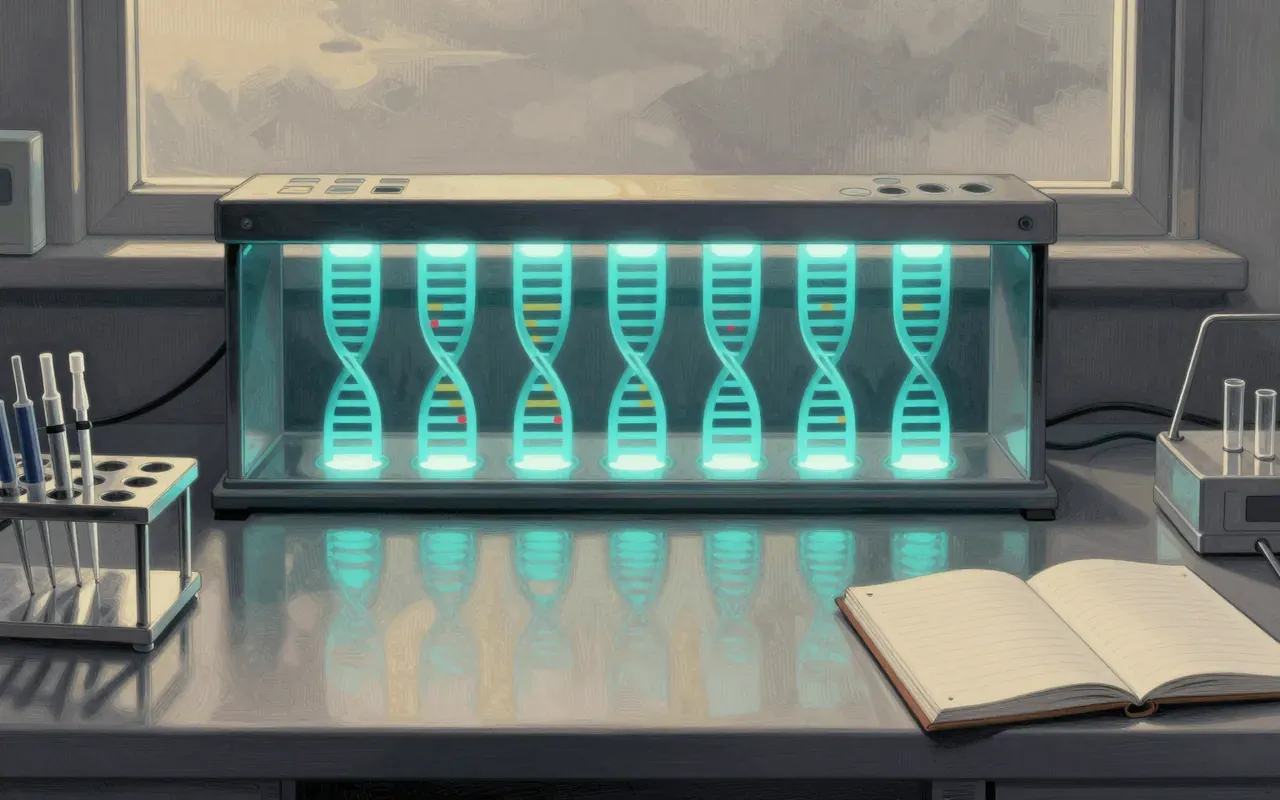
The claim is that DNA sequencing can be made dramatically cheaper and faster by changing the unit of work from a single reaction to millions of them running side by side. Where Sanger sequencing reads one set of DNA fragments through electrophoresis at a time, massively parallel sequencing attaches spatially separated, clonally amplified DNA templates, or in some cases single molecules, across a flow cell and reads all of them simultaneously, generating anywhere from roughly a million to tens of billions of short reads, each between about fifty and four hundred bases, in a single instrument run. That shift from sequential to parallel reading is the entire basis for the throughput and cost gains that followed.
A genome project measured in years and millions
The scale of the earlier, one-reaction-at-a-time era is the necessary baseline. The Human Genome Project’s draft sequence, built on Sanger-based methods, was completed in 2003 at around 92% accuracy, following large-scale sequencing trials that the NIH ran around 1990 at an estimated cost of about seventy-five cents per base. Sequencing costs during that period were reported falling from roughly one hundred million dollars in 2001 to about ten thousand dollars by 2011 as the technology improved, and it was not until 2022 that the final, most difficult eight percent of the genome was completed, producing the fully finished reference sequence of 3.1 billion base pairs.
A market that consolidated fast
Massively parallel platforms arrived and reordered the market quickly. Technology of this kind first emerged in the 1990s and became commercially available from around 2005, with 454 Life Sciences launching the GS20, the first commercial next-generation sequencer, in 2003, producing reads of several hundred bases at high accuracy but modest total output per run. Illumina’s Genome Analyzer followed in 2006 with shorter individual reads but far higher total throughput, and the platform’s later instruments, including the HiSeq X Ten in 2014 and NovaSeq in 2017, drove the field toward the long-sought ‘$1,000 genome’ and beyond, with Illumina reported to generate more than ninety percent of global sequencing data by the early 2020s as competing platforms such as 454 and SOLiD were discontinued.
What shorter, faster reads give up
This gain in throughput did not come free. Second-generation platforms generally produce reads shorter than the several-hundred-to-thousand-base reads Sanger sequencing could manage, which makes reconstructing repetitive or structurally complex regions of a genome harder, since short overlapping fragments give a computer program less unambiguous information to piece back together. Specific chemistries carried their own weaknesses too — semiconductor-based platforms, for instance, struggled particularly with runs of the same repeated base. These are documented trade-offs rather than fatal flaws, but they explain why ‘sequencing a genome’ does not mean the same thing, in terms of completeness or reliability, on every platform.
The long-read answer to that trade-off
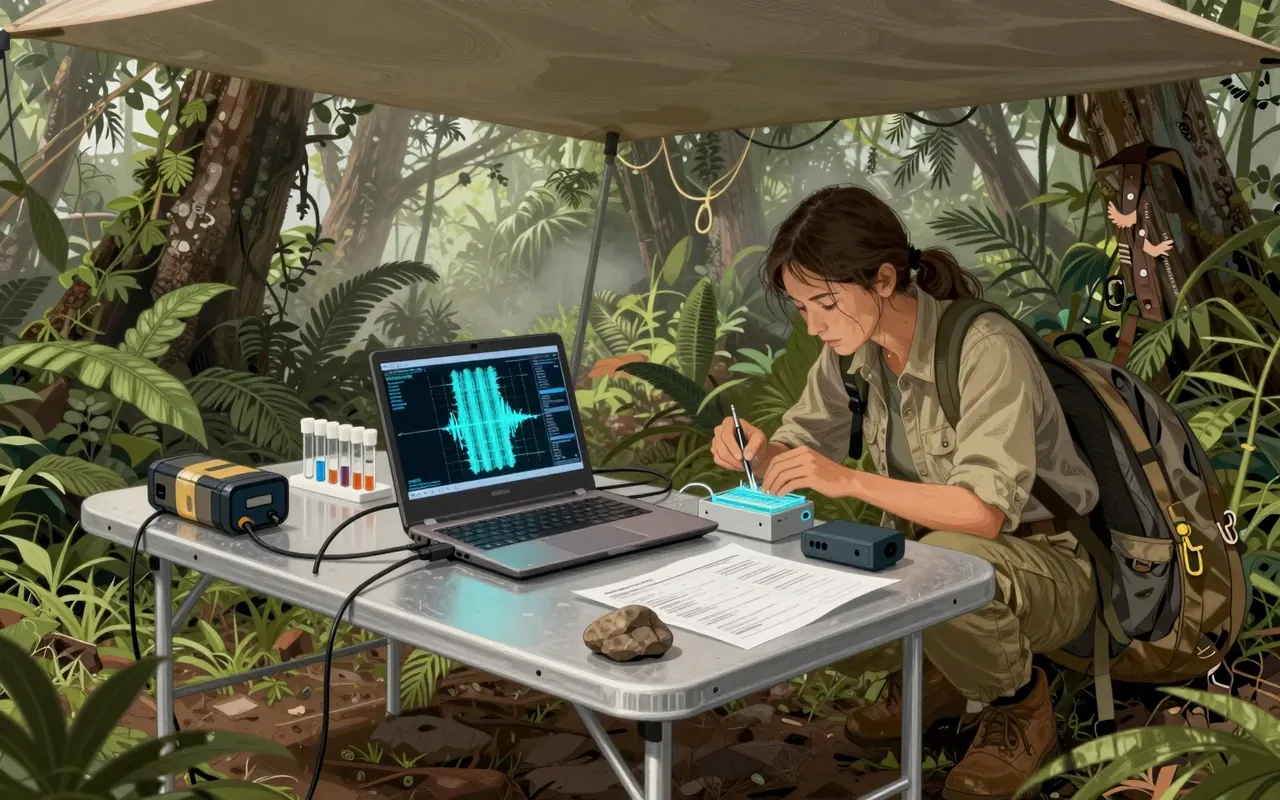
Long-read, third-generation platforms answer that specific weakness rather than the cost question. Pacific Biosciences’ real-time single-molecule method and Oxford Nanopore’s technology can each produce individual reads tens of thousands of bases long, with Nanopore reads reported reaching well over a million bases in some cases, which resolves repetitive stretches that defeat short-read assembly. The cost is a materially lower single-read accuracy than second-generation platforms typically achieve, though consensus accuracy across multiple overlapping long reads can still be very high. Nanopore’s hardware has also become genuinely portable, described as palm-sized, with results streamed in real time rather than produced only at the end of a run.
Worth knowing before trusting a headline genome figure
This is worth understanding less for any single fact than for the habit of scepticism it supports: a stated cost or turnaround time for ‘sequencing a genome’ means very little without knowing which platform produced it and what it traded away to do so. The story is one of competing engineering choices rather than a single decisive breakthrough, and readers who want to follow genomic medicine, agricultural genomics or outbreak surveillance as they are reported in the news will get more out of that context than out of any individual number. It rewards patience with a landscape of platforms rather than a tidy single narrative, but the reward is a much better filter for judging future sequencing claims.