sciencebriefs
all subjects →
11:02in productionCh. 1 · Not the sole cause/ 11:02 · ceiling 15 min
Medicine · Genetics

Aubrey de Grey

A gerontologist broke a 60-year-old maths stalemate—and used graveyard soil to test an anti-ageing idea no one else would touch.

Three distinct contributions: a qualified biomedical hypothesis, a discrete mathematical result, and a small-scale microbiological observation. No single thread unifies them beyond de Grey’s name. Each stands on its own evidence—and its own limits.

Chapters & takeaways4
  1. 1:06
    Not the sole cause

    Mitochondrial damage matters for ageing—but de Grey never claimed it was the only cause.

  2. 3:00
    Five colours, not four

    A single arXiv post raised the lower bound for the Hadwiger–Nelson problem for the first time since the 1950s.

  3. 4:39
    Soil that eats age

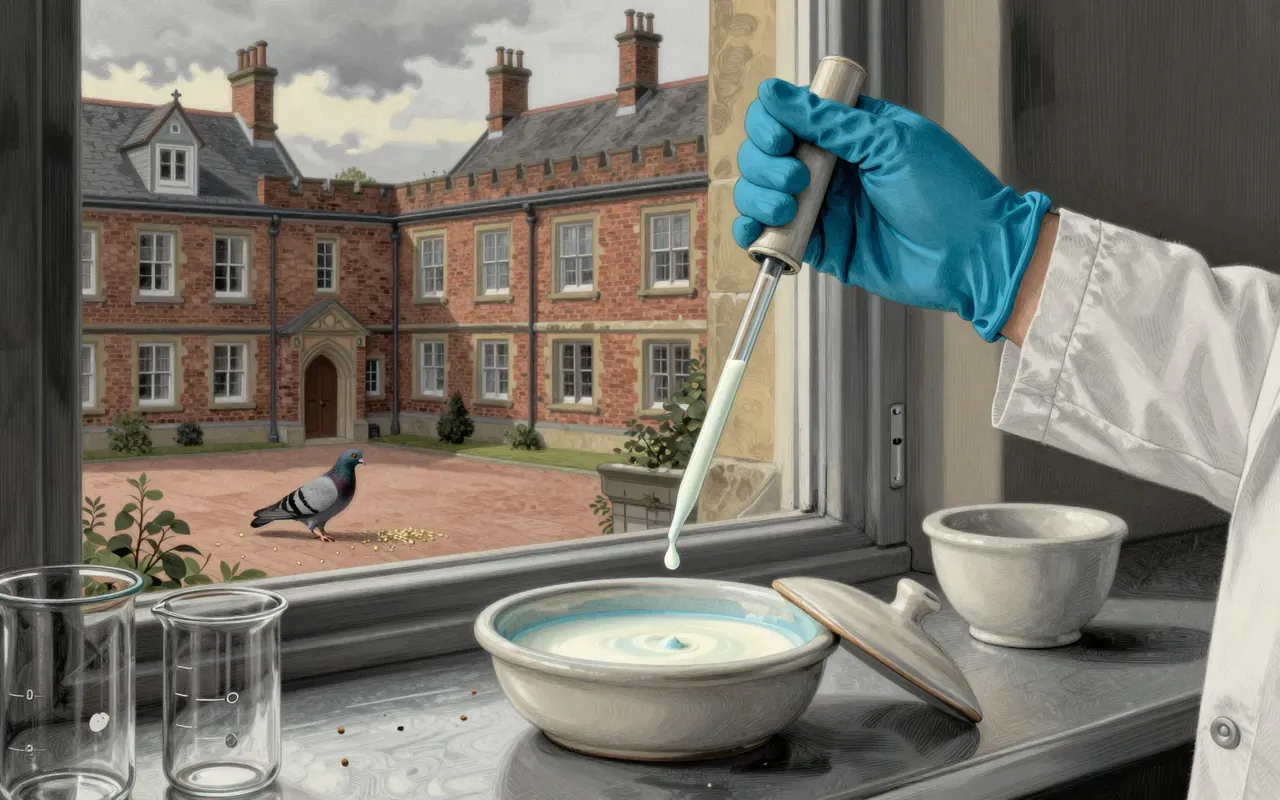
    Graveyard soil bacteria degraded lipofuscin—supporting, but not proving, xenocatabolism.

  4. 6:12
    Lab-scale, not body-scale

    Both claims rest on laboratory-scale evidence—not clinical trials or human data.

Worth your time?

Yes. Study the whole thing.

3.5/ 5
What works
  • a clear, bounded mathematical contribution
  • a coherent refinement of mitochondrial theory
  • a testable, if narrow, microbiological observation
What does not
  • prove any anti-ageing therapy works in humans
  • solve the Hadwiger–Nelson problem
  • demonstrate xenocatabolism in mammals
Study it if
  • readers tracking how fringe ideas enter mainstream discourse
  • those assessing evidentiary thresholds in longevity science
  • mathematicians interested in accessible combinatorial constructions
Skip it if
  • anyone seeking clinical guidance on ageing
  • those expecting consensus validation
  • readers wanting unified theory across domains
The written brief1 min read

What the work claims

That mitigating mitochondrial DNA damage could significantly extend lifespan; that the chromatic number of the plane is at least five; and that xenocatabolism—using foreign enzymes or microbes to break down age-related waste—is plausible.

How it was done

De Grey proposed the mitochondrial link in a 1999 book. He posted a mathematical construction to arXiv in 2018. He tested lipofuscin breakdown using bacteria cultured from graveyard soil.

What holds up

The 1999 claim that mitochondrial DNA damage is a significant—but not sole—cause of senescence remains internally consistent. The 2018 graph is a valid unit-distance construction requiring five colours. The graveyard-soil experiment showed bacterial lipofuscin degradation under lab conditions.

What does not

None of the work establishes that mitochondrial damage mitigation extends human lifespan. None proves xenocatabolism works in vivo. None solves the Hadwiger–Nelson problem—it only raised the lower bound.

Why it matters beyond the lab

It forces sharper distinctions between mechanistic plausibility, mathematical rigour, and biological scalability—especially where longevity research leans on analogy rather than assay.

Is it worth your time

Yes—if you care about how speculative biomedical claims interface with concrete, testable interventions in ageing or mathematics.

Same field · Medicine4 of 23
Up next in Science

Barbara McClintock

· 9:05

Genes don’t just code—they jump, break, and switch traits on and off depending on where they land.

9:05