sciencebriefs
all subjects →
9:56in productionCh. 1 · The Jigsaw Fit/ 9:56 · ceiling 15 min
Earth & climate · Genetics

Alfred Wegener

Wegener didn’t prove continental drift—he proved it was the only explanation that fit the map, the rocks, and the fossils.

Wegener’s continental drift was a structural hypothesis built on geometry and paleontology—not mechanics. It held up where it could be observed, failed where it required unmeasured forces, and changed geology by refusing to ignore the map.

Chapters & takeaways4
  1. 1:02
    The Jigsaw Fit

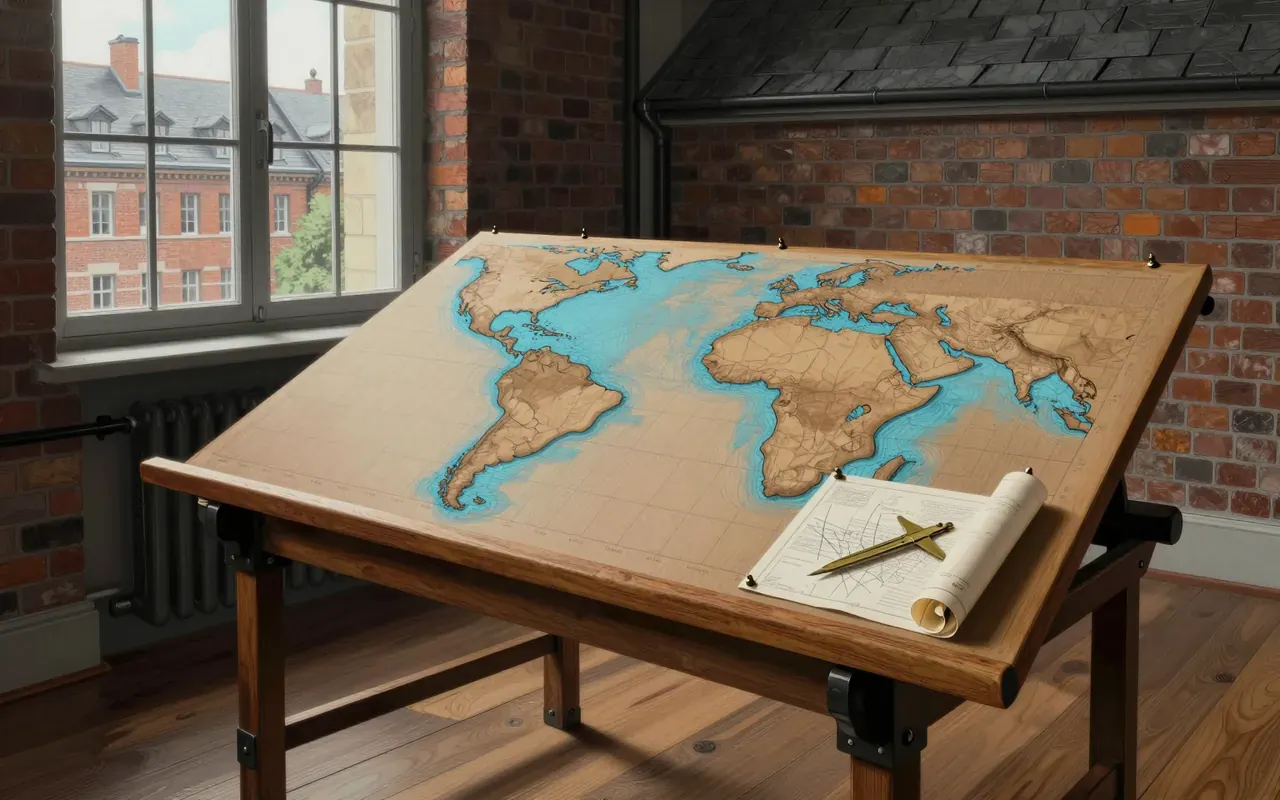
    He matched continents at the continental shelf—not the shoreline—where they fit like puzzle pieces.

  2. 3:05
    The Fossil and Rock Evidence

    Fossil plants, rock types, and geological structures aligned across the Atlantic—no coincidence.

  3. 4:33
    Urkontinent

    He named the primordial continent 'Urkontinent' and argued it had broken apart.

  4. 6:32
    The 1912 Lecture

    He first proposed drift publicly on 6 January 1912—in a lecture, not a paper.

Worth your time?

Yes. Study the whole thing.

4.5/ 5
What works
  • The jigsaw fit at the shelf level remains visually and quantitatively compelling
  • Fossil and rock matches across oceans are still taught as foundational evidence
  • His naming and framing of Urkontinent shaped how we visualise deep-time Earth
What does not
  • Wegener identified a driving mechanism
  • Wegener measured continental motion
  • Wegener cited magnetic anomalies or seafloor spreading
Study it if
  • Students of scientific reasoning
  • Geologists reviewing historical foundations
  • Anyone who thinks evidence without mechanism is meaningless
Skip it if
  • Readers seeking modern plate tectonic theory
  • Those wanting experimental validation
  • Those expecting quantitative error bars or statistical confidence
The written brief1 min read

What the work claims

That all continents were once joined in a single landmass—‘Urkontinent’—and later drifted apart. That this explained the match in shape, rocks, and fossils across ocean basins.

How it was done

Wegener noticed the jigsaw fit of continental shelves—not coastlines—at 200 m depth. He presented this idea in a lecture on 6 January 1912. He compared rock types, geological structures, and fossil plants across Atlantic margins.

What holds up

The geometric fit at the continental shelf level holds. The fossil and geological similarities across the Atlantic hold. His inference—that continents were once joined—was correct, though unsupported by geophysical evidence in 1912.

What does not

Wegener did not identify a physical mechanism for drift. He did not measure motion. He did not cite seafloor spreading, magnetic reversals, or plate tectonics—none of which existed in his time.

Why it matters beyond the lab

It redefined Earth as dynamic, not static. It forced geology to confront evidence that contradicted prevailing theories—making it a masterclass in scientific dissent grounded in observation, not speculation.

Is it worth your time

Yes—if you want to understand how a bold, evidence-anchored hypothesis can precede its mechanism by decades. It demands no technical background, only attention to what was seen and where it led.

Same field · Earth & climate4 of 18
Up next in Science

Atacama Large Millimeter Array

· 11:25

ALMA doesn’t see stars — it sees the cold gas that becomes them, and nothing else.

11:25