Turning inert air into a nutrient
Nitrogen fixation is described as the conversion of atmospheric nitrogen gas, chemically inert and unusable to most organisms, into ammonia, a form that can be built into DNA, proteins and other essential molecules. The material frames this as one of biology’s genuinely difficult chemical problems: breaking the strong bond holding two nitrogen atoms together and attaching hydrogen instead requires a substantial energy investment, and the reaction is driven by an enzyme called nitrogenase built around a metal cluster containing iron and molybdenum. Because almost no plant or animal can perform this conversion itself, life depends on bacteria capable of it, either living independently in soil and water or partnered directly with plant roots, to keep nitrogen moving from the atmosphere into a form the rest of the biosphere can actually use.
An enzyme allergic to oxygen
Nitrogenase’s defining vulnerability is that it is rapidly destroyed by oxygen, and the material treats this as the single fact that shapes almost everything else about where and how nitrogen fixation happens. Organisms that fix nitrogen have had to evolve around this constraint, either by living exclusively in anaerobic environments where oxygen never reaches the enzyme, or, in the case of bacteria partnered with plants, by relying on a protective protein called leghemoglobin that binds any oxygen present before it can reach and disable the nitrogenase. This single biochemical limitation is presented as the underlying reason nitrogen fixation is concentrated in specific ecological niches, root nodules, oxygen-poor sediments, certain cyanobacteria, rather than being a capability spread evenly across the living world.
Some go it alone, some strike a deal
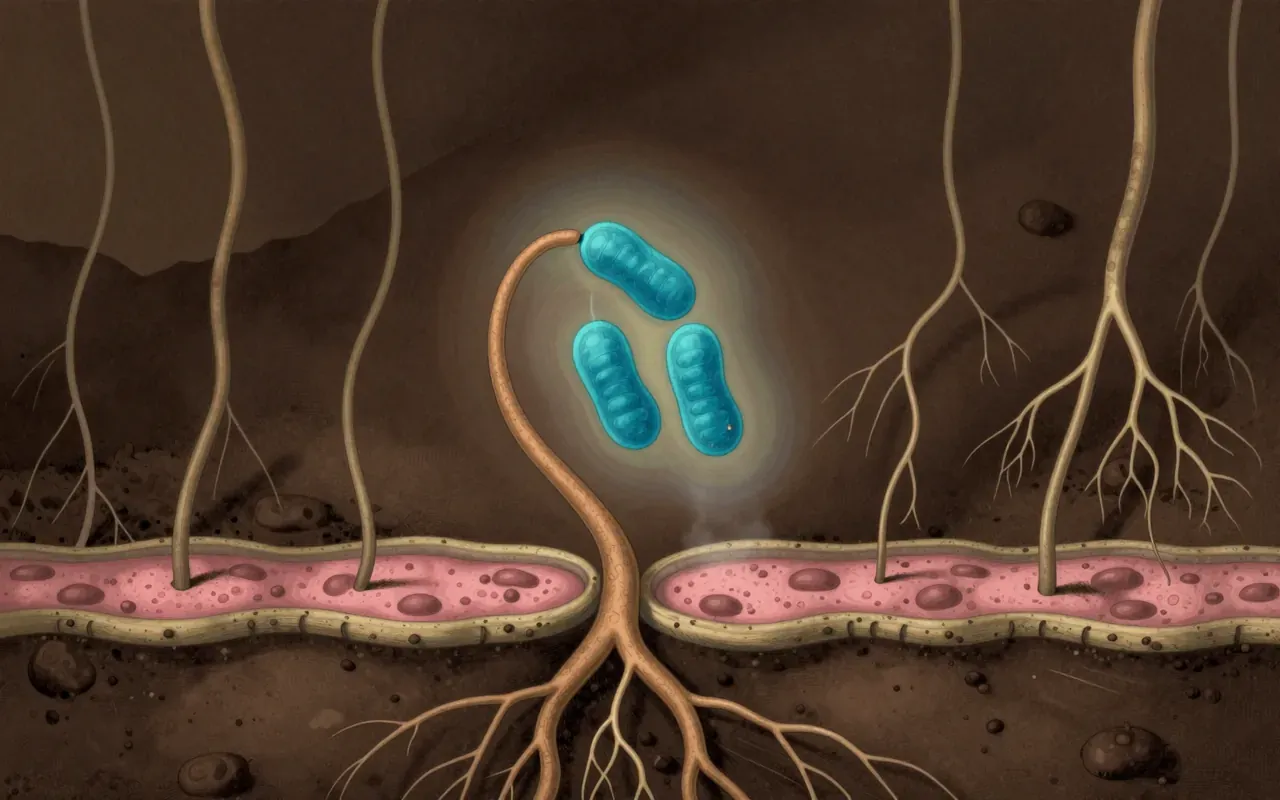
Free-living nitrogen fixers named in the material include cyanobacteria such as Trichodesmium, along with various anaerobic bacteria, all capable of fixing nitrogen without any plant partnership. Symbiotic fixation, by contrast, is concentrated heavily in legumes, plants in the pea and bean family, which host rhizobia bacteria in specialised root nodules; when these plants die, the nitrogen their bacterial partners fixed becomes available to other plants growing nearby, effectively fertilising the surrounding soil. A smaller number of non-legume plants, including alder and bayberry, maintain a comparable partnership with a different bacterial genus, Frankia. The material treats this legume-rhizobia relationship as the clearest and most agriculturally significant example of the broader symbiotic pattern.
An eccentric professor’s key discovery
The discovery history given here runs across more than sixty years. Jean-Baptiste Boussingault is credited with the first identification of biological nitrogen fixation in 1838, and Hermann Hellriegel and Hermann Wilfarth worked out the specific symbiotic mechanism between legumes and their bacterial partners through the 1880s. Martinus Beijerinck then identified Azotobacter chroococcum in 1901 as capable of fixing atmospheric nitrogen on its own, marking the first known free-living diazotroph, a discovery that sits alongside his other major contributions to microbiology, including his work distinguishing viruses from bacteria and his identification of sulfate-reducing bacteria. Beijerinck is described elsewhere as an eccentric, difficult figure who never married and lived an ascetic life, a personal detail that sits oddly next to the scale of what his laboratory work established.
The process that fed a growing world
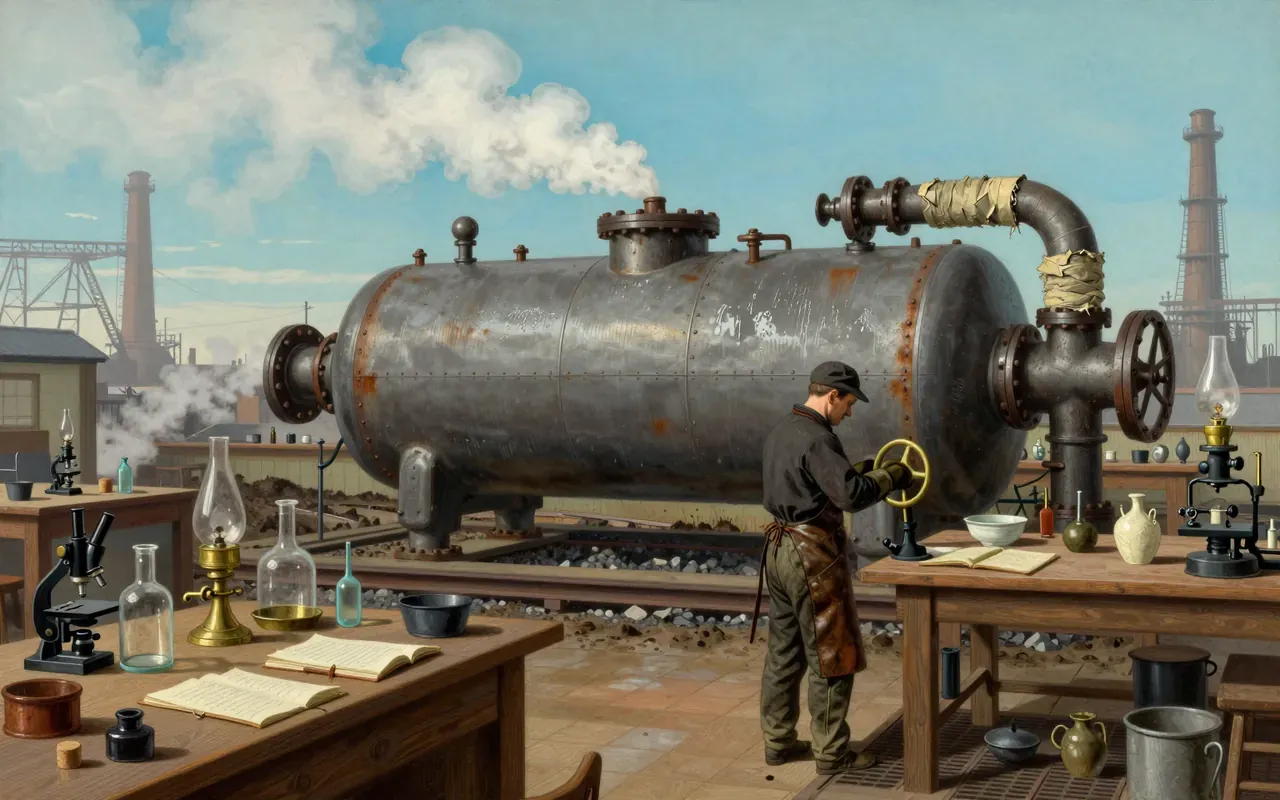
The industrial side of the story runs on a separate but related track. Early attempts at artificial nitrogen fixation included Henry Cavendish’s eighteenth-century use of electric arcs and later industrial processes developed around the turn of the twentieth century. The method that came to dominate was developed by Fritz Haber and Carl Bosch in 1909, combining nitrogen and hydrogen under extreme pressure and temperature to produce ammonia at industrial scale. The material states plainly that this process is credited with supporting the growth of the human population from around two billion people in the early twentieth century to more than eight billion today, a claim that gives the underlying chemistry an unusually direct and consequential link to the size of the world’s food supply and, by extension, its population.
The crop engineering problem still unsolved
The unresolved thread the material leaves open is whether this capability can be extended deliberately to crops that do not naturally fix nitrogen at all. Some naturally occurring associations already exist, including bacteria found with wheat, rice and certain maize landraces, but the material is clear that establishing efficient, reliable nitrogen fixation in major staple crops such as wheat, rice or maize more broadly remains a difficult, unsolved engineering problem, and that laboratory efforts to replicate the Haber process’s efficiency through simpler catalytic chemistry have not yet succeeded either. This is a genuinely worthwhile hour for anyone who wants to understand why fertiliser matters as much as it does, tracing a single, oxygen-sensitive enzyme all the way from a Dutch laboratory in 1901 to the scale of the modern food system.