A brain cut in two, for epilepsy
Split-brain research asked what happens to the mind when the corpus callosum, the thick bundle of nerve fibres connecting the brain’s two hemispheres, is surgically severed, a procedure sometimes used as a last resort to control severe epilepsy. Roger Sperry and his graduate student Michael Gazzaniga tested patients who had undergone this surgery through the 1960s and found that each hemisphere, cut off from the other, behaved in some respects like a separate processing system with its own specialisations: the left hemisphere handled spoken language almost exclusively, while the right hemisphere could recognise objects, shapes and faces but generally could not produce speech to describe what it perceived. The claim was not that people literally have two separate minds after the surgery, but that specific cognitive functions, language production chief among them, are concentrated in one hemisphere rather than shared evenly.
From cats to careful visual field tests
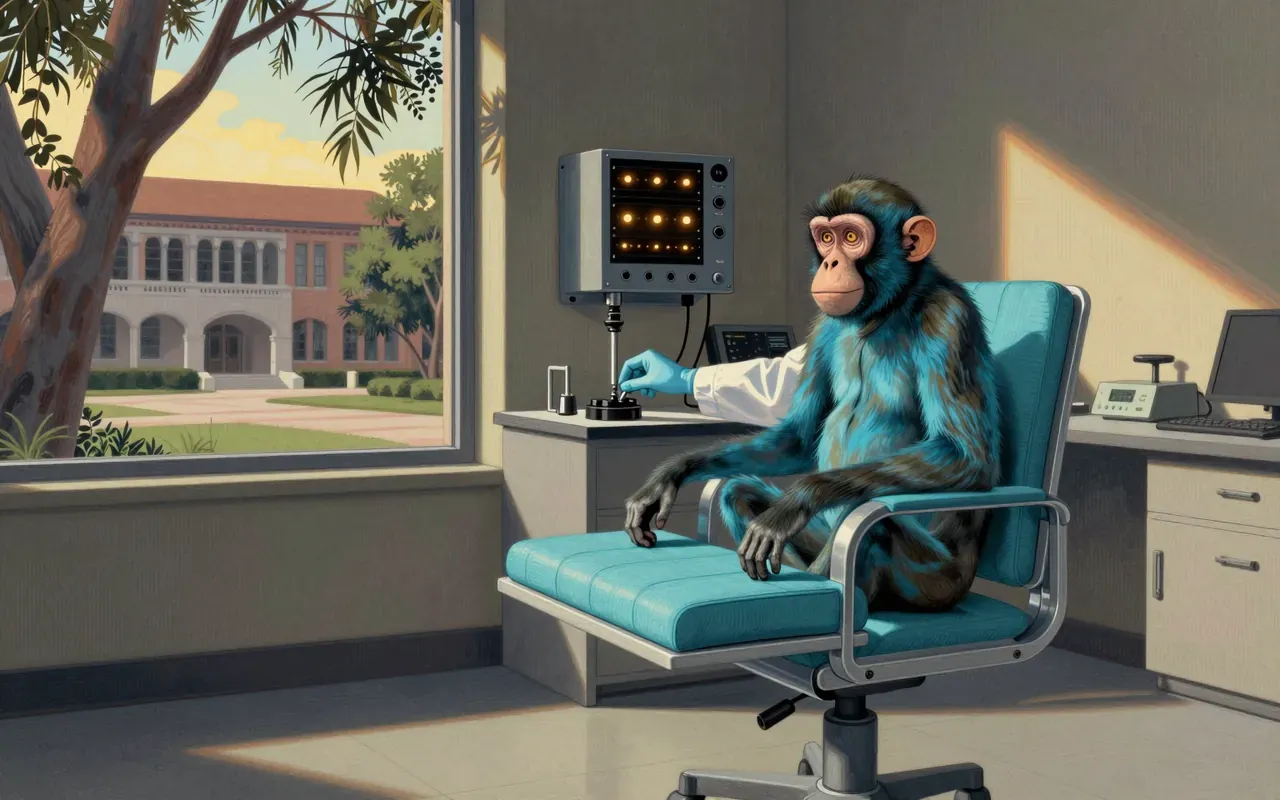
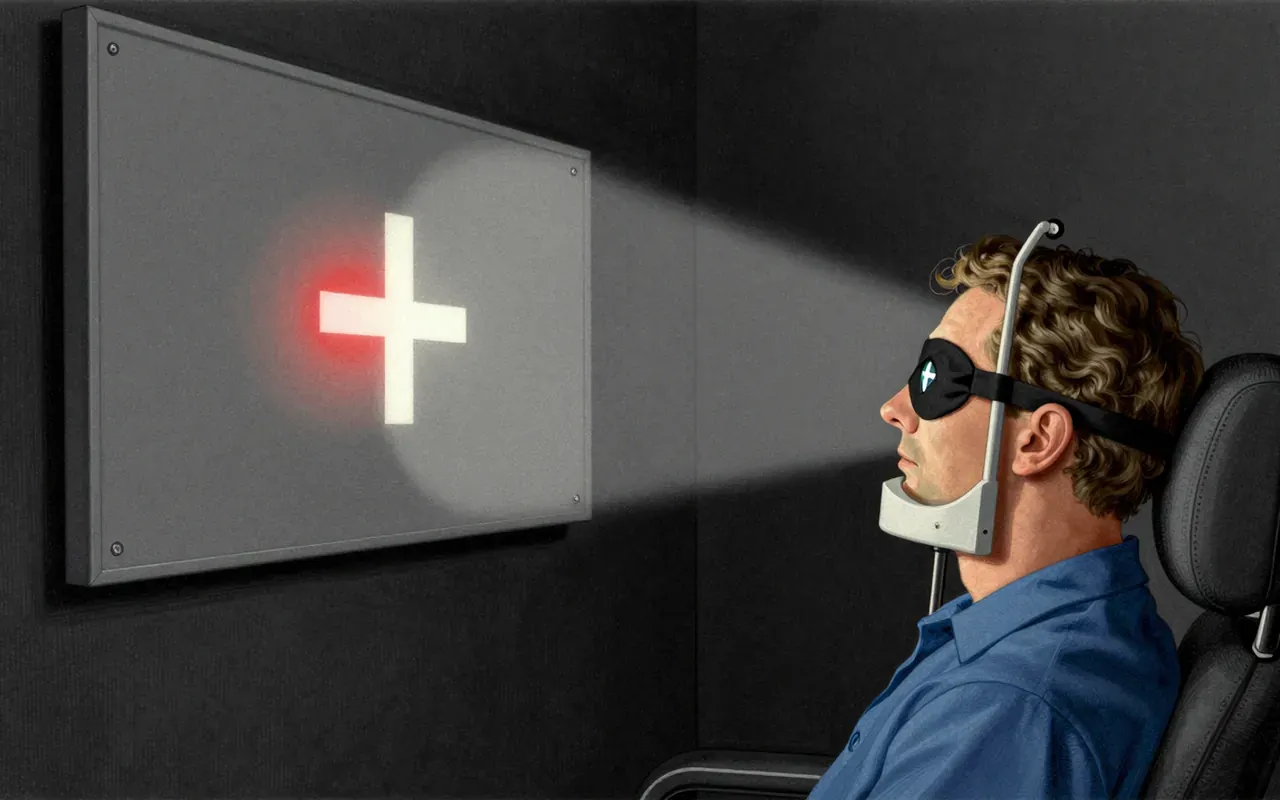
Sperry had laid the groundwork earlier with cats, severing the corpus callosum and cross-wiring the visual pathways so each eye fed only one hemisphere, then showing that a cat trained to recognise a shape with one eye could not recognise the same shape when tested through the other, demonstrating that a disconnected hemisphere could learn and remember independently. The human experiments with Gazzaniga used careful visual field presentation: flashing an image briefly to one side of a patient’s vision routes it to only one hemisphere, since each half of the visual field projects mainly to the opposite hemisphere. Patients could verbally name objects flashed to their right visual field, processed by the left hemisphere, but not objects flashed to the left visual field, even though their left hand, controlled by the unspeaking right hemisphere, could still pick out the correct matching object by touch.
A hemisphere that invents its reasons
The core finding, that language production and certain forms of spatial and visual processing are lateralised to different hemispheres, has held up and earned Sperry a share of the 1981 Nobel Prize in Physiology or Medicine. One of the more striking, well-replicated observations to come out of the research is what became known as the interpreter effect: when the two hemispheres received conflicting information, the left hemisphere, in charge of speech, would still generate a fluent, confident explanation for behaviour it had not actually caused, as in patients who chose an image matching what their unspeaking right hemisphere had seen and then verbally justified the choice with a plausible but invented reason. This showed that the brain’s language centre readily constructs coherent narratives for actions it did not itself decide on, a finding with implications well beyond split-brain patients specifically.
A myth the research itself corrected
What later research corrected was the popular simplification the findings spawned: the idea that people are either predominantly left-brained and logical or right-brained and creative. Researchers including Jerre Levy argued in the 1980s that intact brains work in an integrated way, with essentially no everyday cognitive task relying on only one hemisphere, and later studies of people born entirely without a corpus callosum found evidence of information passing between hemispheres through other, subcortical pathways, complicating any simple story of strict separation. Split-brain patients themselves, once past initial recovery, are largely indistinguishable from other adults in daily life, since the two hemispheres, though surgically disconnected, continue to receive largely similar sensory information and can each act sensibly on it, occasionally producing odd but minor coordination lapses, such as one hand undoing what the other had just done.
Two conscious systems in one skull
The research reshaped how neuroscience and the wider public think about the relationship between the brain and a unified sense of self. Sperry himself argued that each disconnected hemisphere appeared to be conscious in its own right, capable of perceiving, reasoning and even emoting independently, a claim that pushed hard against any simple assumption that consciousness requires the whole brain acting as one. The interpreter effect, in particular, has been picked up well beyond split-brain research as a way of thinking about ordinary human self-explanation, the tendency to generate a confident, coherent story for one’s own behaviour even when the actual cause is inaccessible to conscious awareness. That idea has since informed thinking in psychology and philosophy of mind about how reliable people’s stated reasons for their own actions really are.
Ordinary lives, minor oddities
This is worth the time precisely because it sits at the boundary between well-confirmed neuroscience and a popular myth the same neuroscience helped generate. The original experiments are genuinely rigorous and worth understanding on their own terms, particularly the interpreter effect, which is stranger and more consequential than the tidy left-brain, right-brain story usually associated with this research. Readers should come prepared to have that popular version corrected rather than confirmed: the specialisation is real but narrower and more integrated than the stereotype suggests, and split-brain patients live largely ordinary lives rather than experiencing a permanent split identity. It rewards attention for anyone curious not just about brain lateralisation but about how confidently people explain their own behaviour, correctly or not.