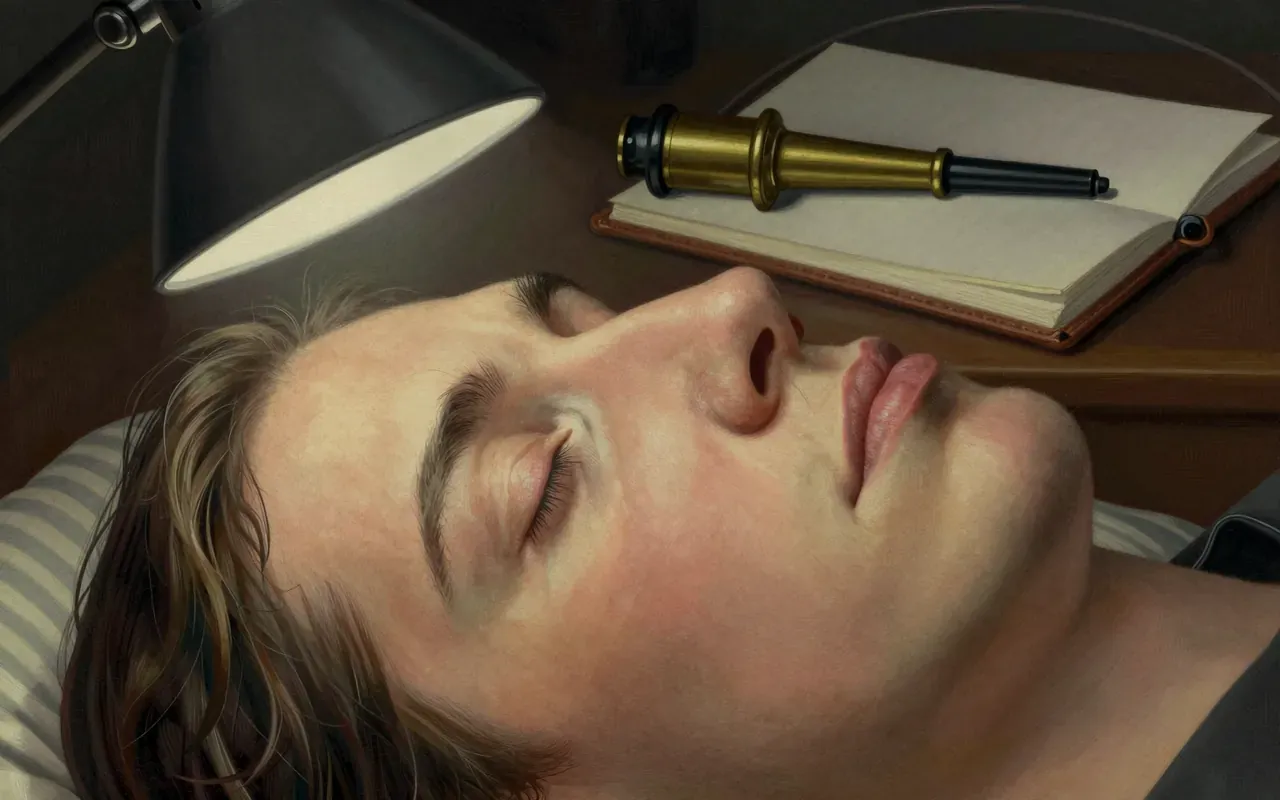
Eyes moving behind closed lids
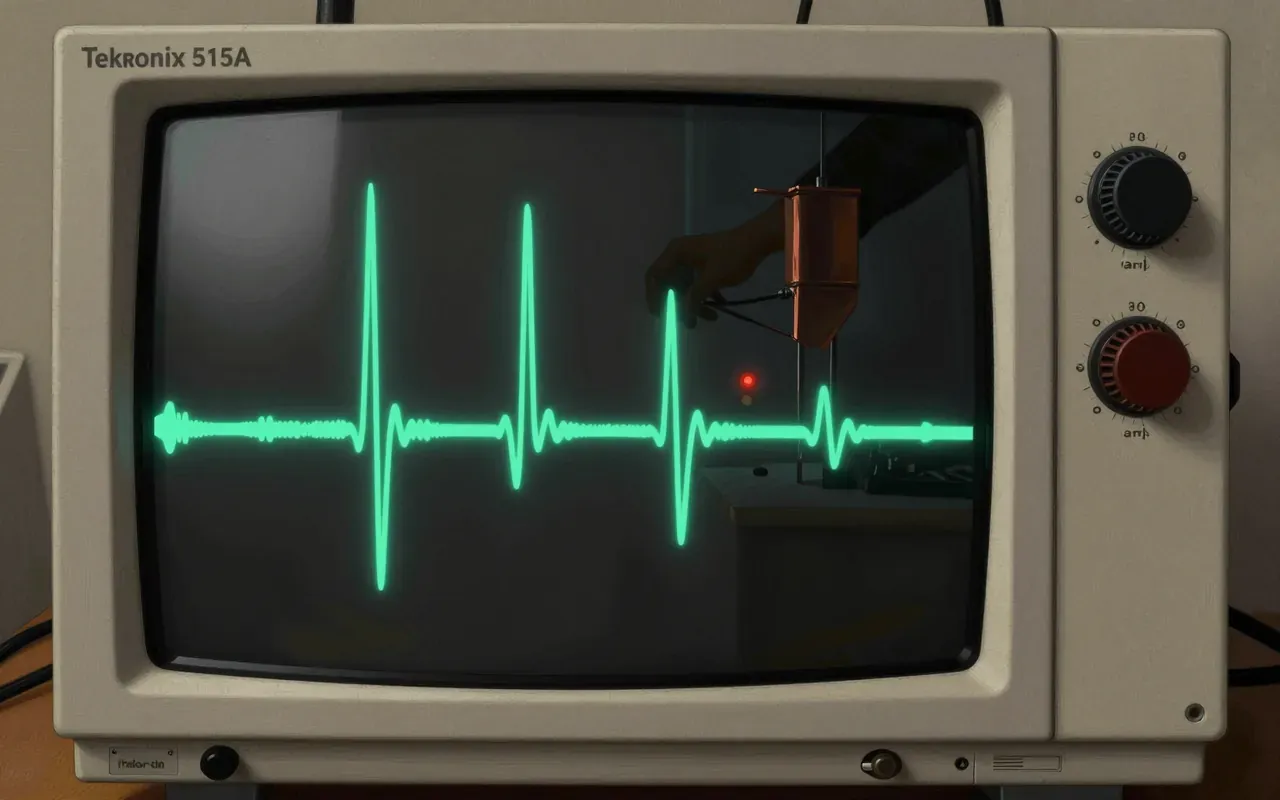
In 1953, Nathaniel Kleitman and his graduate student Eugene Aserinsky identified a distinct phase of sleep marked by rapid, darting eye movements beneath closed eyelids, brain activity that looked more like wakefulness than deep sleep, and near-total paralysis of the body’s voluntary muscles. Aserinsky first noticed the pattern while using an early electroencephalogram machine that produced roughly half a mile of paper output each night; Kleitman, wanting the finding checked independently, had the experiment repeated on his own daughter before the pair felt confident enough to publish. Their central claim was that this phase, rapid eye movement or REM sleep, was closely associated with vivid dreaming and was physiologically distinct from the quieter, slow-wave sleep that surrounds it, giving dream research for the first time a measurable, objective marker rather than relying solely on what someone remembered on waking.
Verified on the discoverer’s own daughter
Identifying REM sleep required treating sleep itself as something that could be continuously measured rather than simply observed. Kleitman and Aserinsky recorded eye movements alongside brain electrical activity through the night, then correlated the physiological pattern with reports from sleepers woken during it, who described dreaming far more often and more vividly than those woken during other sleep stages. The finding held up once other researchers, including William Dement and Michel Jouvet, extended the initial observation and mapped it onto the fuller architecture of a night’s sleep: REM sleep occupies roughly twenty to twenty-five per cent of adult sleep time, arriving in several distinct periods across the night, each one typically longer than the last, embedded within a cycle of alternating sleep stages that repeats roughly every ninety minutes.
A measurable stage in a ninety-minute cycle
The physiological picture established in 1953 and refined afterward has proven remarkably durable: during REM sleep, the brain’s electrical activity closely resembles a waking state even though the body’s motor neurons are actively suppressed, a genuine paralysis that prevents the sleeper from physically acting out what is being dreamed. This muscle atonia and the accompanying brain activity pattern have since been traced to specific neurochemical changes, including a shift toward high acetylcholine and a near-absence of certain other neurotransmitters during REM compared with waking or non-REM sleep. William Dement, another of Kleitman’s students, later described 1953 as the year sleep research became a genuine scientific field, and the basic measurement approach Kleitman and Aserinsky pioneered, tracking eye movement and brain activity together through the night, remains the standard method sleep laboratories use today.
A durable physiological description
What remains unsettled, seven decades on, is exactly what REM sleep is for. Several theories compete without a clear winner: that it consolidates certain kinds of memory, particularly procedural and emotional memory, since REM sleep measurably increases after intensive learning in some studies; that it supports early brain development, given that newborns spend over eighty per cent of their sleep in an REM-like state that declines sharply through childhood; and that it serves other functions entirely, including thermoregulation or immune support. Complicating the memory theory specifically, some research has found that people deprived of REM sleep do not show the memory impairment the theory would predict, which is why researchers describe these explanations as competing hypotheses rather than an established consensus.
Competing theories, no clear winner
The discovery mattered beyond the sleep laboratory because it gave clinical medicine a specific, measurable failure mode to look for when the underlying mechanism breaks down. REM sleep behaviour disorder occurs when the muscle paralysis that normally accompanies REM sleep fails to develop properly, leaving people to physically act out their dreams, a condition clearly distinguished from sleepwalking, which happens during a different, non-REM stage of sleep entirely. Recognising REM as a distinct physiological state also reshaped how researchers study sleep-related conditions generally, since a treatment or diagnosis can now be pinned to a specific, objectively measurable stage of the sleep cycle rather than to a vague category of disturbed rest, a precision that would not have been possible before 1953.
When the paralysis fails
This is worth the time as an example of how a genuinely new scientific field can begin with a single careful observation and a healthy dose of scepticism, since Kleitman’s insistence on repeating the finding on his own daughter before publishing is itself a small, instructive detail about how discoveries get verified rather than simply announced. The material rewards attention to what has and has not been settled: the physiological description of REM sleep, its brain activity, its muscle paralysis, its place in the sleep cycle, is now solid and well replicated, while the deeper question of why REM sleep evolved at all remains genuinely open across several competing theories. Readers wanting a definitive answer to what dreams are for will not get one here, but the honest uncertainty is itself part of what makes this worth reading closely.