sciencebriefs
all subjects →
8:52in productionCh. 1 · Who got there first?/ 8:52 · ceiling 15 min
Genetics · Life sciences

The Double Helix

Watson and Crick’s story isn’t the discovery — it’s the first spin-off.

The Double Helix is not the discovery of DNA’s structure — it is Watson’s memoir of it. The real discovery is in the 1953 Nature papers. The book’s value lies in exposing how scientific credit gets assigned, not in explaining how the structure was found.

Chapters & takeaways4
  1. 0:46
    Who got there first?

    Watson and Crick co-discovered the structure of DNA in 1953.

  2. 1:36
    Where was it published?

    The discovery appeared in three short papers in Nature in 1953.

  3. 3:06
    Who else was in the room?

    Franklin and Wilkins worked together on DNA at King’s College, London.

  4. 4:21
    Why does the book still cause friction?

    The book’s account is contested — not for what it says about the structure, but for how it frames credit.

Worth your time?

Yes. Study the whole thing.

4/ 5
What works
  • shows how narrative shapes scientific memory
  • forces a distinction between discovery and storytelling
  • anchors credit debates in verifiable institutional facts: King’s College, Nature, 1953
What does not
  • establish Franklin’s consent or collaboration in the model-building
  • report consensus, replication or functional validation
  • describe the biochemical mechanism of replication
Study it if
  • historians of science
  • students learning how to read primary sources
  • anyone who assumes the memoir equals the method
Skip it if
  • readers seeking technical detail on base pairing or helical parameters
  • those looking for Franklin’s own account — it is not in this source
The written brief1 min read

What the work claims

The Double Helix claims Watson and Crick deduced the double-helical structure of DNA through model-building, aided by Franklin’s unpublished X-ray data — a claim contested by Anne Sayre as unbalanced in its portrayal of Franklin’s role.

How it was done

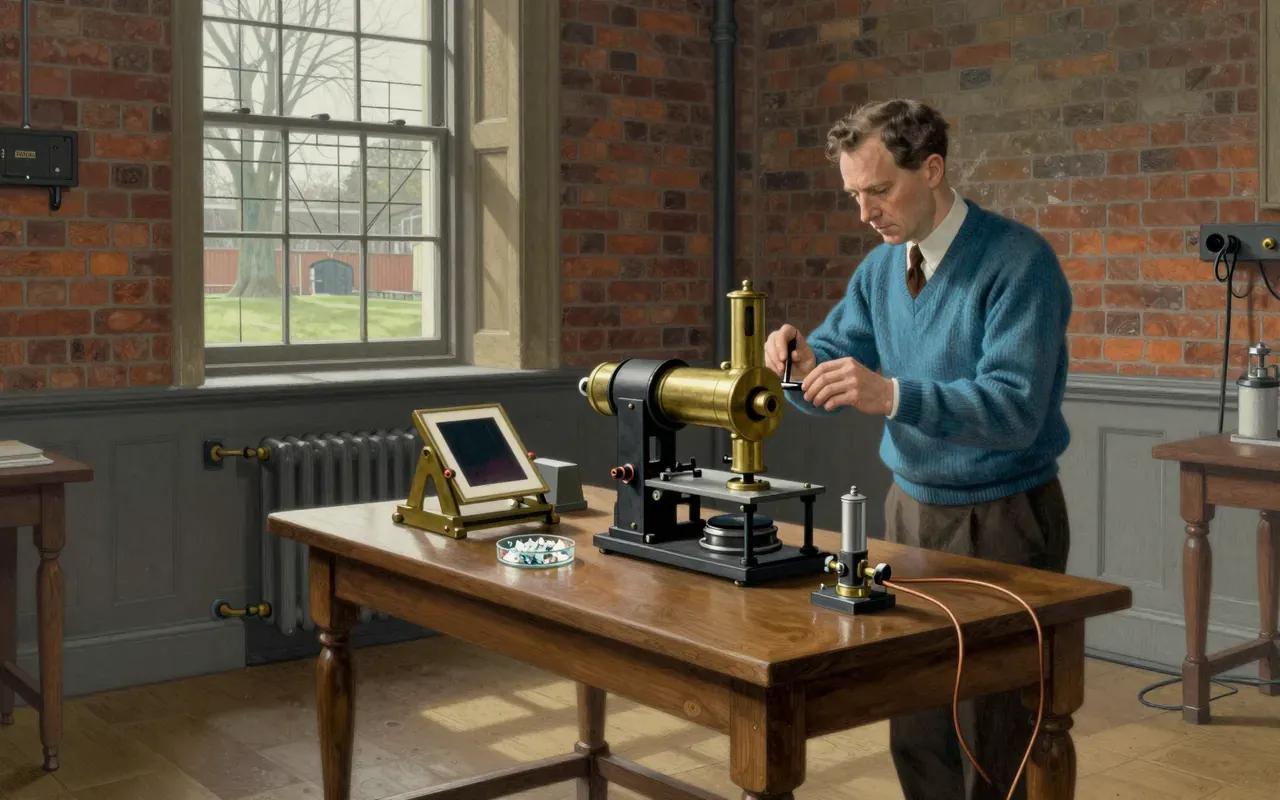
Watson and Crick built a physical model of DNA using available X-ray diffraction data, including work from Rosalind Franklin and Maurice Wilkins at King’s College, London.

What holds up

Watson and Crick co-discovered the structure of DNA in 1953. The discovery was reported in the 1953 papers on DNA structure published in Nature. Rosalind Franklin worked with Maurice Wilkins at King’s College, London, on DNA.

What does not

The document does not establish that Franklin’s data was used with her knowledge or consent. It does not say she contributed to the model-building, nor that she accepted the double helix interpretation before publication.

Why it matters beyond the lab

It redefined biology as a molecular science — but the book’s cultural dominance has obscured how little the original papers said about mechanism, function or inheritance.

Is it worth your time

Yes — it is the foundational structural insight for molecular genetics, but only if you treat the 1953 Nature papers as the primary evidence, not Watson’s later narrative.
Same field · Genetics1 of 1
Up next in Science

Double-slit experiment

Young · 1801 · 7:51

Observation isn’t passive — it erases possibility.

7:51