sciencebriefs
all subjects →
9:46in productionCh. 1 · Damage, not wind/ 9:46 · ceiling 15 min
Earth & climate · Engineering

Fujita scale

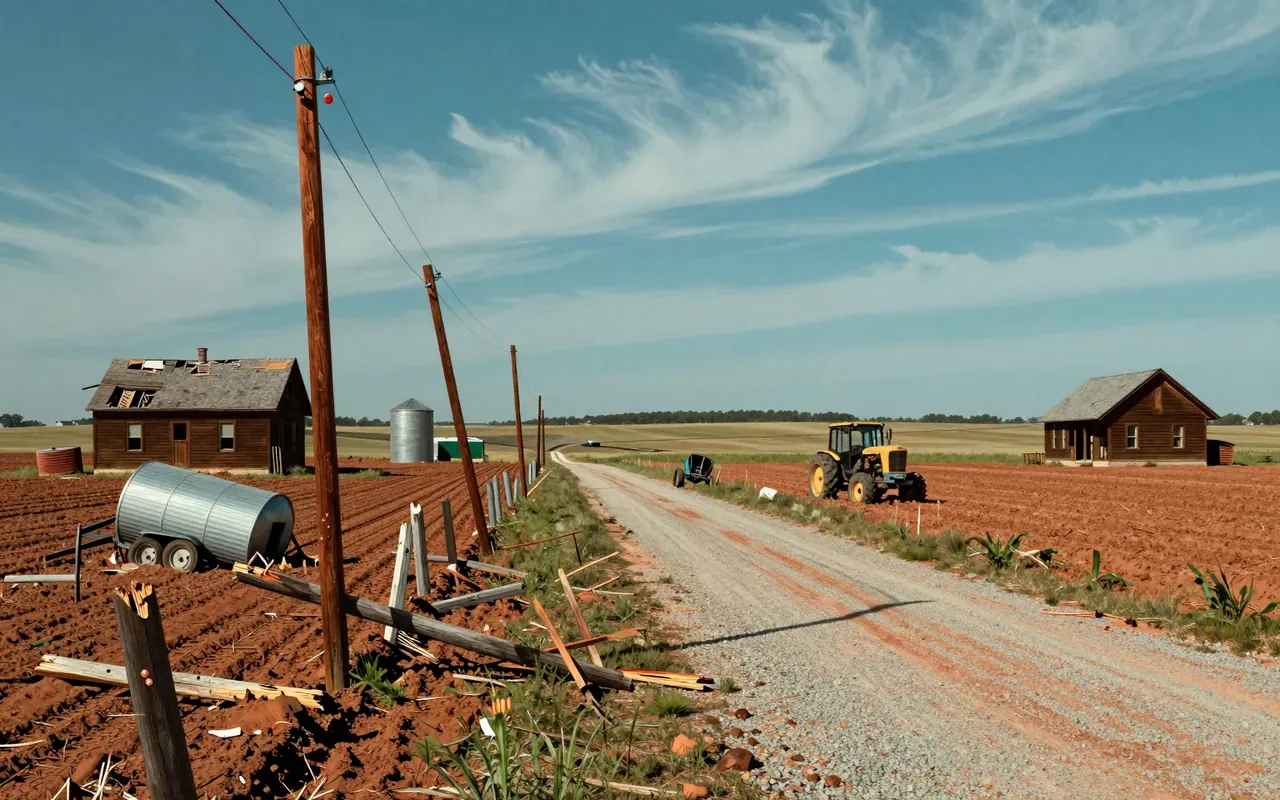
It classifies tornadoes by what they break — not how fast they blow.

The Fujita scale is a damage-based tornado classification system introduced in 1971. It is not a wind-speed measurement tool. Its F0–F5 categories remain operationally useful. Its theoretical F6–F12 levels were never used. Its wind-speed estimates were unverified and later shown to be inflated.

Chapters & takeaways4
  1. 1:06
    Damage, not wind

    The Fujita scale is damage-based, not wind-speed-based.

  2. 2:16
    A scale built on analogy

    F0–F12 was a theoretical bridge between Beaufort and Mach — but only F0–F5 were ever meant for real-world use.

  3. 4:08
    F5 was the ceiling

    Fujita capped practical use at F5 because that covered all possible damage to frame homes.

  4. 5:34
    What it measures well

    Its strength is consistency in damage description — not accuracy in wind estimation.

Worth your time?

Yes. Study the whole thing.

3.5/ 5
What works
  • standardised tornado damage classification
  • cross-jurisdictional severity reporting
  • public risk communication
What does not
  • wind-speed measurement
  • empirical wind calibration
  • operational use beyond F5
Study it if
  • meteorologists
  • emergency planners
  • structural engineers
Skip it if
  • aerodynamicists
  • instrumental wind researchers
The written brief1 min read

What the work claims

The Fujita scale claims to rate tornado intensity by mapping observed damage to a theoretical scale spanning from calm (F0, ~Beaufort 8) to supersonic flow (F12, Mach 1.0), with F1 at Beaufort 12.

How it was done

Ted Fujita introduced the scale in 1971 with Allen Pearson. It was derived as a theoretical 13-level (F0–F12) linkage between the Beaufort and Mach scales. Official ratings rely on post-event damage surveys — ground or aerial — and may include radar data, witness accounts, and photogrammetry.

What holds up

The F0–F5 categories hold up as a standardised, observation-driven framework for comparing tornado damage severity. Its reliance on structural and vegetation damage remains operationally robust and widely adopted.

What does not

The wind speed estimates were never verified. They were later found to be overestimated, especially above F5. The scale is not a direct measurement of wind; it is damage-based, and its theoretical upper levels (F6–F12) were never intended for operational use.

Why it matters beyond the lab

It created the first systematic, field-deployable language for tornado severity — enabling consistent reporting, risk communication, and infrastructure standards — even though its wind-speed anchors are unverified.

Is it worth your time

Yes. It remains foundational for tornado assessment in the US and shaped how meteorologists link observable damage to physical intensity — but only if you treat it as a classification tool, not a wind-speed meter.


Same field · Earth & climate4 of 18
Up next in Science

Galilean moons

· 9:53

Galileo did not prove Copernicus right — he proved Ptolemy wrong, one night at a time.

9:53