8:42in productionCh. 1 · The Apparatus/ 8:42 · ceiling 15 min
Chemistry · Evolution
Miller–Urey experiment
It didn’t recreate early Earth—it invented a testable question.
The Miller–Urey experiment demonstrated amino acid synthesis from inorganic gases under simulated lightning. It used a specific reducing atmosphere now considered geologically inaccurate. Its enduring value is methodological—not historical.
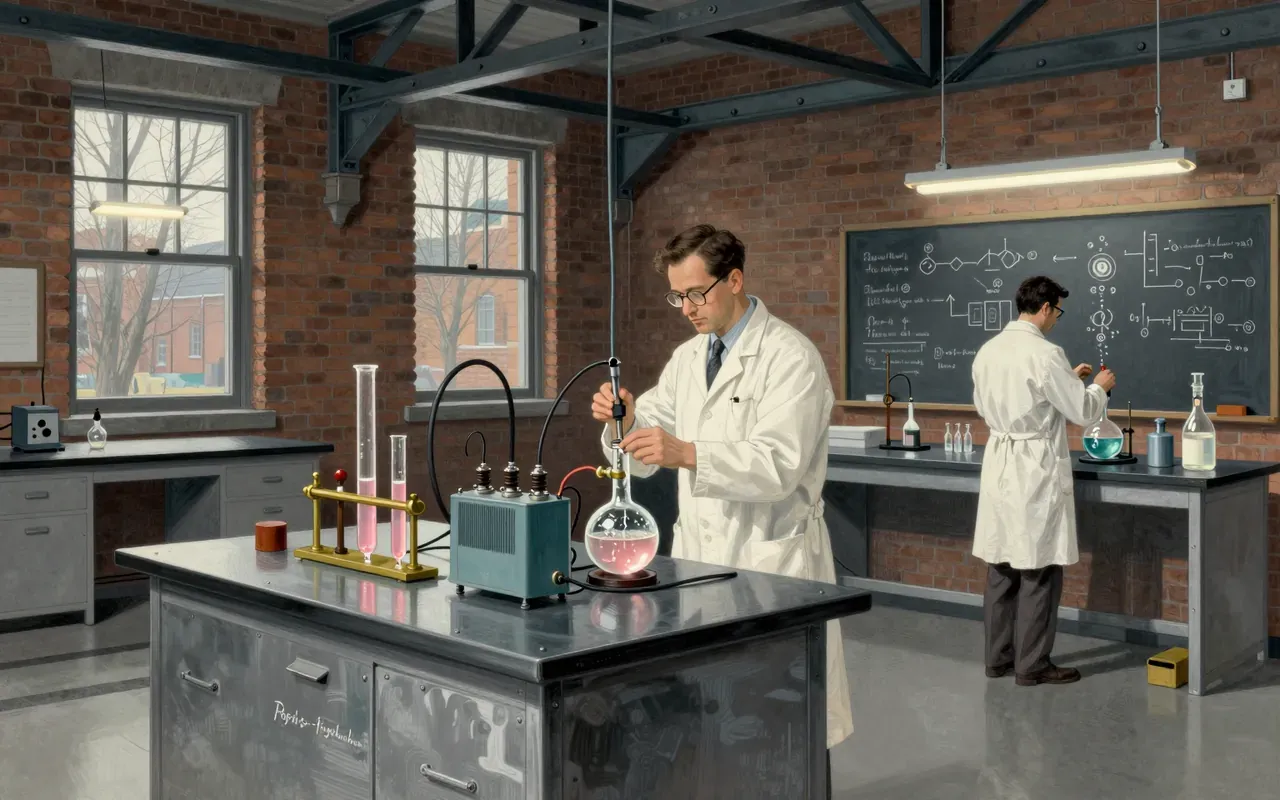
A sealed 5-L glass flask with gases and water was sparked continuously to mimic lightning.
2:18
The Assumption
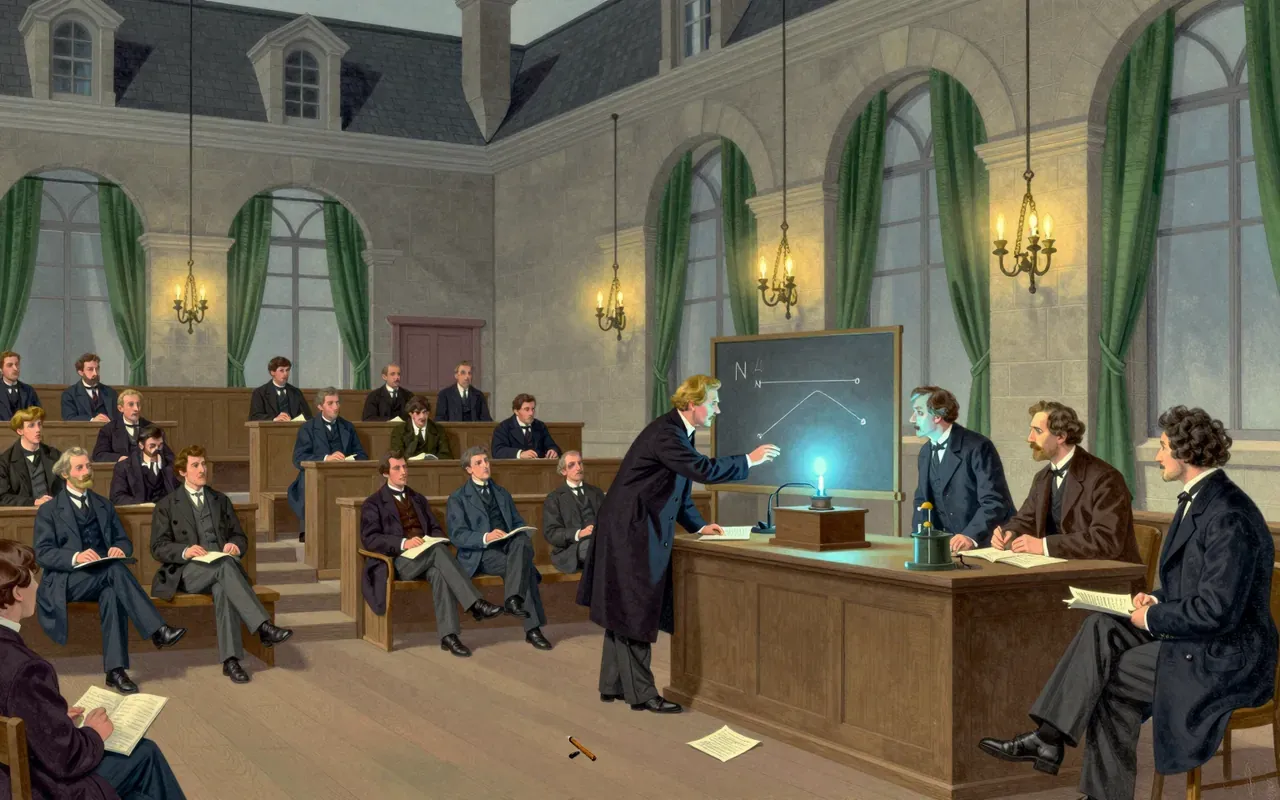
It used a reducing atmosphere—methane, ammonia, hydrogen—that later evidence rejected as geologically implausible.
3:48
The Detection
Miller identified five amino acids—including glycine and two alanines—using paper chromatography.
5:08
The Reanalysis
More amino acids were found in preserved vials after 2007—confirming synthesis, but not its relevance to Earth’s history.
Worth your time?
Yes. Study the whole thing.
3.5/ 5
What works
It works as a controlled demonstration of abiotic synthesis.
It works as a catalyst for decades of follow-up experiments.
It works as a cautionary case about assumptions in simulation design.
What does not
It did not replicate early Earth conditions.
It did not prove life’s origins.
It did not establish biological relevance.
Study it if
Students of chemical evolution.
Historians of experimental science.
Critics of reductionist origin-of-life models.
Skip it if
Researchers seeking current atmospheric models.
Those requiring geological validation.
Anyone expecting a direct path to cells or replication.
The written brief1 min read
What the work claims
That early Earth’s atmosphere could produce biologically relevant organic molecules when energised by lightning.
How it was done
A 5-L glass flask held methane, ammonia, and hydrogen in a 2:2:1 ratio, connected to a 500-mL flask half-full of water. A continuous electrical spark passed between electrodes through the gas–vapour mixture to simulate lightning.
What holds up
It demonstrated synthesis of organic compounds—including glycine, α-alanine, and β-alanine—from inorganic precursors under the tested conditions. Later reanalysis confirmed more amino acids were present than Miller originally identified using paper chromatography.
What does not
It does not demonstrate that amino acids formed this way on early Earth. The assumed atmosphere—methane, ammonia, hydrogen—is no longer thought to reflect actual prebiotic conditions.
Why it matters beyond the lab
It established a methodological template for prebiotic chemistry: test plausible geochemical conditions with controlled energy input. Its legacy is procedural—not evidential.
Is it worth your time
Yes—if you need to understand how laboratory simulations of prebiotic chemistry began, and why their assumptions remain contested.