Vaccines already proven on animals
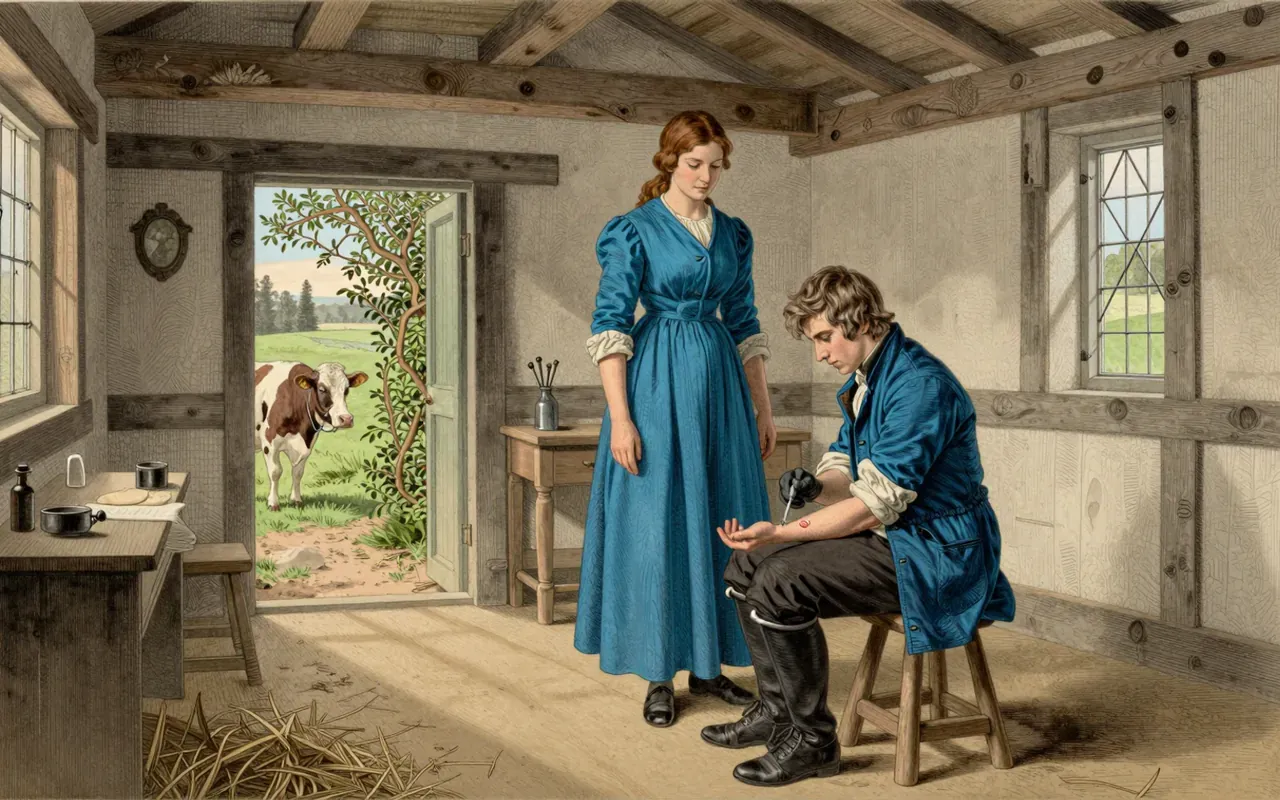
Before turning to rabies, Louis Pasteur had already established that a pathogen deliberately weakened in the laboratory could protect an animal against the full-strength disease. In 1877 he found that chicken cholera bacteria left exposed to air for a long period lost their ability to kill chickens outright while still triggering protection, and in May 1881, at a public demonstration at Pouilly-le-Fort attended by over 200 spectators, sheep and goats given a similarly weakened anthrax preparation survived exposure to the full disease while unvaccinated animals died. These two results established attenuation, weakening a pathogen just enough to provoke immunity without causing the disease itself, as a working method before Pasteur’s laboratory applied the same logic to rabies.
Weakening rabies in rabbit spinal cords
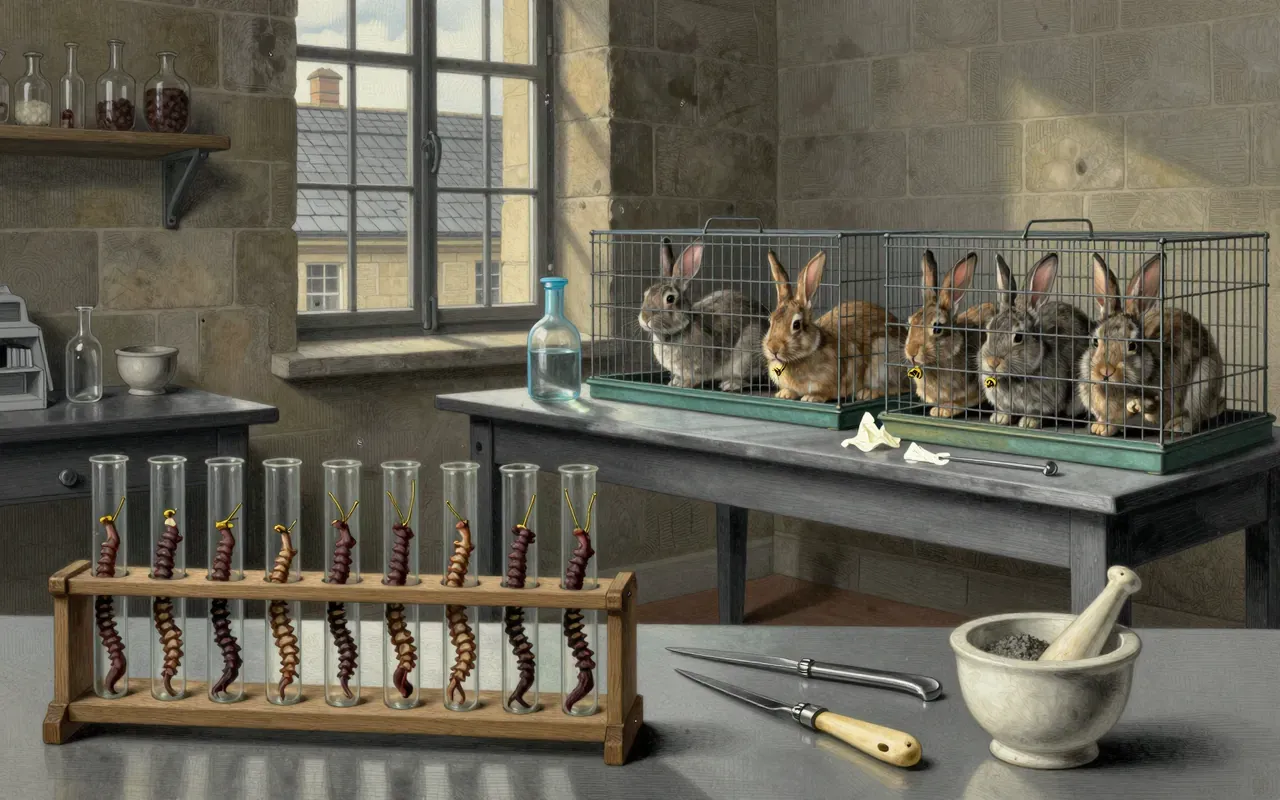
Rabies posed a harder problem, since the causative agent could not yet be grown or observed the way bacteria could. Pasteur’s laboratory, with the rabies work directed experimentally by his assistant Emile Roux, grew the infectious material by passing it through the nervous systems of rabbits and then weakened it by drying the resulting infected spinal cord tissue for varying lengths of time, producing a graded series of preparations ranging from strongly weakened to nearly full strength. The treatment protocol that emerged from this work involved giving a patient a sequence of injections starting with the most weakened material and moving progressively toward stronger preparations over the following days.
A bitten boy and an unlicensed doctor
On 6 July 1885, nine-year-old Joseph Meister, who had been mauled by a rabid dog, became the first person to receive this treatment, given a series of roughly a dozen injections over eleven days under Pasteur’s direction. Pasteur himself held no medical licence, which meant the treatment carried genuine legal and ethical exposure; his colleague Roux, who was a qualified physician, reportedly declined to take part, apparently regarding the human trial as unjust, and two other physicians, Jacques-Joseph Grancher and Alfred Vulpian, were brought in to supervise and administer the injections directly. Meister survived and remained healthy when examined three months later.
A claim the notebooks did not support
Pasteur told the public that he had already successfully vaccinated 50 rabid dogs before risking a human patient, a claim meant to establish that the treatment had been thoroughly proven safe and effective in animals first. A later historian’s examination of Pasteur’s own laboratory notebooks found a considerably smaller number, only 11 dogs actually vaccinated, a substantial gap between the confidence Pasteur projected publicly and what his private records documented. That discrepancy does not appear to have affected the outcome for Meister, but it complicates any account of the episode that treats Pasteur’s own contemporary statements about his preparation as straightforwardly reliable.
From one boy to hundreds of patients
Word of Meister’s recovery spread quickly, and Pasteur went on to treat additional patients, including Jean-Baptiste Jupille later that same year; by 1886 he had treated 350 people bitten by suspected rabid animals, with only one later death from rabies among them, a success rate that drove rapid international adoption of the method, reaching the United States within a year. The demand for treatment centres led to the founding of the Pasteur Institute in Paris in 1887, and within roughly two decades comparable rabies treatment centres, numbering around 75, had opened across multiple countries, including in French Indochina and Siam.
Why the gap in the record matters
This case is worth understanding in full because the treatment’s genuine success does not erase the more uncomfortable details around how it was introduced: an unlicensed practitioner directing human injections, a colleague who reportedly viewed the trial as unjust, and a public claim about prior animal testing that a later, careful check of the actual laboratory notebooks did not fully support. None of this changes the fact that Meister survived and that the treatment went on to save many more lives across the world in the following decades, but reading the achievement alongside the discrepancy gives a far more accurate sense of how this particular piece of medical history actually unfolded.