A problem no earlier attempt had solved
Every attempt at kidney transplantation before 1954 had ultimately failed for the same underlying reason: the recipient’s immune system recognised the donated kidney as foreign tissue and attacked it, regardless of how technically successful the surgery itself had been. A 1933 attempt in Ukraine failed within two days due to blood type incompatibility, and a 1950 operation in Chicago kept a patient alive for years after the donated kidney was eventually rejected, because her own remaining kidney partially recovered, but neither case demonstrated a transplanted organ functioning long-term inside a genuinely different person’s body. By the early 1950s, rejection stood as the central unsolved problem standing between kidney transplantation as a surgical possibility and as an actual treatment.
Choosing twins to remove the obstacle
Joseph Murray’s team at Peter Bent Brigham Hospital in Boston addressed the problem by removing it from the equation entirely rather than trying to solve it directly: they selected identical twins, Ronald Herrick as donor and his brother Richard as recipient, whose matching genetics meant Richard’s immune system had no basis to recognise Ronald’s kidney as anything other than his own tissue. This sidestepped the rejection problem completely rather than managing it, since there was, in this one specific case, no immunological difference between donor and recipient for the body to react against, making the operation a genuine test of whether the surgical technique itself could succeed given that obstacle removed.
An operation, and a decision made first with clergy
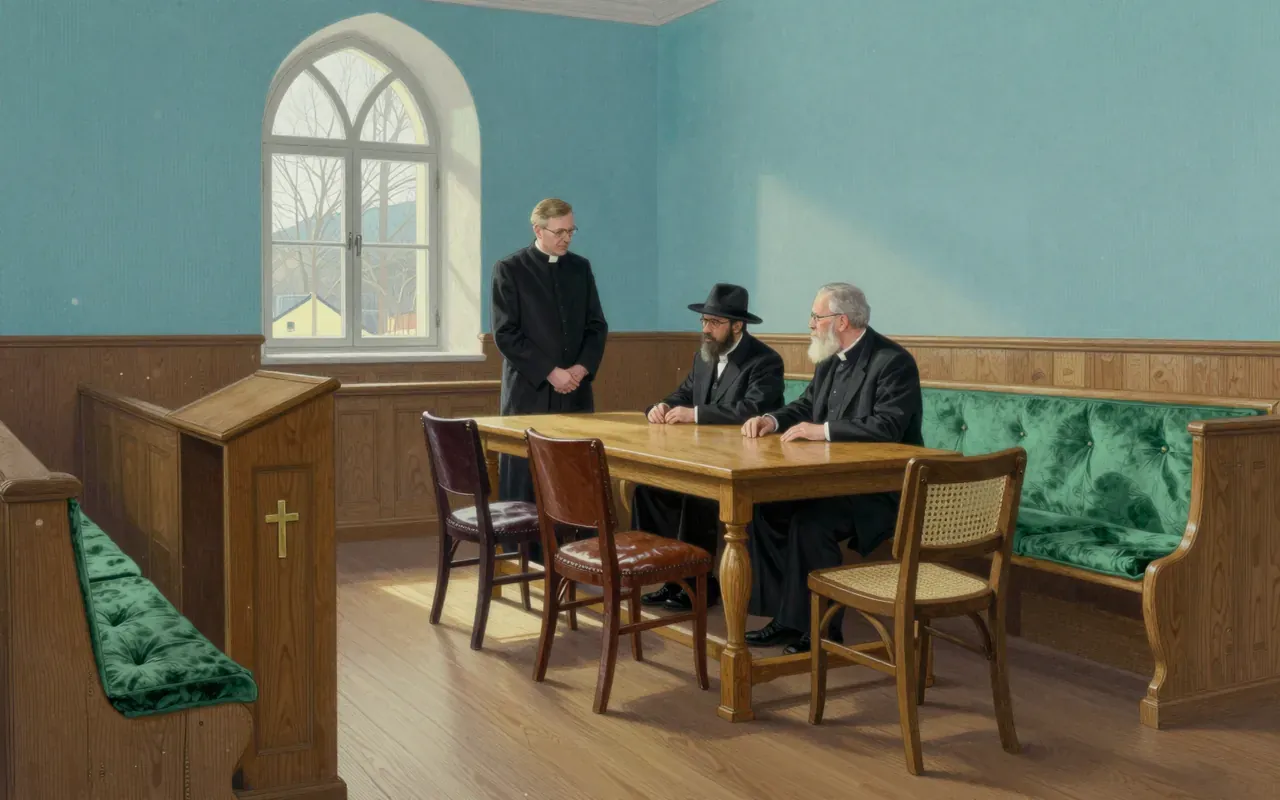
Before proceeding, Murray’s team took the additional and unusual step of consulting clergy from multiple denominations to weigh the ethics of the operation, since it required a healthy person, Ronald, to undergo major surgery and permanently lose one kidney purely to benefit his brother rather than himself. That deliberate ethical review, conducted ahead of a procedure with no established precedent to draw on, addressed a genuine tension in operating on a healthy donor that later became a standard consideration built into all living-donor transplantation, rather than an issue unique to this particular first case alone.
Two lives, two very different follow-ups
The operation itself, performed on 23 December 1954 and lasting five and a half hours, succeeded without the rejection that had undone every previous attempt. Richard Herrick, the recipient, lived another eight years, long enough to marry and have two children, before dying of an unrelated cardiac condition, while Ronald, the donor, lived more than fifty years afterward without major complications from having given up a kidney. Both outcomes, taken together, demonstrated that the underlying surgical procedure worked cleanly once the immunological obstacle was removed, isolating that one remaining problem for future research to address.
From twins to strangers
Murray did not stop with the twin case. In 1959 he performed a successful transplant between non-identical brothers using total body irradiation to suppress the recipient’s immune response, and by 1962, working with immunosuppressive drugs including azathioprine, developed with the later Nobel laureates George Hitchings and Gertrude Elion, he achieved the first successful transplant using a kidney from a deceased, genetically unrelated donor. Survival rates for transplants between unrelated people rose past 65 percent by 1965, and Murray’s approach, developed step by step from the twin case outward, became the foundation for kidney transplantation as it is practised today, contributing to the roughly 95,000 kidney transplants performed worldwide each year by 2018.
Why the twin case still anchors the field
This case is worth understanding closely because of how deliberately narrow it was: rather than trying to solve organ rejection outright, Murray’s team engineered a specific situation in which rejection could not occur, proving the underlying surgery worked before anyone had the tools to make it work more generally. That staged approach, solve the surgical problem first in a case with no immunological complication, then tackle rejection separately once the technique itself was proven, is a useful pattern for thinking about how genuinely hard, multi-part problems in medicine sometimes get solved: not all at once, but one isolated piece at a time.