sciencebriefs
Topic

Energy

What everything costs, and the politics of where it comes from.
17
in science
11:31
average
196 min
in total
120
across the network
Energy across the network →
All briefs17
10:10

Renewable energy

Renewables aren’t a discovery — they’re a scaling target with a definition, not a breakthrough.
9:39

Thomas Edison

Edison didn’t invent the light bulb—he invented the process that made it matter.
8:32

Wind power

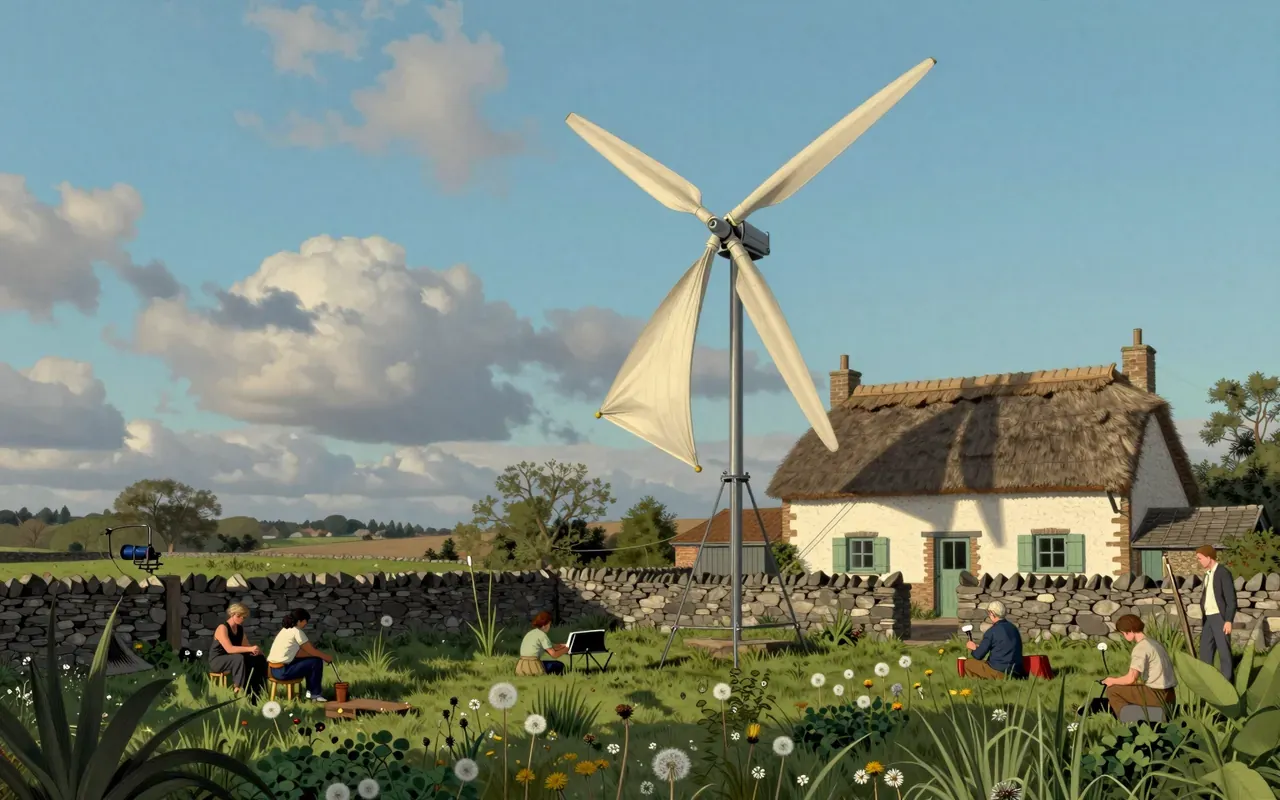
Wind power did not begin with climate policy — it began with a Scottish professor lighting his cottage in 1887.
13:00

Carnot heat engine

Sadi Carnot's 1824 argument that every heat engine has an efficiency ceiling set only by temperature, built on the wrong theory of heat, still turned out right and grew into the second law of thermodynamics.
10:18

Chicago Pile-1

Enrico Fermi

Chicago Pile-1 proved a self-sustaining nuclear chain reaction was possible using natural uranium and purified graphite — nothing more, nothing less.


13:00

Lithium cobalt oxide

In 1980 John Goodenough found a layered cobalt compound that could double a battery's capacity, Oxford chose not to patent it, and nearly forty years later he collected the Nobel Prize for it at ninety-seven, the oldest laureate in the prize's history.
13:00

Manganese nodule

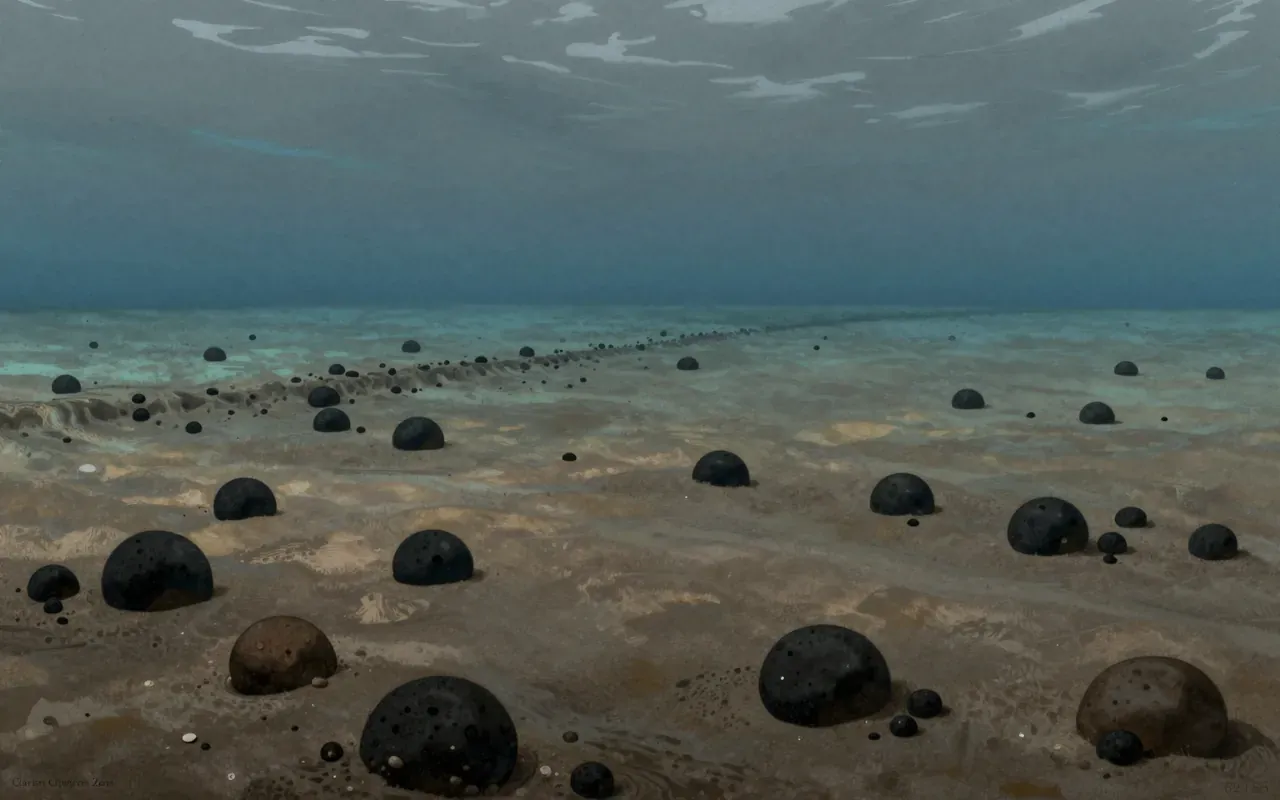
Potato-sized rocks that took millions of years to grow a few millimetres now sit at the centre of a mining industry racing ahead of ecosystem studies that find recovery incomplete even after 26 years.
13:00

Nuclear fission

Otto Hahn's puzzling 1938 chemistry, barium from bombarded uranium, was explained within weeks by the exiled Lise Meitner and Otto Frisch as nuclear fission, work for which only Hahn received the 1944 Nobel Prize.
9:59

Nikola Tesla

Tesla didn’t invent the future — he engineered its first working parts.
10:19

Perovskite solar cell

Kojima, Park and others

Perovskite solar cells began with CsSnI3 in a solid-state dye-sensitized architecture. They proved 3D halide perovskites could act as efficient semiconductors — not just additives — and enabled rapid efficiency gains: 3.8% to 27% (single-junction) and 34.85% (silicon tandem) between 2009 and 2025. The materials are cheap and simple to make. But no source names Kojima or Park, reports stability, or confirms real-world deployment.

13:00

Perpetual motion

Every self-sustaining machine ever proposed, from a medieval overbalanced wheel to modern magnetic motors, runs into the same two laws of thermodynamics that patent offices now use to reject them without a hearing.
13:00

Solar cell

In 1954 Bell Labs built a silicon cell that converted sunlight to electricity roughly six times better than anything before it, and then spent the next two decades discovering that solving efficiency was the easy half of the problem.
13:00

Cold fusion

Two respected electrochemists announced room-temperature fusion at a press conference before publication, and within six weeks most of the physics community had rejected the claim outright.
13:00

National Ignition Facility

The National Ignition Facility's December 2022 shot produced more fusion energy than its laser delivered to the fuel, a real milestone at the target that is roughly a hundredfold short of net energy for the facility itself.
13:00

First law of thermodynamics

A brewer with no university post announced in 1843 that he had measured how much mechanical work turns into a fixed amount of heat. He was met with silence. Four years later Helmholtz's own declaration of energy conservation credited him by name.