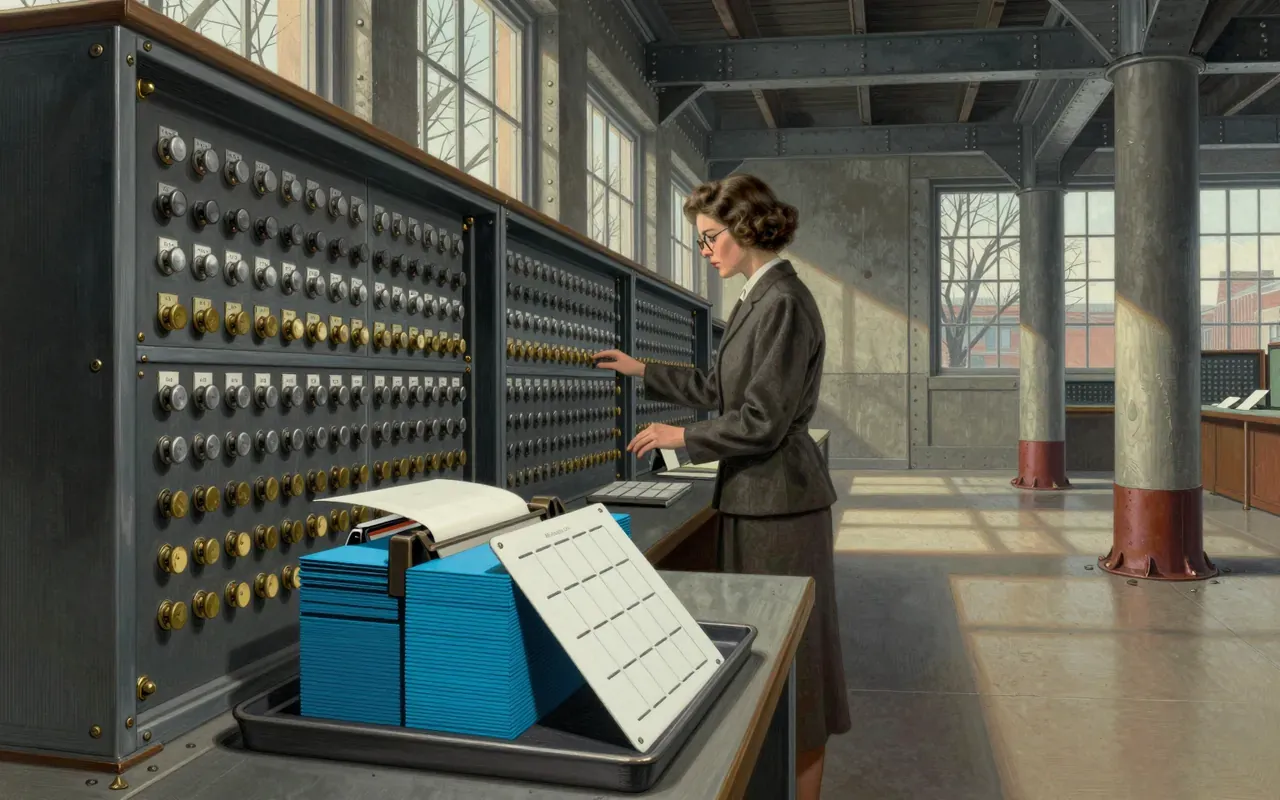
Shannon didn’t invent the computer — he proved electricity could think.
Shannon’s 1937 thesis linked Boolean logic to physical switches. His diagrams implemented AND, OR, NOT. He proved equivalence to Boolean algebra. He showed how to simplify real telephone routing systems. His 4-bit adder was the first complete digital arithmetic circuit described in print. His 1948 paper defined information entropy as uncertainty reduction. No claim here rests on experiment, implementation, or measurement — only on formal proof, diagrammatic construction, and documented adoption by engineers.
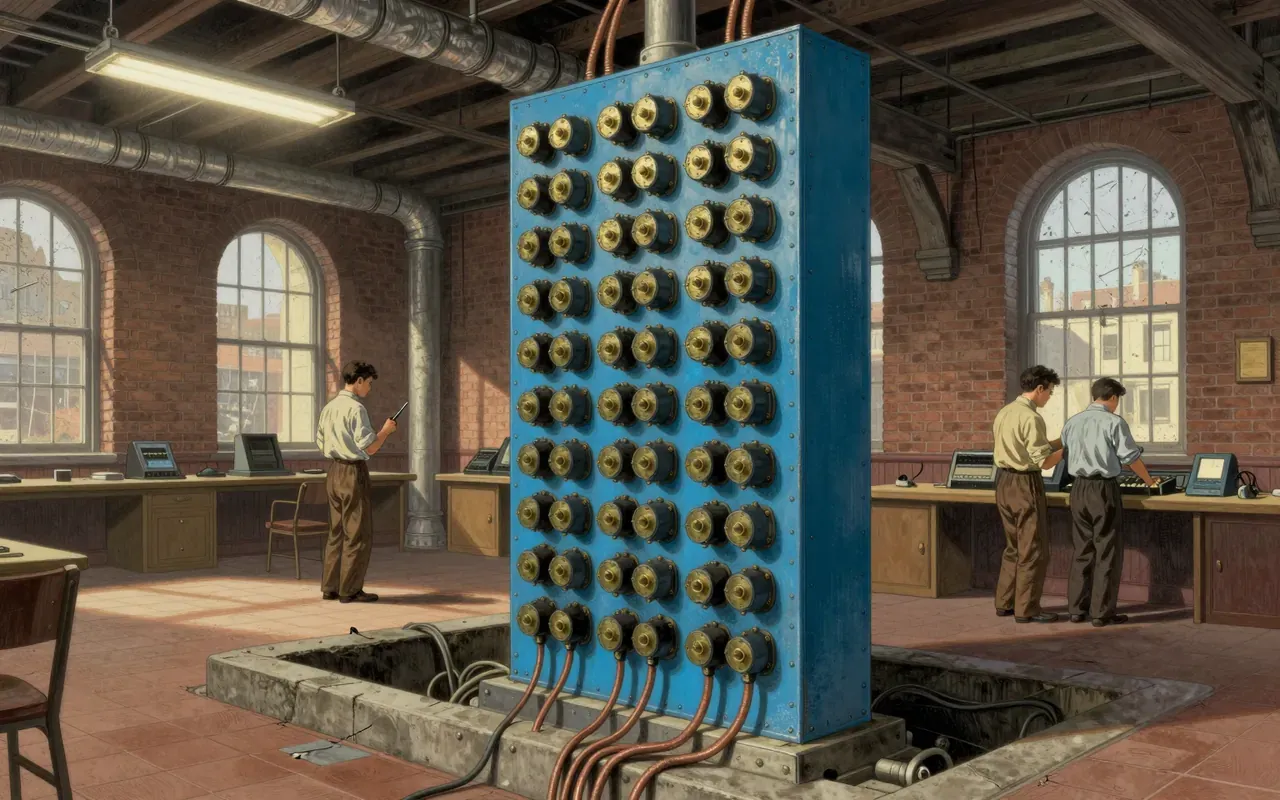
Boolean algebra isn’t abstract — it maps directly onto switches.
2:11
From theory to trunk lines
His circuits weren’t just possible — they replaced real-world telephone relays.
3:37
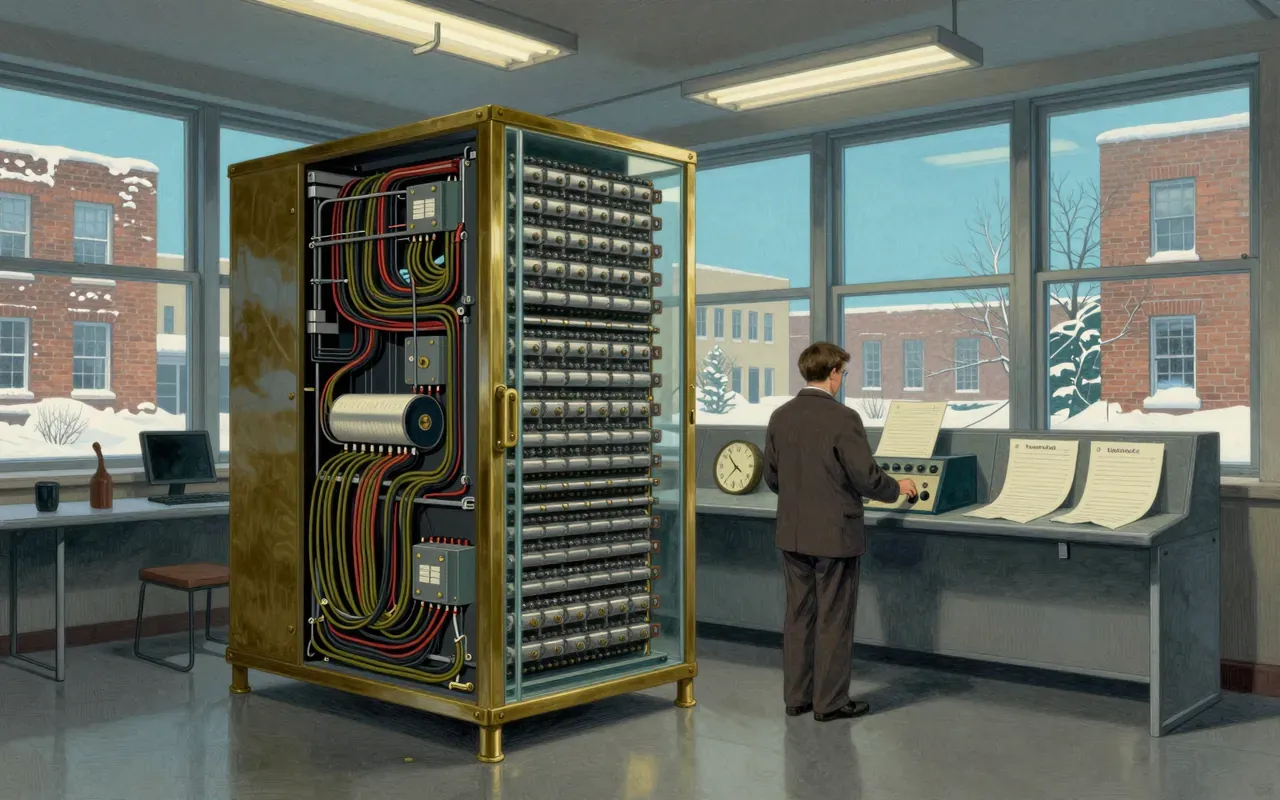
The first digital arithmetic circuit on paper
He didn’t just sketch ideas — he drew a working 4-bit adder.
4:52
The foundation before the hardware existed
Engineers used his work during WWII — before transistors, before silicon.
5:56
Information entropy, 1948
Entropy wasn’t borrowed from physics — he defined it anew for messages.
Worth your time?
Yes. Study the whole thing.
4.5/ 5
What works
circuit logic design
telecom infrastructure simplification
formalisation of information
What does not
proof of physical reliability
empirical testing
transistor implementation
real-time performance data
Study it if
hardware designers
computer historians
logicians
Skip it if
AI researchers
neuroscientists
software developers (unless studying foundations)
The written brief1 min read
What the work claims
That switching circuits can implement all Boolean operations. That those circuits can simplify telephone relay switches. That they can solve every problem Boolean algebra can solve.
How it was done
Shannon applied Boolean algebra to electrical relay and switching circuits. He diagrammed circuits implementing Boolean operators. He published this in a 1937 master’s thesis, with a paper version appearing in 1938.
What holds up
His diagrams implement Boolean operators. His proofs show equivalence between circuit behaviour and Boolean algebra. His work became the foundation of digital circuit design, widely adopted in electrical engineering during and after World War II.
What does not
The sources do not say Shannon built or tested any of these circuits. They do not report empirical validation, error rates, timing behaviour, power consumption, or scalability beyond the 4-bit adder diagram.
Why it matters beyond the lab
It established the theoretical basis for programmable digital hardware — not as metaphor or analogy, but as direct, operational equivalence between logic and electricity.
Is it worth your time
Yes. It is the first formal link between symbolic logic and physical circuit design — a prerequisite for all digital hardware.
Amos Tversky and Daniel Kahneman's 1970s experiments found people rate a detailed, statistically impossible scenario as more probable than a plain one — evidence that judgment runs on shortcuts, not pure logic, a claim that reshaped economics and drew its own rationality war.