A nucleotide built to stop the reaction
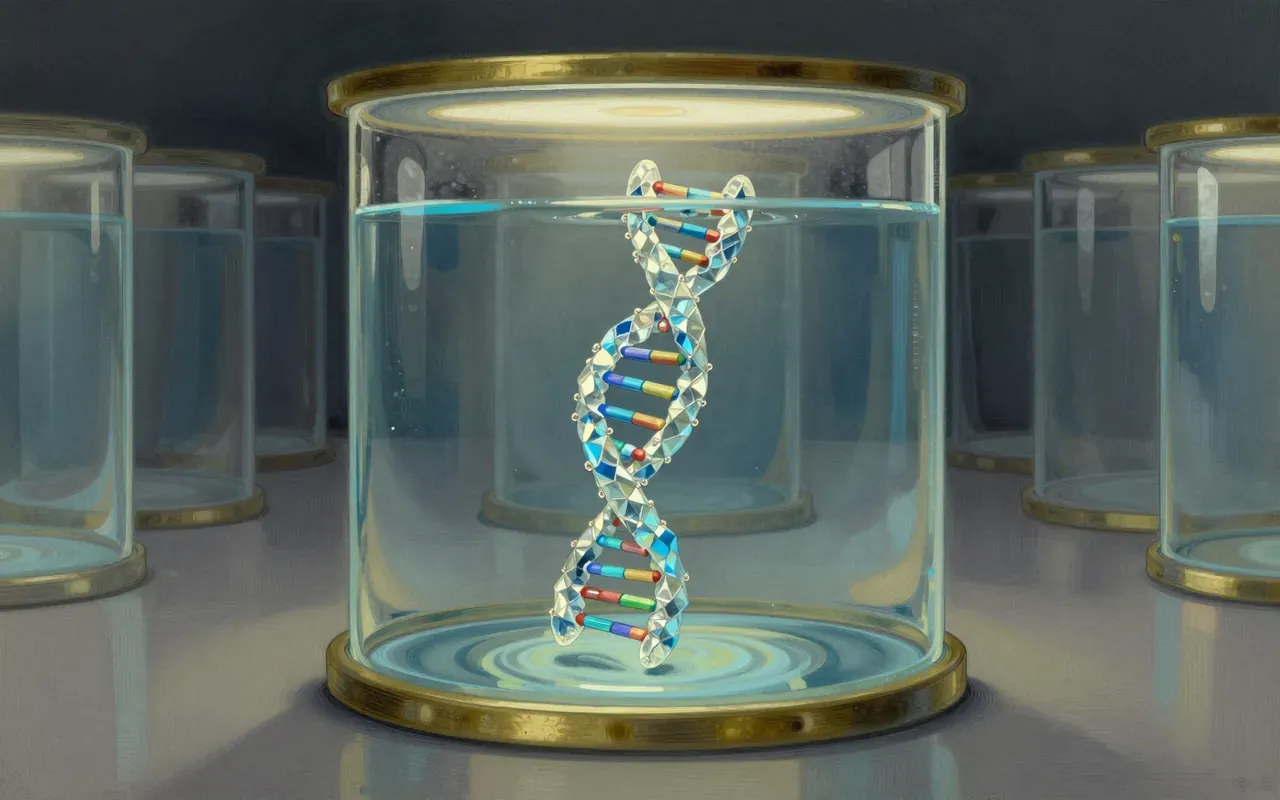
The method’s claim is that a DNA sequence can be read out letter by letter by deliberately sabotaging the copying process at a known point. Ordinary DNA synthesis extends a strand one nucleotide at a time because each nucleotide carries a chemical group that lets the next one attach. Dideoxynucleotides lack that group, so when DNA polymerase happens to incorporate one instead of the normal version, the strand stops growing right there. Running the reaction with a small proportion of dideoxynucleotides mixed among the normal ones produces a population of fragments that stop at every possible position along the template, and separating those fragments by size, then reading off which fragment ended with which dideoxynucleotide, reconstructs the original sequence one base at a time.
From plus-and-minus to dideoxy
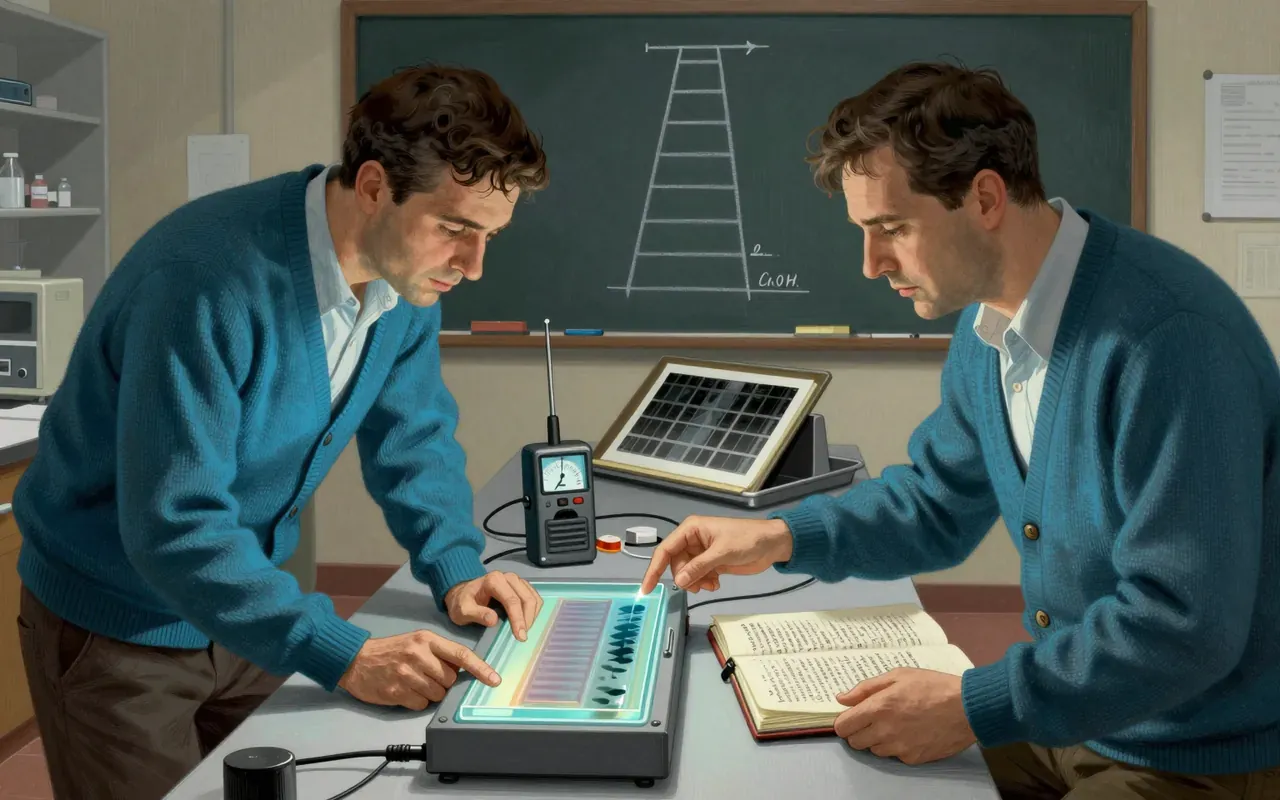
This built directly on earlier work by the same team. Frederick Sanger and Alan Coulson had published a plus-and-minus technique in 1975 that used radioactive labelling and gel electrophoresis to read around eighty nucleotides in a single experiment. The chain-termination method that followed, published in 1977, refined the same basic tools — labelling, electrophoresis, four parallel reactions each biased toward stopping at a different one of the four bases — into a technique that could read far longer, more reliable stretches of DNA at once, and it is this later method that is now generally meant by the name Sanger sequencing.
The first genome, then the human mitochondrion
The strongest evidence the method worked at real scale came quickly. Sanger’s group used it to sequence the complete genome of the bacteriophage phi X 174, 5,386 nucleotides long, the first time any DNA-based genome had been sequenced in full, and followed that with the complete human mitochondrial genome, 16,569 base pairs. Those results demonstrated that chain termination could be extended from a short experimental read to an entire, biologically meaningful genome, and the method went on to form the technical foundation later used in sequencing the full human genome. The work earned Sanger a share of the 1980 Nobel Prize in Chemistry, alongside Walter Gilbert and Paul Berg, on top of the Nobel Prize he had already won in 1958 for sequencing insulin.
Where the reads get unreliable
The method has clear, well-documented limits on read quality. The first fifteen to forty bases of a read tend to be unreliable because of how the sequencing primer binds, and quality degrades again after roughly seven hundred to nine hundred bases, with the technique generally unable to reliably sequence a continuous stretch beyond something in the range of three hundred to a thousand nucleotides. Non-specific primer binding and secondary structure in the DNA itself can also distort individual reads. None of this makes the method unreliable within its working range — reported accuracy for a good read exceeds 99.99 percent — but it does mean each individual experiment only ever reads a modest, bounded stretch of sequence, typically five hundred to six hundred bases in practice.
Outrun on volume, not on accuracy
That bounded read length is exactly why later, higher-throughput sequencing methods displaced Sanger sequencing for large-scale genome work, where sequencing millions of short fragments in parallel produces vastly more sequence per run. But the trade-off runs in Sanger sequencing’s favour on a different axis: its very high per-base accuracy and longer individual reads still make it the preferred choice where a short, specific stretch of DNA needs to be got exactly right, which is why it remains in active use for confirming results from other methods, for particular public-health tasks such as tracking norovirus outbreaks through dedicated surveillance networks, and for targeted work such as reading the SARS-CoV-2 spike protein sequence during the COVID-19 pandemic.
A method worth knowing before the ones that replaced it
This is worth the time both as science and as a small piece of scientific biography — Sanger is one of very few people to win two Nobel Prizes in the same category, and by his own account approached both breakthroughs the same unglamorous way, through methodical, incremental technical improvement rather than a single flash of insight. Understanding chain termination specifically also pays off beyond this one method, since the logic of stopping synthesis at a labelled point, rather than simply reading an intact strand directly, underlies much of how sequencing technology developed afterward. A reader who wants only the newest sequencing platforms can skip this, but anyone who wants those platforms to make sense will find this the more useful starting point.