What the work claims
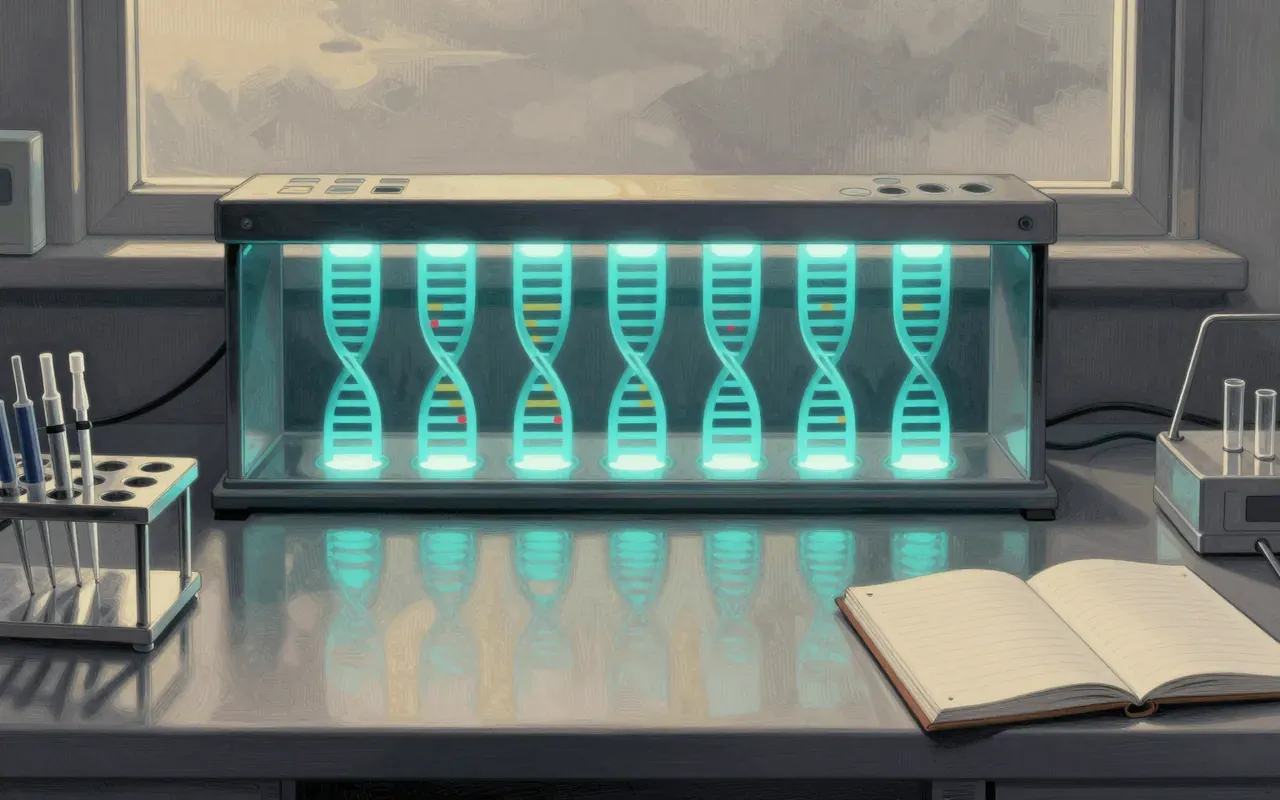
That the nucleus of a fully differentiated adult somatic cell retains all genetic information and regulatory capacity needed to direct full embryonic development.
How it was done
Dolly was cloned using somatic cell nuclear transfer from a mammary gland cell. The nucleus of that adult somatic cell was inserted into an enucleated sheep egg cell. The reconstructed embryo was implanted into a surrogate ewe.
What holds up
Dolly was the first mammal cloned from an adult somatic cell. Her creation proved that a mature cell from a specific body part could generate a whole organism. It showed that genes in the nucleus of a mature differentiated somatic cell can revert to an embryonic totipotent state.
What does not
The work did not show that cloning from adult cells is efficient, safe, or scalable. It did not demonstrate viability beyond one individual. It did not address epigenetic stability, telomere length, or long-term health outcomes in clones.
Why it matters beyond the lab
It enabled new paths in regenerative medicine, livestock breeding, and conservation biology — but only as a proof-of-principle, not a ready tool. Its real impact was conceptual: it collapsed the dogma that differentiation is irreversible.
Is it worth your time
Yes — it redefined the biological limits of cellular differentiation and forced a global reassessment of developmental potential in mammals.