What the work claims
Genes are divisible into multiple functional elements. Homeotic gene complexes like Bithorax control segment identity in development. Radiation health risks are linear with no safe threshold.
How it was done
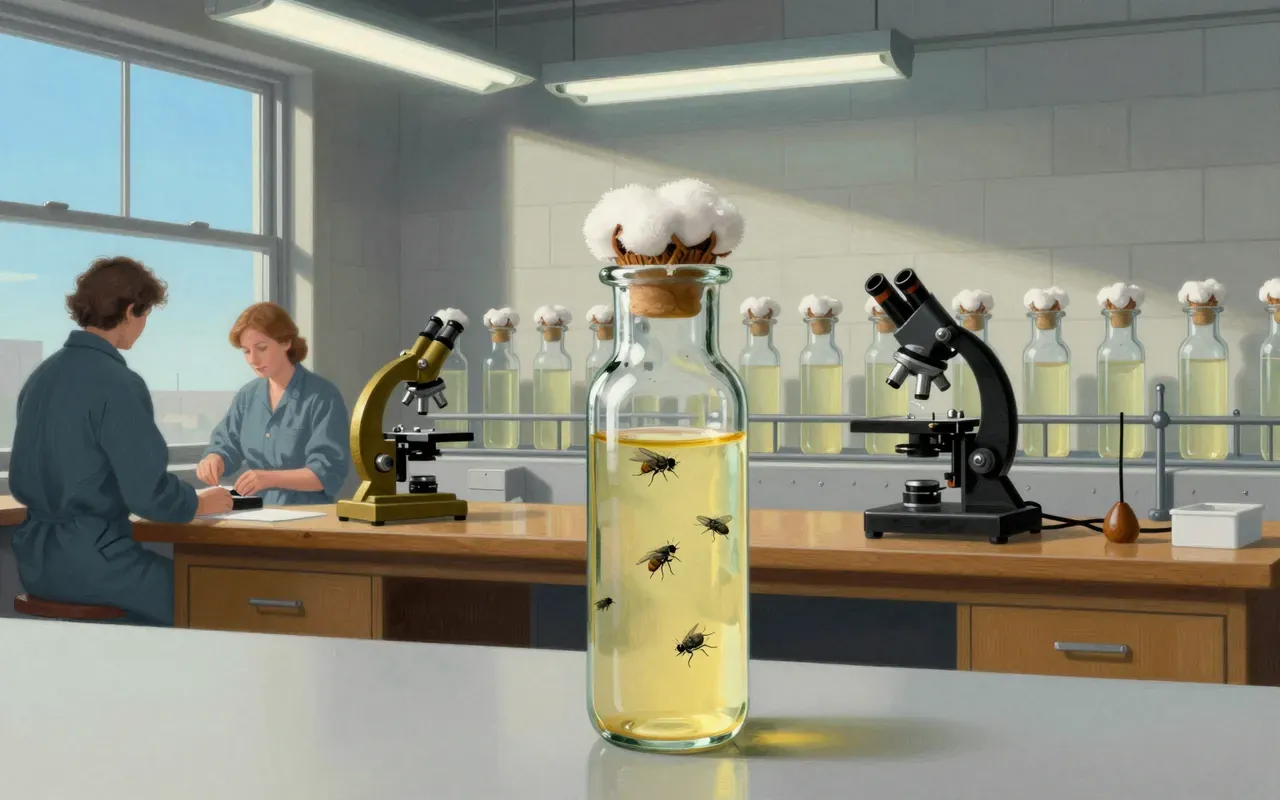
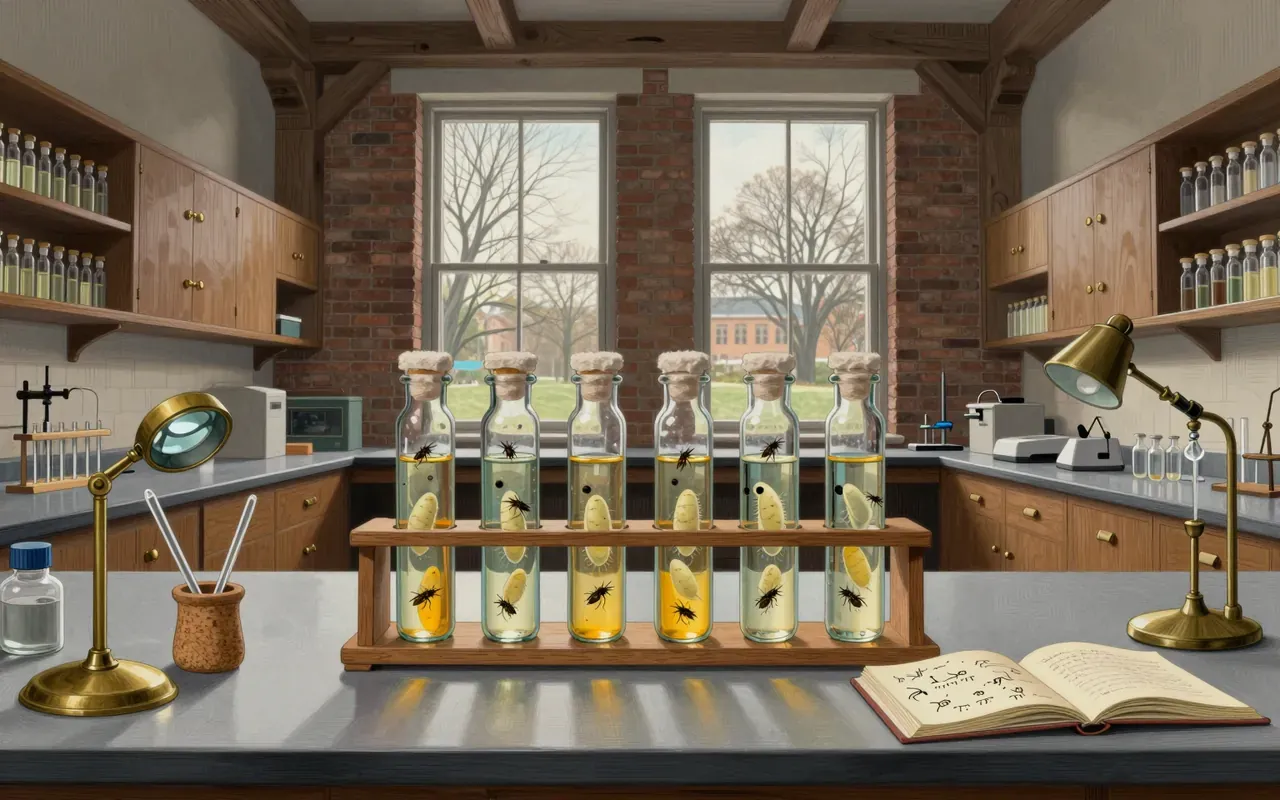
Lewis used Drosophila melanogaster at Caltech. He performed genetic crosses, recombination analysis, and radiation exposure experiments. He developed the complementation test and studied closely linked mutations at loci including white and apricot.
What holds up
The Bithorax complex discovery and functional elucidation hold up. Intragenic recombination at white and apricot is verified. Pseudoallelism and the complementation test are documented methods he introduced. His conclusion that radiation health risks had been underestimated is stated as his own.
What does not
The material does not support claims that Lewis proved the linear-no-threshold model, established cancer causation in humans, or demonstrated evolutionary conservation across species. It does not report replication of his radiation conclusions by others, nor consensus on them.
Why it matters beyond the lab
His work redefined the gene from an indivisible unit to a structured, recombinable locus — reshaping genetics education and practice. His radiation analysis directly informed policy debates on nuclear fallout and safety standards.
Is it worth your time
Yes — if you need to understand how genes were first shown to be divisible, how homeotic gene complexes organise body plans, or why radiation risk models assume linearity without threshold.