sciencebriefs
all subjects →
10:28in productionCh. 1 · The Mechanical Basis/ 10:28 · ceiling 15 min
Genetics · Evolution

Thomas Hunt Morgan

Morgan didn’t discover the gene — he pinned it to a chromosome, and proved inheritance was mechanical, not mystical.

Morgan’s Drosophila work established chromosomes as the physical carriers of heredity, identified sex-linked inheritance, and introduced recombination frequency as a tool for ordering genes — the bedrock of modern genetics.

Chapters & takeaways4
  1. 0:58
    The Mechanical Basis

    Genes are physical objects on chromosomes — not abstractions.

  2. 2:48
    The White-Eyed Male

    White eyes in male flies revealed sex-linked inheritance — the first concrete evidence genes live on sex chromosomes.

  3. 4:40
    Linked but Not Locked

    When miniature wings sorted independently of white eyes, Morgan inferred linkage and crossing over.

  4. 6:28
    The First Genetic Map

    Crossover frequency became the first ruler for measuring gene order and distance on chromosomes.

Worth your time?

Yes. Study the whole thing.

4.5/ 5
What works
  • chromosomal basis of inheritance
  • sex-linked trait identification
  • genetic linkage
  • crossover-based gene ordering
What does not
  • DNA
  • molecular structure
  • universal inheritance mechanism
  • quantitative mapping standard
Study it if
  • biologists
  • geneticists
  • science historians
Skip it if
  • general public without biology background
  • those seeking clinical or therapeutic insight
The written brief1 min read

What the work claims

Genes are carried on chromosomes and constitute the mechanical basis of heredity. Some traits are sex-linked and carried on sex chromosomes. Other genes are carried on specific chromosomes. Linked genes can separate via crossing over, and the frequency of that separation reflects their relative positions.

How it was done

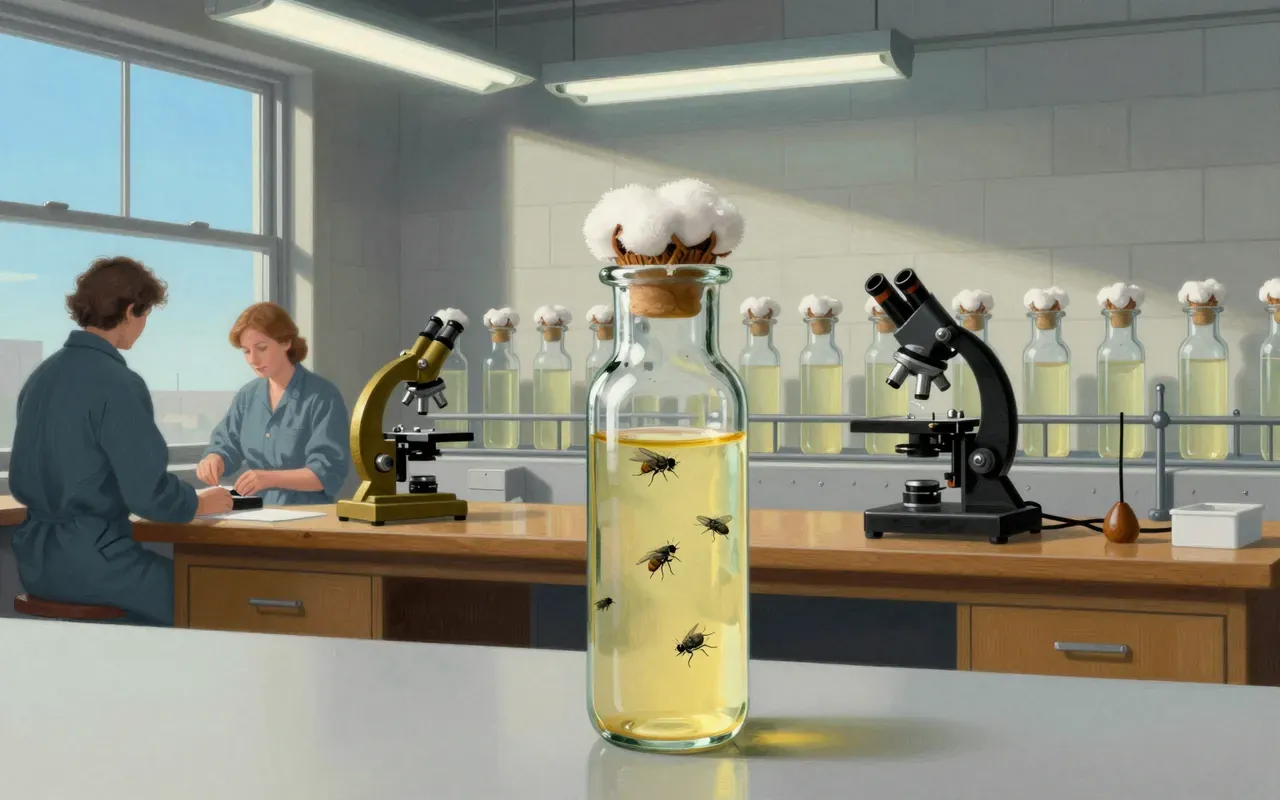
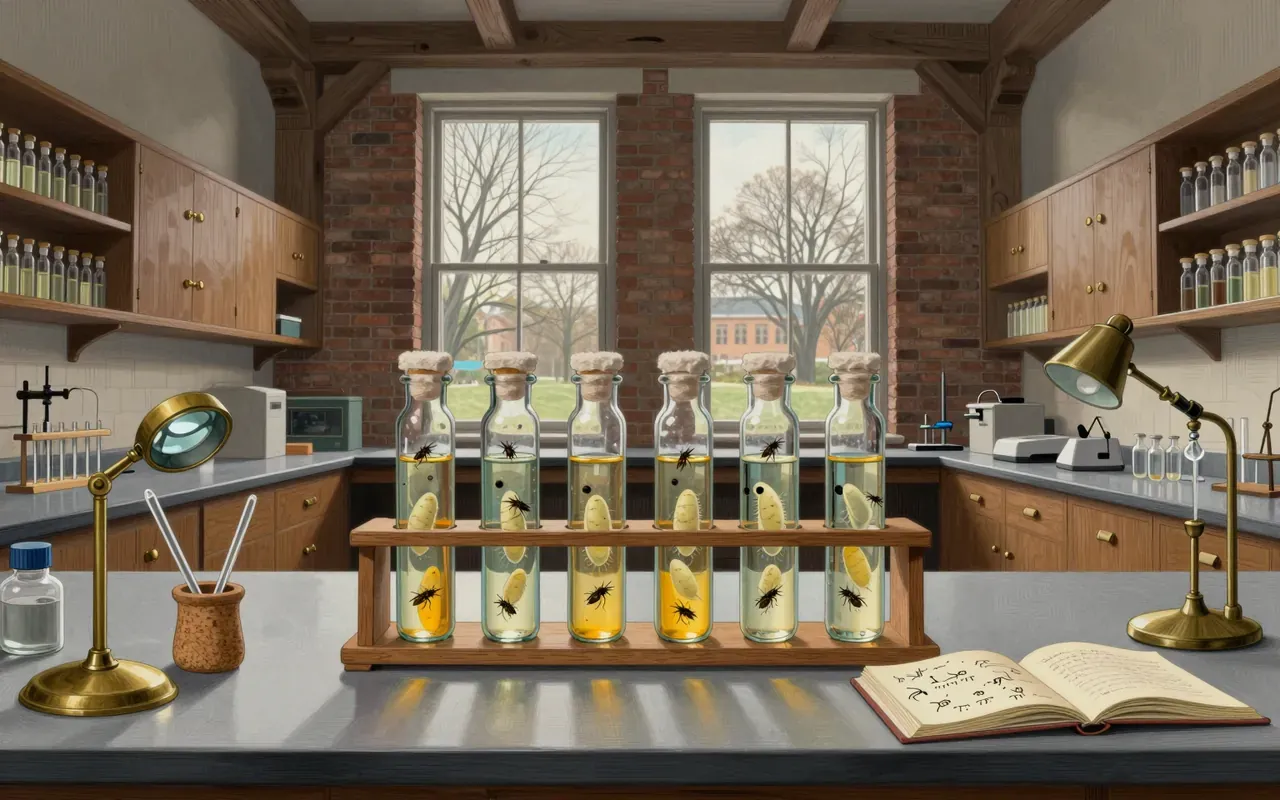
Morgan bred Drosophila melanogaster in Columbia University’s Schermerhorn Hall Fly Room. He observed inheritance patterns across generations, counting mutant traits in thousands of flies. He crossed white-eyed males with red-eyed females, then intercrossed their progeny to track trait segregation by sex.

What holds up

Genes reside on chromosomes. The white-eye trait is sex-linked and recessive. Traits sort non-independently when on the same chromosome. Crossover frequency correlates with physical separation of genes — a principle still used in genetic mapping.

What does not

The work does not prove that genes are DNA sequences. It does not identify the molecular nature of the gene, nor does it establish universal mechanisms for all inheritance. It does not quantify crossover frequency as a precise distance metric — only proposes it as a possible indicator.

Why it matters beyond the lab

It transformed heredity from statistical observation into a physical, testable science. It enabled predictive breeding, disease-gene mapping, and later genome sequencing — all reliant on the chromosome-as-map premise Morgan established.

Is it worth your time

Yes — it is the first experimental demonstration that genes are physical entities on chromosomes, not abstract units. It remains the foundational evidence for genetic mapping and chromosomal inheritance.
Same field · Genetics4 of 24
Up next in Science

Tim D. White

· 11:01

Two fossils—one 4.4 million, one 2.5 million years old—don’t prove human ancestry, but they do break the timeline into testable chunks.

11:01