sciencebriefs
all subjects →
9:19in productionCh. 1 · The air conducted electricity/ 9:19 · ceiling 15 min
Physics · Chemistry

Marie Curie

She didn’t find radioactivity—she proved it lived inside the atom.

Marie Curie used an electrometer to show uranium rays ionised air, that activity scaled precisely with uranium mass, and that pitchblende contained substances far more active—leading to the announcement of polonium and radium. She hypothesised radioactivity was atomic—but the sources do not report isolation, quantification, or proof of atomic origin.

Chapters & takeaways4
  1. 0:55
    The air conducted electricity

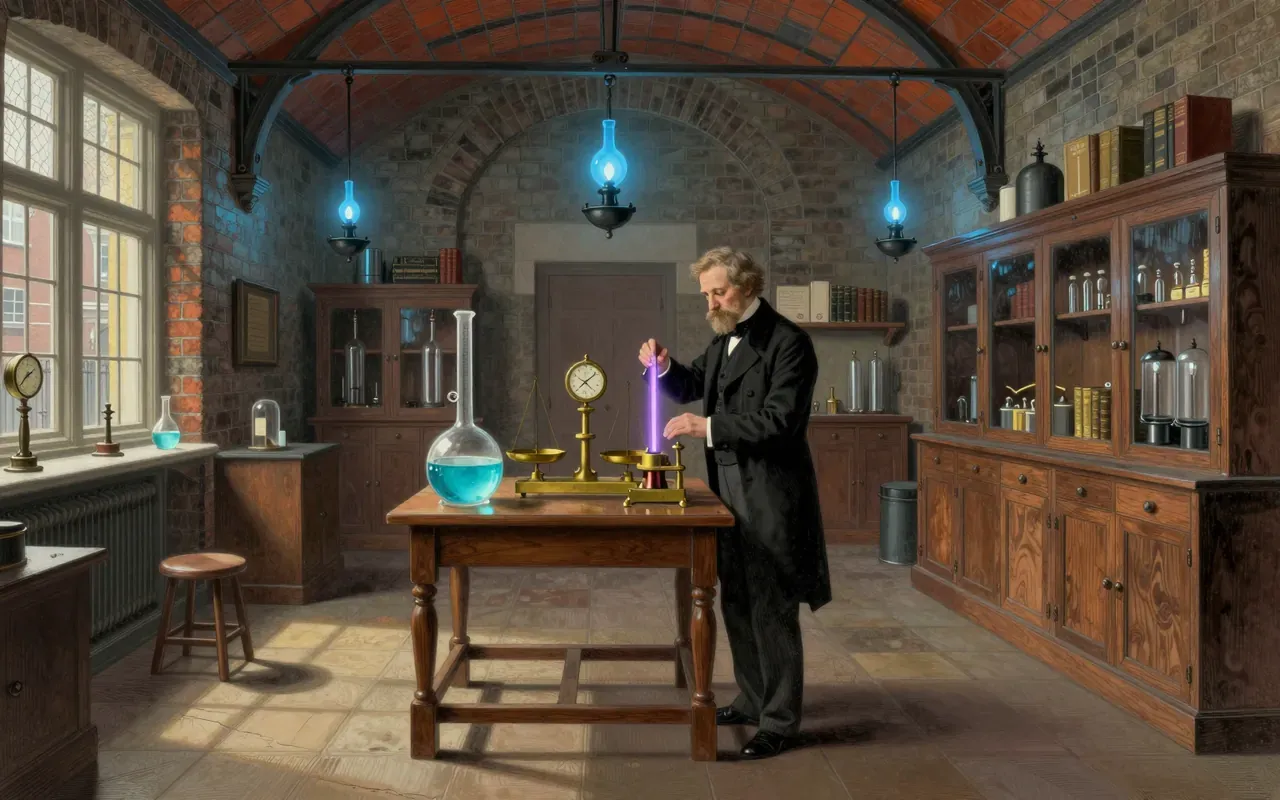
    Uranium rays ionised air—and she measured it with an electrometer.

  2. 2:22
    An atomic property

    Activity scaled with uranium mass—so radiation had to come from the atom itself.

  3. 3:35
    Too much activity

    Pitchblende was too active for its uranium content—so something else was there, and thorium joined uranium as radioactive.

  4. 5:14
    Two new elements, named

    Polonium and radium were announced—not isolated—as elements responsible for the excess activity.

Worth your time?

Yes. Study the whole thing.

4.5/ 5
What works
  • redefined the atom
  • established radioactivity as measurable and elemental
  • named two new elements based on activity
  • used quantitative inference to infer unseen matter
What does not
  • proof
  • isolation
  • quantitative error bounds
  • atomic mechanism confirmed
Study it if
  • physicists
  • chemists
  • historians of science
Skip it if
  • clinicians
  • engineers
  • policy-makers
The written brief1 min read

What the work claims

Radioactivity is an atomic property. Uranium and thorium emit rays that ionise air. Pitchblende contains at least two previously unknown elements—polonium and radium—each far more active than uranium.

How it was done

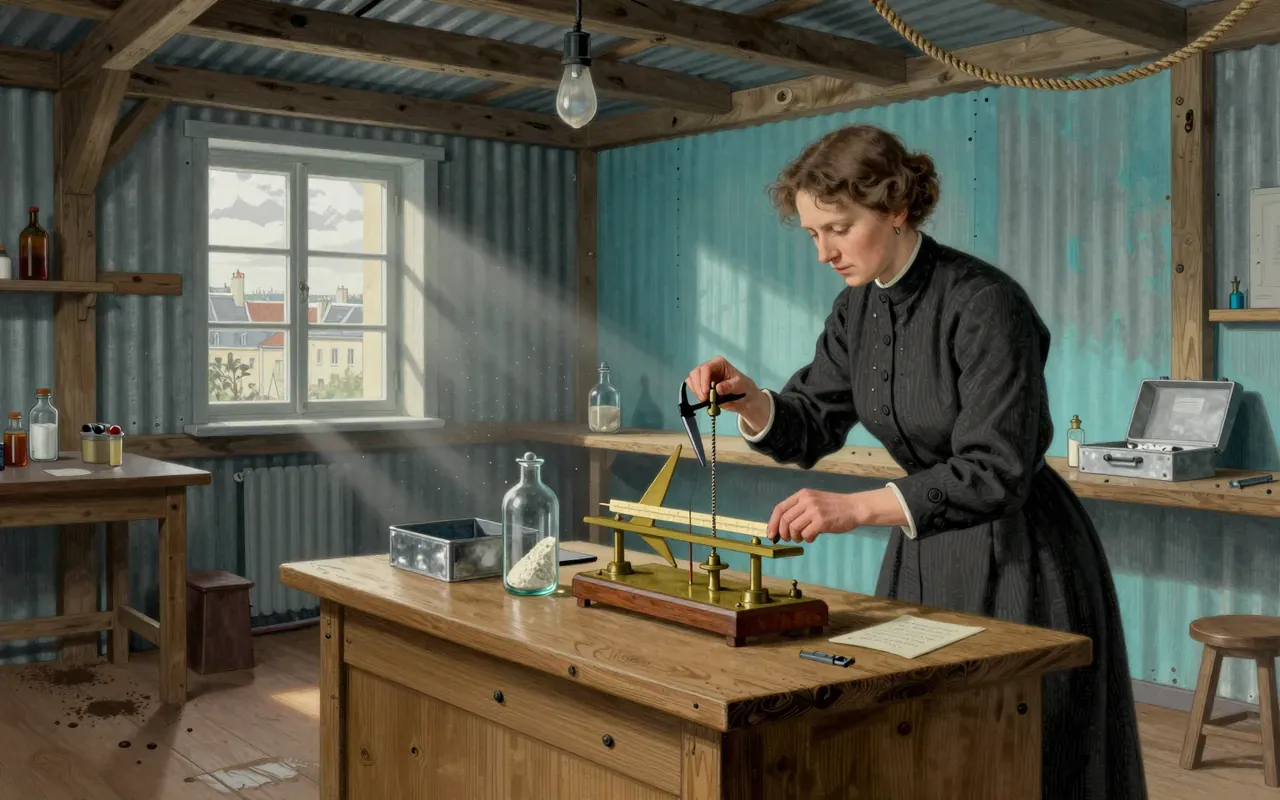
She used an electrometer—developed by her husband and his brother—to measure electric charge caused by uranium rays. She tested uranium compounds and minerals like pitchblende and chalcolite.

What holds up

Uranium’s activity scaled strictly with quantity. Uranium rays ionised air. Thorium was confirmed radioactive. Polonium and radium were announced as new elements based on anomalous activity in pitchblende and chalcolite.

What does not

The sources do not say she proved radioactivity was atomic; they say she hypothesised it. They do not say she isolated pure radium or polonium, only that she announced their existence. No error bars, sample sizes, or statistical thresholds are given.

Why it matters beyond the lab

It broke the idea that atoms were immutable. That shift enabled nuclear physics, radiometric dating, and radiation medicine—but none of those applications appear in the sources.

Is it worth your time

Yes. It redefined the atom as a source of energy, not just structure—and did so with minimal apparatus and maximal inference.
Same field · Physics4 of 114
Up next in Science

Mario Molina

· 10:33

A postdoc and a chemist proved your fridge coolant was eating the sky — and changed how the world governs chemistry.

10:33