sciencebriefs
8:42in productionCh. 1 · The fusion/ 8:42 · ceiling 15 min
Medicine · Genetics

Monoclonal antibody

A single-cell trick turned antibody production from artisanal guesswork into industrial precision.

The 1975 hybridoma technique solved one problem: how to make unlimited quantities of identical antibodies targeting a known antigen. It did not solve delivery, safety, scalability, or therapeutic function. Its value lies in reproducibility — not potency, not novelty of target, not clinical impact.

Chapters & takeaways5
  1. 1:05
    The fusion

    They fused two cell types: antibody-making B cells and immortal myeloma cells.

  2. 1:56
    The output

    The resulting hybridomas secreted monoclonal antibodies — identical, immortal, and antigen-specific.

  3. 2:56
    The advantage

    Unlike conventional antisera, monoclonal antibodies enabled precise molecular identification, purification, and measurement.

  4. 3:58
    The recognition

    The 1984 Nobel Prize confirmed its foundational status — but only for the method, not its applications.

  5. 5:28
    The extension

    Later work by Milstein and Cuello extended this into diagnostic power — but that was not part of the 1975 discovery.

Worth your time?

Yes. Study the whole thing.

4.5/ 5
What works
  • reproducible monoclonal antibody generation
  • uniform specificity
  • continuous culture of antibody-secreting cells
What does not
  • therapeutic use
  • human trials
  • affinity quantification
  • batch consistency data
Study it if
  • biologists
  • diagnostic developers
  • antibody engineers
Skip it if
  • clinicians seeking treatments
  • drug regulators
  • patients
The written brief1 min read

What the work claims

The method produces monoclonal antibodies of predefined, uniform specificity via immortal hybridomas derived from B-cell–myeloma fusions.

How it was done

Köhler and Milstein fused antibody-producing lymphocytes from immunized animals with immortal myeloma cells to create hybridomas. They reported continuous cultures of these fused cells secreting antibody of predefined specificity in Nature in 1975.

What holds up

The hybridoma technique reliably produced immortalised cell lines secreting monoclonal antibodies specific to known antigens. It enabled reproducible generation of antibodies with uniform specificity — unlike heterogeneous conventional antisera.

What does not

The work did not produce therapeutic antibodies. It did not demonstrate in vivo efficacy, clinical use, or human application. It did not quantify affinity, yield, stability, or batch-to-batch variation.

Why it matters beyond the lab

Monoclonal antibodies became essential for immuno-based diagnostic tests. They enabled precise identification, purification, and measurement of particular molecules — foundational for modern biomedicine and industrial assay development.

Is it worth your time

Yes. It established the first reproducible method to generate antibodies of uniform specificity — a tool that reshaped diagnostics, purification, and measurement in molecular biology.
Same field · Medicine4 of 83
10:02
AvicennaAvicenna laid structural foundations for scientific reasoning—linking observation to logic, disease to unseen agents, self-awareness to immateriality—but produced no empirical verification, no taxonomy of organisms, no experimental protocol, and no mechanism for transmission.
8:44
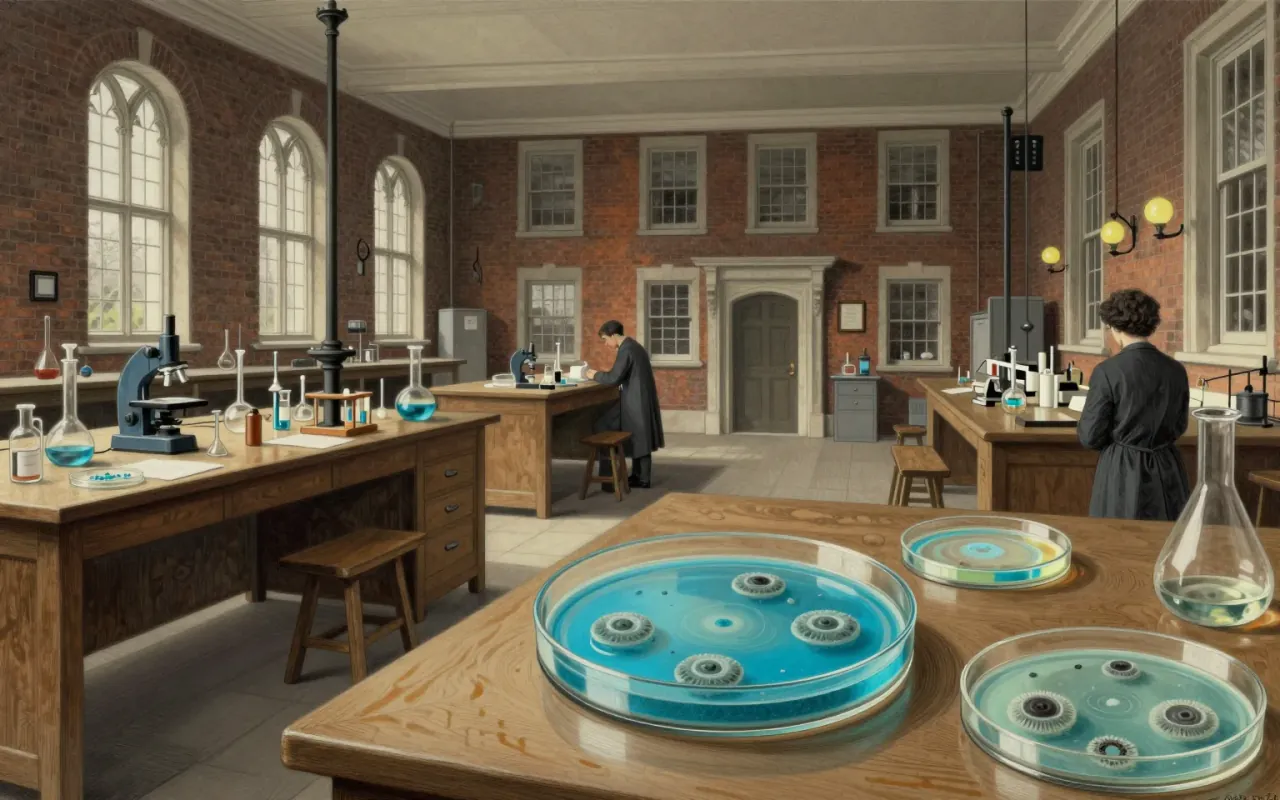
Alexander FlemingFleming’s 1928 observation was narrow, unreplicated in vivo, and clinically inert at the time — yet it encoded three durable truths: microbes can inhibit each other selectively; that inhibition fails if deployment is incomplete; and the agent responsible is both unstable and taxonomically specific. Nothing he did translated directly to therapy. Everything he saw framed the problem correctly.
13:00
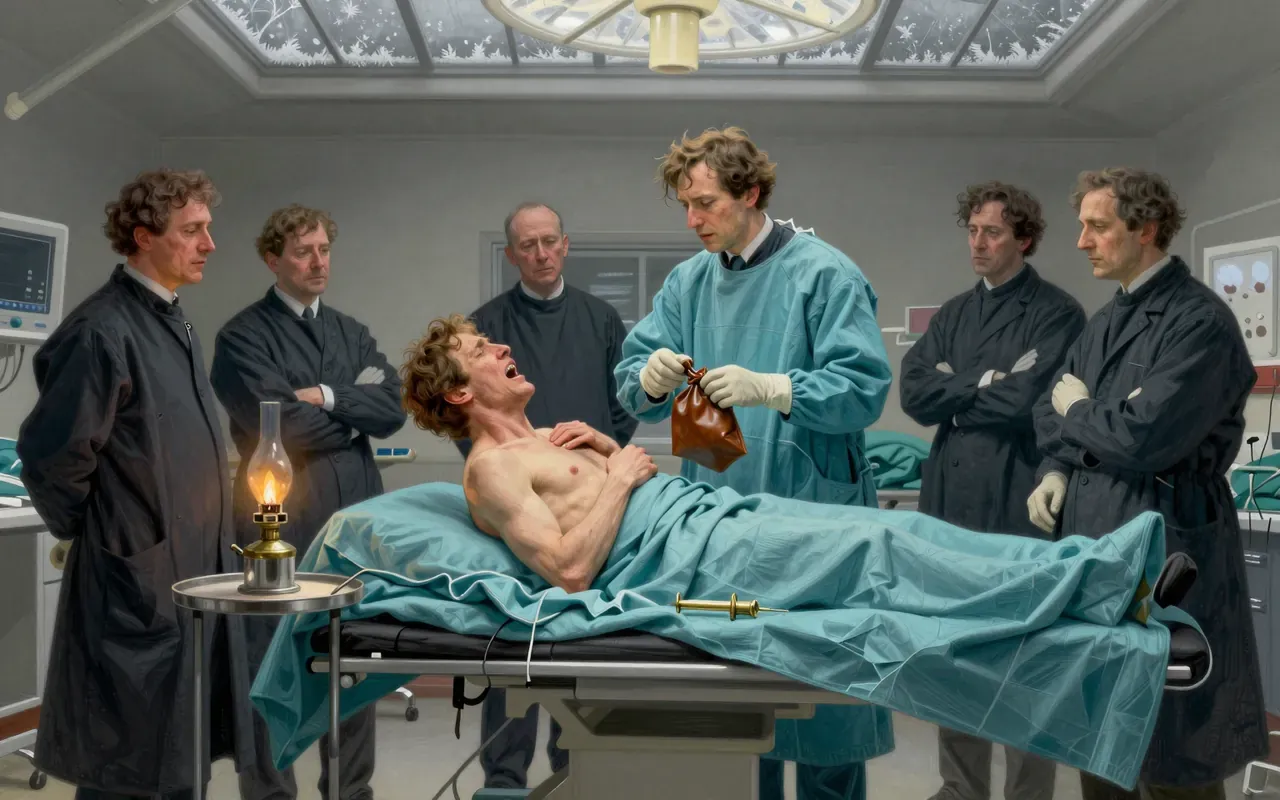
History of general anesthesiaAt Massachusetts General Hospital on 16 October 1846, the dentist William Morton administered inhaled ether to a young printer named Edward Gilbert Abbott, allowing surgeon John Collins Warren to remove a neck tumour without Abbott reporting any pain, a demonstration that ended with Warren's remark that this was no humbug. News of the success spread to Europe and across America within weeks, quickly overshadowing an earlier failed attempt, a nitrous oxide demonstration by Horace Wells the previous year that had gone wrong when the patient cried out. Morton's claim to priority was disputed almost immediately, both by Charles Jackson, who said Morton had taken the idea from him, and by the fact that Crawford Long had used ether for a similar operation back in 1842 without publishing the result until years later, leaving Morton's public demonstration, rather than any single discovery, as the moment credited with launching modern surgical anaesthesia.
13:00
Management of HIV/AIDSHuman studies tracking how fast HIV levels fell once patients started treatment showed the virus was replicating continuously and mutating constantly, not lying dormant. That finding argued for combining several drugs at once rather than relying on any single one, a strategy the 1996 clinical trials confirmed and that remains the basis of antiretroviral therapy today.
Up next in Science

Per Bak

· 10:19

Self-organized criticality is not a law of nature—it’s a sandbox with one working toy.

10:19