What the work claims
That electromagnetic fields obey compact vector equations; that distributed inductance eliminates signal distortion in telegraph lines; that gravity admits a formal electromagnetic analogue.
How it was done
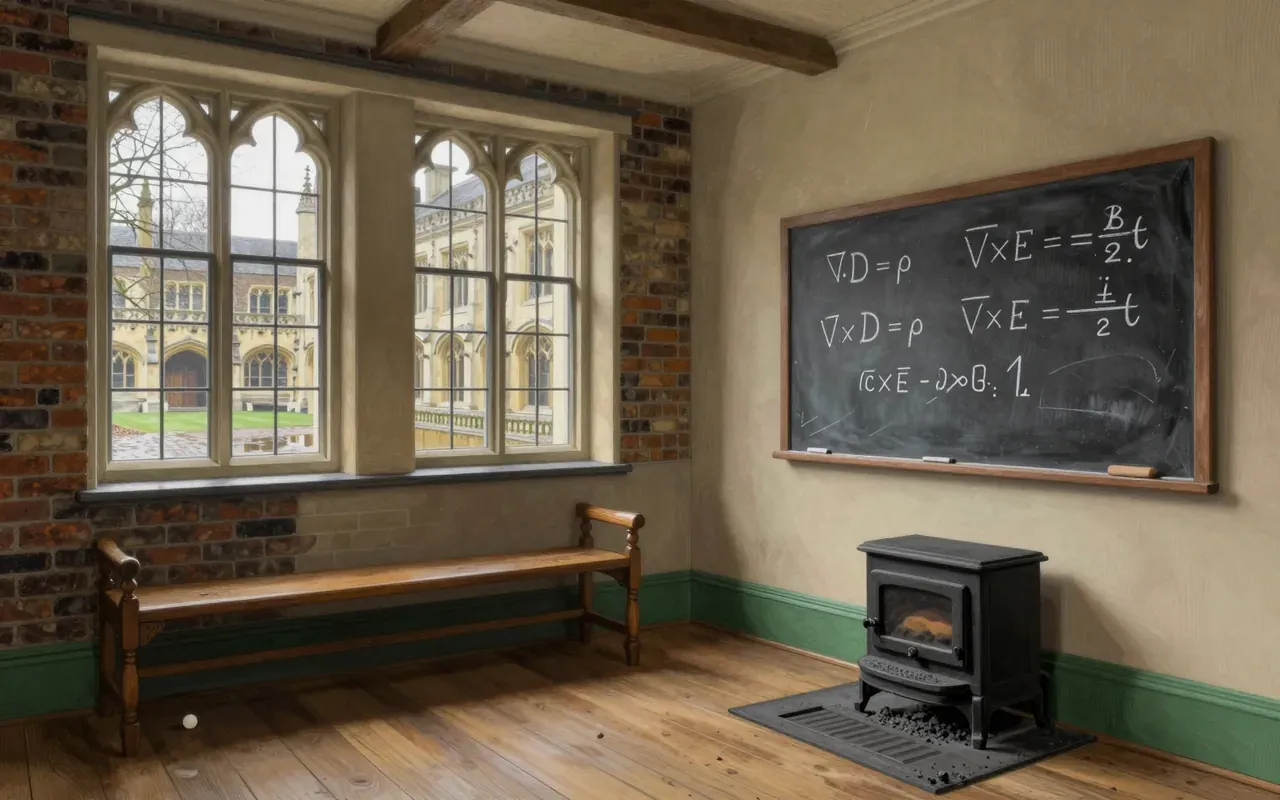
Heaviside used vector calculus to recast Maxwell’s equations, derived transmission line theory from first principles, and extended electromagnetic formalism to gravity using analogy. The vector recasting reduced twelve equations in twenty unknowns to four differential equations in two unknowns.
What holds up
The vector form of Maxwell’s equations (four differential equations in two unknowns) is universally used. Uniform inductance enabling distortionless propagation is experimentally validated and applied. The Kennelly–Heaviside layer exists and reflects radio waves.
What does not
Heaviside did not build or test hardware. His distortionless condition was theoretical until others implemented loaded lines. Gravitoelectromagnetism remains an analogy—not a quantum theory of gravity.
Why it matters beyond the lab
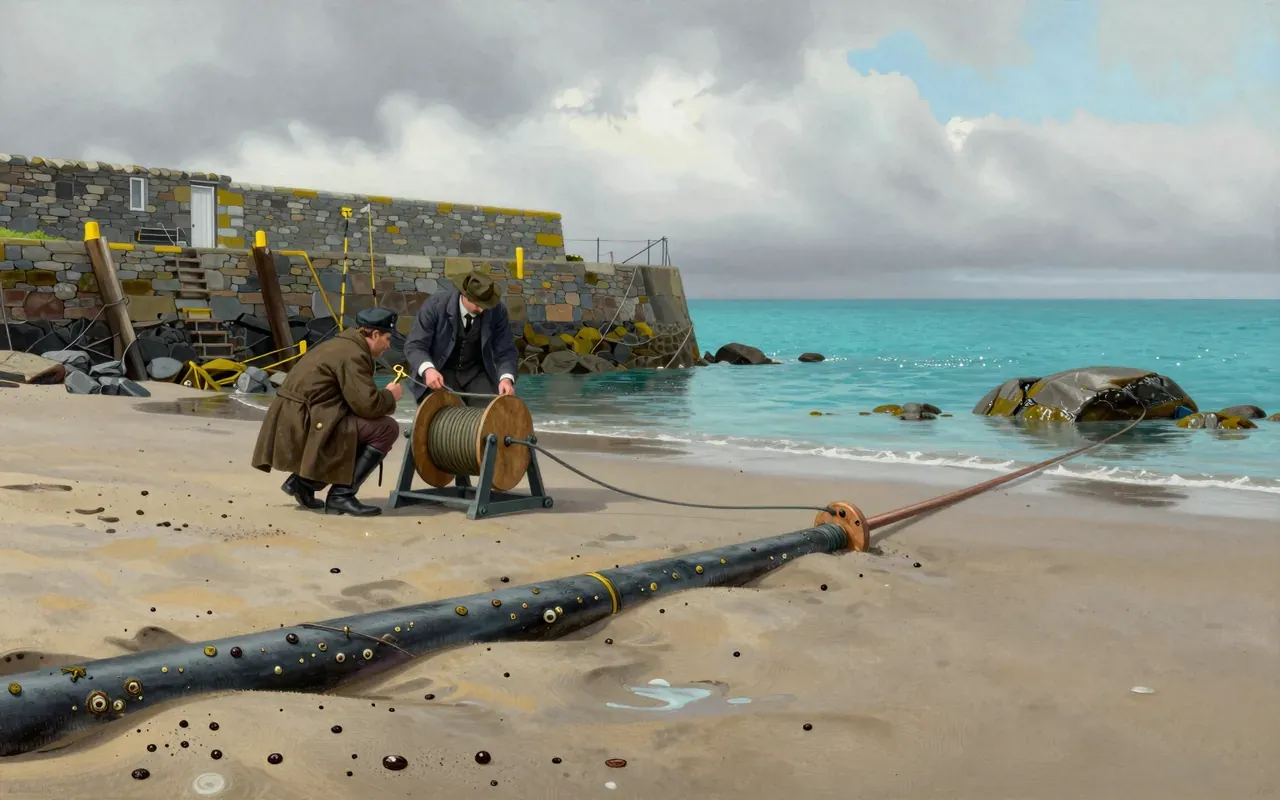
His mathematics underpins every radio, radar, and wireless system. His transmission theory made real-time global communication possible. Transmission line theory increased transatlantic cable transmission rates by a factor of ten, from ten minutes to one minute per character. His gravitational analogy shaped how relativity and frame-dragging were conceptualised. The Royal Society recognized his contributions to the mathematical description of electromagnetic phenomena. FitzGerald and John Perry obtained a civil list pension for him.
Is it worth your time
Yes. His vector reformulation is the language of all modern electromagnetism; his distortionless line condition directly enabled global telegraphy; his gravitoelectromagnetism was confirmed a century later.