
Geoffrey West
Cities scale like organisms—but the 15% salary bump isn’t a law, it’s a rough correlation with no mechanism, margin of error, or boundary conditions.
The language that keeps turning out to describe things it was not built for.







Bayes's 1763 essay solves a narrow inverse probability problem using conditional probability. It computes limits on a binomial parameter—not a general theory of belief updating. Its power lies in precision, not generality.












Wiles proved Fermat’s Last Theorem by establishing the modularity theorem for semistable elliptic curves — a result that, combined with Ribet’s theorem, ruled out integer solutions to a^n + b^n = c^n for n > 2. His initial 1993 proof contained a flaw in the Selmer group argument; he and Taylor repaired it in 1994 using Galois representations and Iwasawa theory. The complete proof appeared in the Annals of Mathematics in 1995.


Gödel’s 1931 incompleteness theorems show that no consistent, effectively axiomatized formal system capable of arithmetic can be both complete and self-consistent. They ended Hilbert’s program. Their method — Gödel numbering and diagonalisation — became foundational for computability theory. They do not apply outside formal systems satisfying strict technical conditions.




Hilbert’s problems are not a discovery in the empirical sense. They are a curatorial act—23 unsolved questions published in 1900 to define mathematics’ trajectory for the next century. Their influence stems from uptake, not truth. They succeeded because mathematicians treated them as a syllabus—not because they were complete, precise or even consistent.




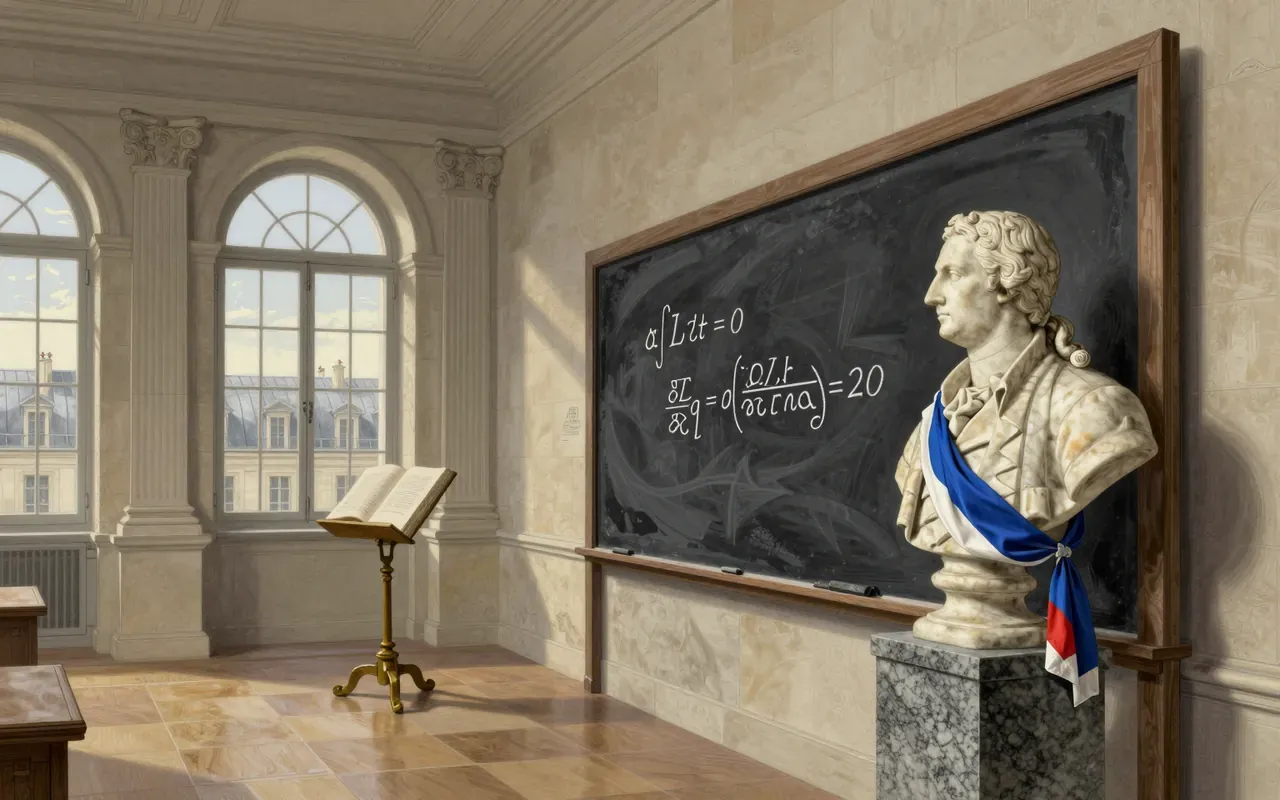









Noether's theorem is the rigorous, general proof that continuous symmetries of the action imply conservation laws. It was published in 1918 in Invariante Variationsprobleme. It applies only to smooth, differentiable symmetries in conservative systems. It resolved energy conservation in general relativity. It reshaped theoretical physics’ emphasis toward symmetry.












Riemann’s 1859 hypothesis is a precise, unproven claim about zeta zeros — central to prime distribution, yet untouched by proof for 165 years.

