10:06in productionCh. 1 · The birth of field quantization/ 10:06 · ceiling 15 min
Physics · Applied science
Quantum electrodynamics
1927
QED isn’t a theory of light and matter — it’s a manual for taming infinity.
Quantum electrodynamics emerged from Dirac’s 1920s field quantization, failed against Lamb shift measurements, and was rescued by renormalization — first by Bethe in 1947, then extended covariantly by Tomonaga, Schwinger, Feynman and Dyson. It delivers finite, gauge-invariant predictions at any perturbation order. It does not explain gravity, strong or weak forces — and its 1927 origins solved none of the infinities later resolved by renormalization.
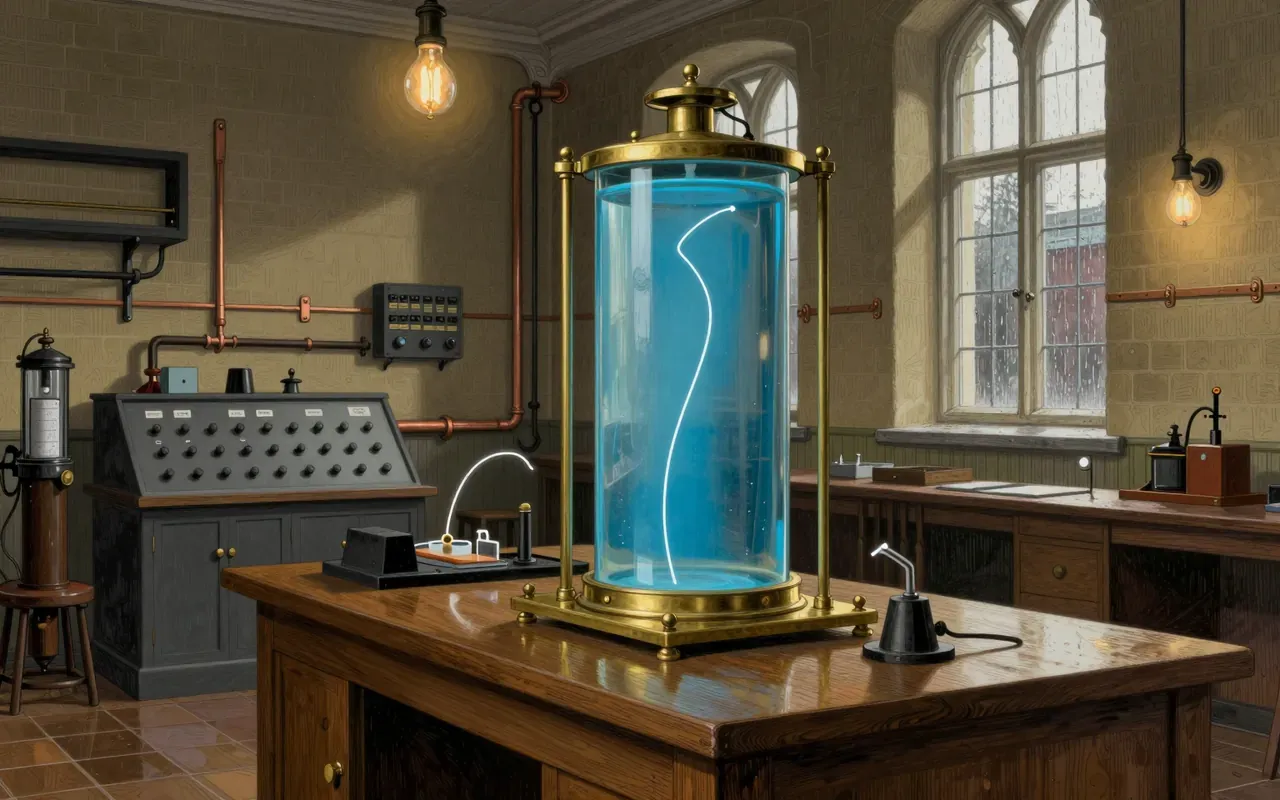
Dirac’s 1920s work invented field quantization — but left infinities unresolved.
2:43
The experiment that broke the theory
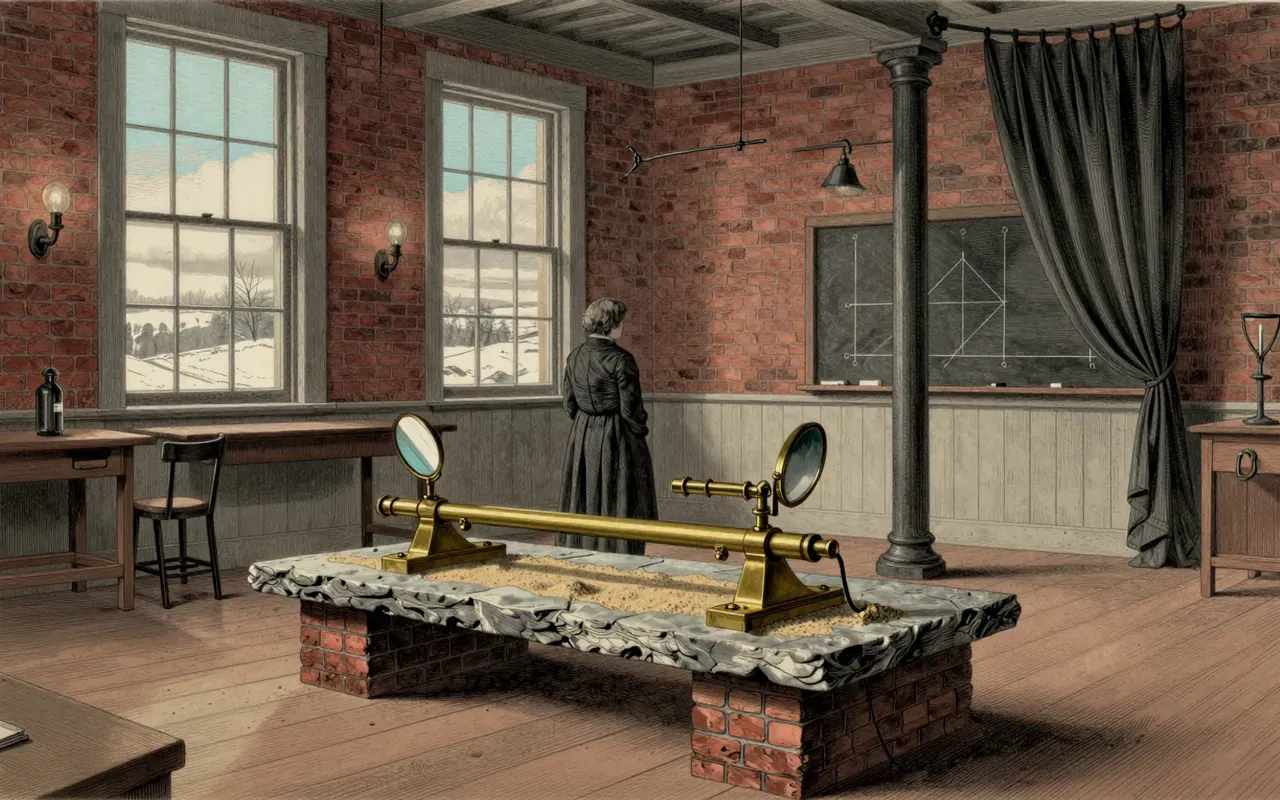
Microwave measurements of the Lamb shift exposed the theory’s failure — and pointed to the fix.
4:34
How to absorb infinity
Renormalization doesn’t remove infinities — it hides them in mass and charge.
6:09
Three formulations, one finite theory
Covariance, gauge invariance and diagrammatic equivalence made QED computable — and reliable.
Worth your time?
Yes. Study the whole thing.
4.5/ 5
What works
finite predictions at any perturbation order
agreement with Lamb shift and magnetic moment
covariant and gauge-invariant formulation
What does not
explains nuclear forces
predicts gravity
resolves infinities before 1947
Study it if
physicists
philosophers of science
engineers working on atomic clocks or quantum sensors
Skip it if
chemists using Hartree–Fock
biologists studying protein folding
climate modellers
The written brief1 min read
What the work claims
Quantum electrodynamics claims to unify quantum mechanics and special relativity in a single framework for electromagnetic interactions — one that computes observables to arbitrary precision via perturbation theory.
How it was done
Dirac quantized the electromagnetic field using harmonic oscillators and creation–annihilation operators in the 1920s. Bethe made a non-relativistic calculation of the hydrogen line shift in 1947. Tomonaga, Schwinger, Feynman and Dyson built fully covariant formulations. Renormalization absorbed infinities into experimentally fixed mass and charge values.
What holds up
Dirac’s 1920s spontaneous emission coefficient remains foundational. The renormalized, covariant QED formulations produce finite, gauge-invariant results at any perturbation order. They match microwave measurements of the Lamb shift and electron magnetic moment.
What does not
The 1927 work did not solve divergences. It produced no finite predictions for observables. It lacked covariance, gauge invariance, or agreement with Lamb shift or magnetic moment measurements.
Why it matters beyond the lab
QED established renormalization as a template for all subsequent quantum field theories. Its success validated treating infinities as redefinitions of physical constants — a conceptual pivot that shaped particle physics, cosmology and condensed matter theory.
Is it worth your time
Yes — it is the only quantum field theory with predictive power confirmed to ten decimal places. Its methods underpin every precision test of fundamental physics since 1947.
George Gamow's 1928 theory explained why alpha particles with far too little energy to climb a nucleus's confining wall still escape it, by treating the particle as a wave that can pass through a barrier it cannot classically surmount.