A structure built for one relationship
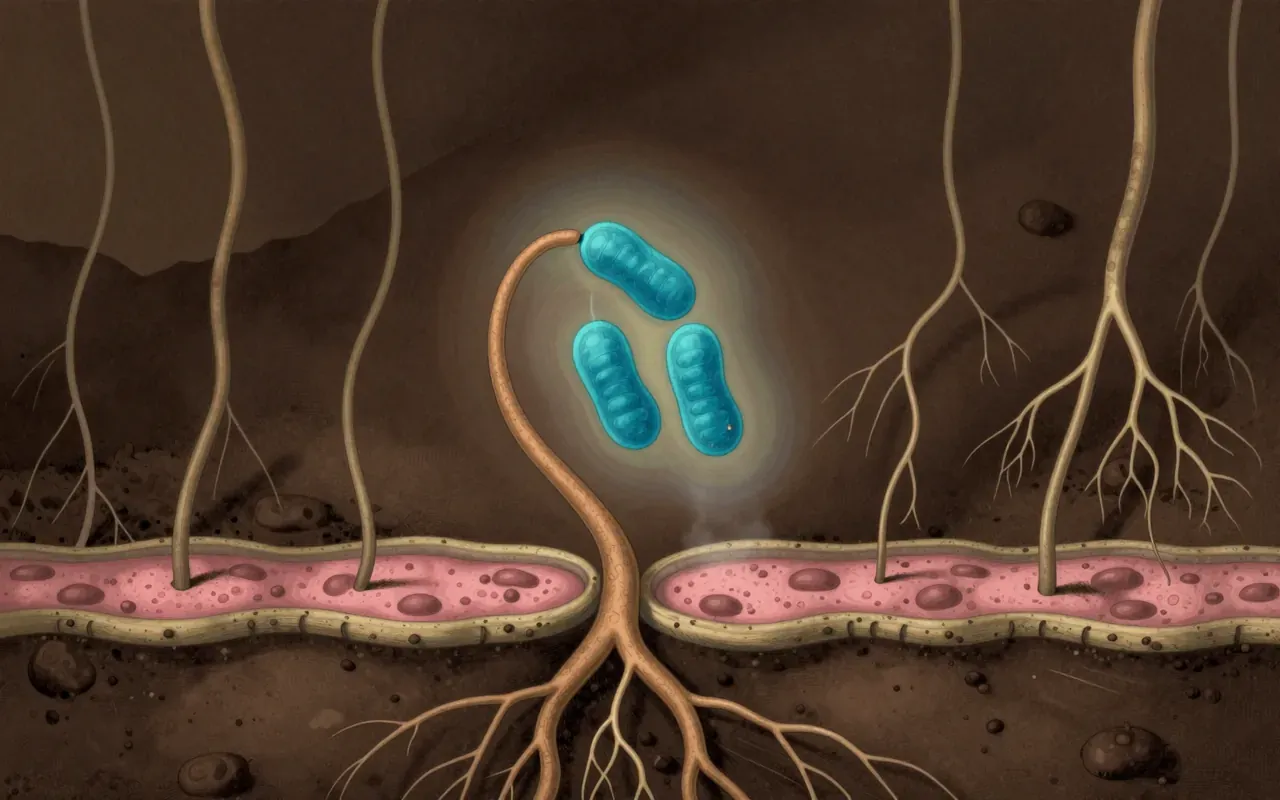
The material describes root nodules as structures built specifically to house a symbiotic relationship, found primarily on legume roots and existing to enable nitrogen fixation that the plant could not otherwise perform. Rather than being a passive location where bacteria happen to settle, the nodule is presented as a deliberately constructed organ, assembled by the plant in response to a specific bacterial signal and shaped internally to support the chemistry the bacteria carry out once inside. This framing matters because it positions the nodule as the product of active coordination between two organisms rather than an incidental byproduct of infection, and the material treats that coordination, beginning with chemical signalling and ending with a functioning nitrogen-fixing organ, as the actual subject worth explaining in detail.
A chemical conversation starts it
The process starts with the legume root releasing flavonoid compounds into the surrounding soil. These flavonoids are picked up by rhizobia bacteria and activate a set of bacterial genes, described as nod genes, which produce small signalling molecules called nod factors. The material specifically notes that nod factors alone are capable of triggering at least partial curling of the plant’s root hairs, demonstrating that this single class of bacterial molecule carries enough information to begin reshaping the plant’s own tissue in response. That root hair curling is the visible first step of a much longer developmental sequence, and the material treats it as evidence of how precisely targeted this molecular signalling exchange is, rather than a vague or generalised chemical interaction.
A tunnel built to let bacteria in
As the root hair curls around the bacteria, a tubular structure called an infection thread begins to form inside it, creating an internal channel through which the bacteria travel from the root’s outer surface into its cortex. This structure is presented as a controlled entry route rather than a simple puncture or breach, guiding the bacteria’s movement through several layers of plant cells toward the region where the nodule will eventually take shape. Once inside, the mature nodule organises itself into distinct functional zones: an active growth region continually producing new tissue, an infection zone where bacteria are still entering plant cells, a transitional region where bacteria differentiate into their nitrogen-fixing form, called bacteroids, and finally the zone where fixation itself takes place, with a further zone where older tissue eventually breaks down.
Four zones, one function each
Inside the nitrogen-fixing zone sits leghaemoglobin, an iron-containing protein the material describes as closely related to myoglobin, the oxygen-storing protein found in animal muscle. Leghaemoglobin’s job is managing the flow of oxygen into that part of the nodule, and it is specifically responsible for the tissue’s distinctive pink colour, visible when a healthy, actively fixing nodule is cut open. This detail connects directly back to the underlying chemistry: nitrogen fixation depends on an enzyme that is destroyed by oxygen, so the plant has evolved a way to keep enough oxygen present to support the bacteria’s normal respiration while still shielding the fixation process itself, a balance leghaemoglobin is described as making possible.
A pink pigment doing a specific job
Not every nitrogen-fixing plant symbiosis follows the rhizobial pattern. The material describes actinorhizal plants, including alder and bayberry, spread across a number of genera and plant families, that form a comparable nitrogen-fixing partnership instead with bacteria in the genus Frankia. A specific structural difference is noted between the two arrangements: in actinorhizal symbioses, the bacteria are never released from the infection thread the way rhizobia eventually are inside a legume nodule, meaning the bacterial partner remains more physically contained throughout the relationship. This variation is treated as evidence that nitrogen-fixing symbiosis has taken more than one structural form across different plant lineages, rather than following a single universal blueprint.
Not just legumes, and not fully explained
The evolutionary question left open in the material is whether this capacity for nodulation traces back to a single origin or arose independently more than once. Nodulation is described as having evolved multiple times within the legumes themselves and in other species within the broader Rosid plant group, and across the wider clade spanning several plant orders that includes nitrogen-fixing lineages, the material presents two competing possibilities without settling between them: that the underlying capacity was present in an ancestral form and lost repeatedly in most descendants, or that the genetic and physiological groundwork existed only in an incipient, partial state in common ancestors. This is a genuinely satisfying hour for anyone who wants the mechanics of a well-known symbiosis explained with real specificity, and it closes on an honest acknowledgement that a fundamental question about its evolutionary history remains unresolved.