The fifty-first photograph
On 2 May 1952, at King’s College London, Raymond Gosling, a graduate student working under Rosalind Franklin’s supervision in John Randall’s biophysics research group, took an X-ray diffraction photograph of a DNA fibre, numbered Photo 51 simply because it was the fifty-first such image Gosling had taken. Franklin had joined King’s in January 1951, initially assigned to study proteins and lipids before being redirected onto DNA fibre research, and by the time this photograph was taken she had already spent months developing the technique needed to capture the molecule’s structure with this degree of clarity, well ahead of most other laboratories working on the same problem.
A humidity-controlled camera
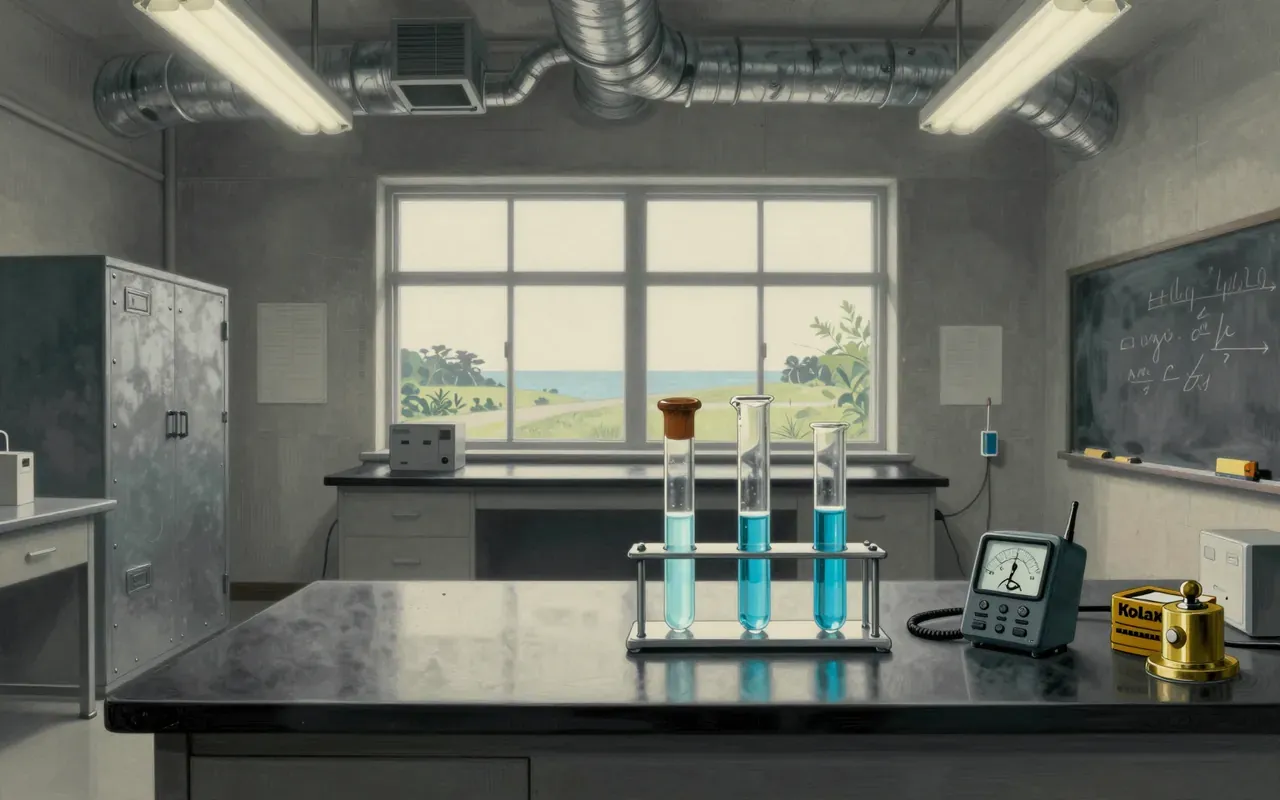
Her central technical contribution was a camera chamber she designed to control humidity precisely using saturated salt solutions, letting her hold DNA fibres at a fixed moisture level through long X-ray exposures. She had already found that DNA took two distinct physical forms depending on humidity, a longer, thinner wet form above roughly 75 percent humidity and a shorter, more crystalline form when drier. That level of control produced sharper images than Maurice Wilkins, working in the same research group, had managed, and Photo 51 itself, an image of the wet B-form, showed a distinctive cross-shaped pattern revealing DNA’s helical structure with unusual clarity, including that its sugar-phosphate backbone ran along the outside of the molecule.
Shown without her knowledge
The structural conclusions drawn from the image have held up completely: DNA’s antiparallel helical structure with the backbone on the outside is now standard, unchallenged textbook fact, confirmed by every subsequent study of the molecule. Historians who have since reviewed Franklin’s own notebooks have concluded she was independently working out several of these same conclusions on her own timeline, in parallel with Watson and Crick’s model-building rather than merely supplying raw material for it. What has drawn lasting scrutiny is not the science itself but how her data reached the two men who are usually credited with the discovery.
A model built partly on her numbers
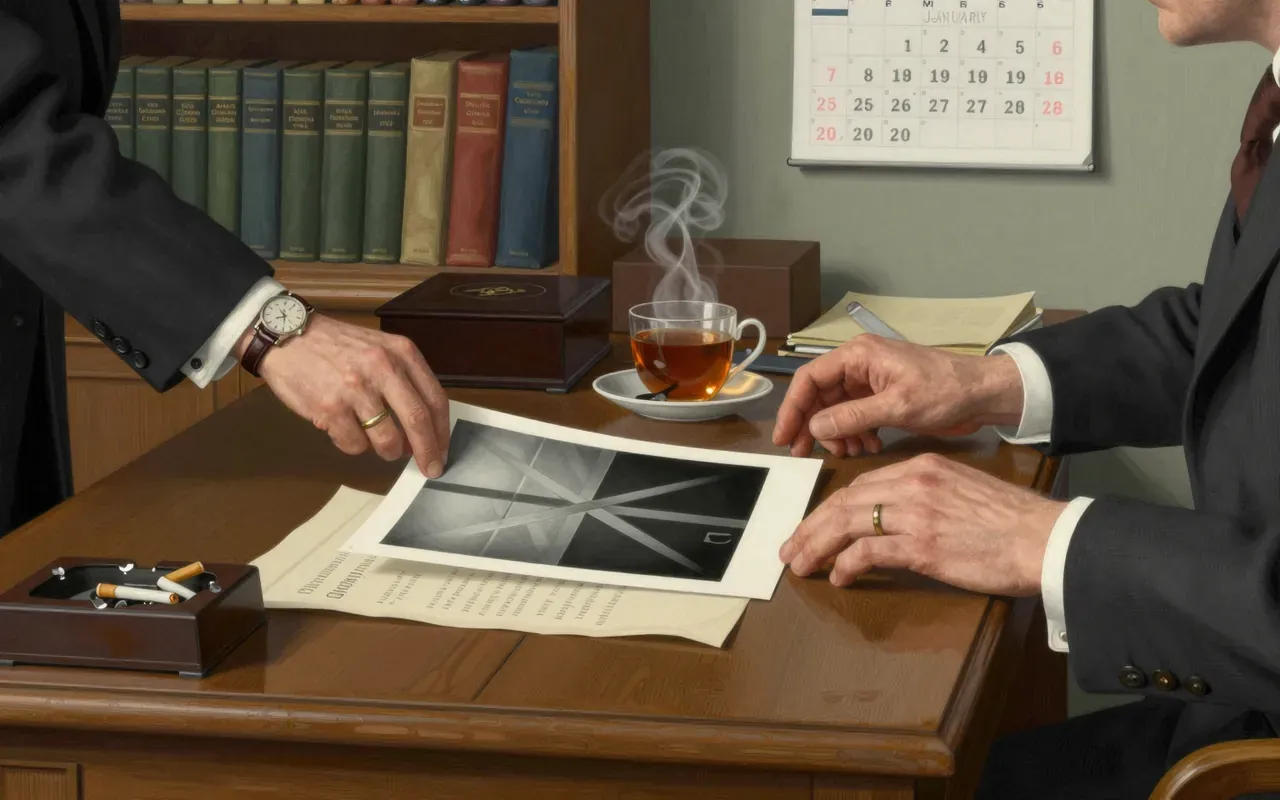
In January 1953, Wilkins showed Photo 51 to James Watson without Franklin’s knowledge or permission, and Watson recognised the cross pattern as evidence of a helix partly because Crick had already worked out theoretically what such a pattern from a helical structure should look like. The following month, Max Perutz separately gave Crick a copy of an internal report containing Franklin’s own crystallographic calculations, again without her authorisation, calculations that confirmed a specific repeat distance and a particular symmetry in the molecule that proved decisive for completing Watson and Crick’s model in the weeks that followed.
A footnote, then a Nobel that came too late
When Watson and Crick published their double-helix model in Nature on 25 April 1953, they credited Franklin and Wilkins only with having generally stimulated their thinking through unpublished work, while Franklin’s and Wilkins’ own papers, containing much of the actual experimental evidence behind the model, appeared afterward in the same issue, positioned in a way that made them look like supporting confirmation rather than independent findings in their own right. Franklin had, separately, submitted her own manuscripts on DNA’s structure to a different journal on 6 March 1953, the day before Watson and Crick finished their model, and a further draft on the B-form of DNA was found among her papers only years after her death.
Recognition, revised
Franklin died of ovarian cancer in 1958; when Watson, Crick and Wilkins shared the 1962 Nobel Prize in Physiology or Medicine, she could not be considered, since the Nobel committee does not make posthumous awards. Her colleague Aaron Klug later published detailed defences of her contribution in 1968 and 1974, correcting an incomplete portrayal in Watson’s own published memoir, and historians since, including Nathaniel Comfort and Matthew Cobb, have concluded she was independently closing in on much of the same structural answer, simply without the time to finish before Watson and Crick did. The story is worth an hour for exactly that tension: sound, largely vindicated science, reaching the public record through sharing its own author never agreed to and did not live to see corrected.