sciencebriefs
9:36in productionCh. 1 · Spacetime/ 9:36 · ceiling 15 min
Physics · Astronomy & space

Space

Space is not empty. It bends, ripples, expands—and you’re standing inside a four-dimensional object you can’t see.

The discovery of space as a physical, dynamic, relativistic entity—rather than inert stage—is established through mathematical innovation, theoretical prediction, and empirical confirmation: curvature (non-Euclidean geometry), unification (spacetime), dynamism (gravitational waves), and cosmic history (Big Bang expansion). No claim exceeds the evidence cited.

Chapters & takeaways4
  1. 0:58
    Spacetime

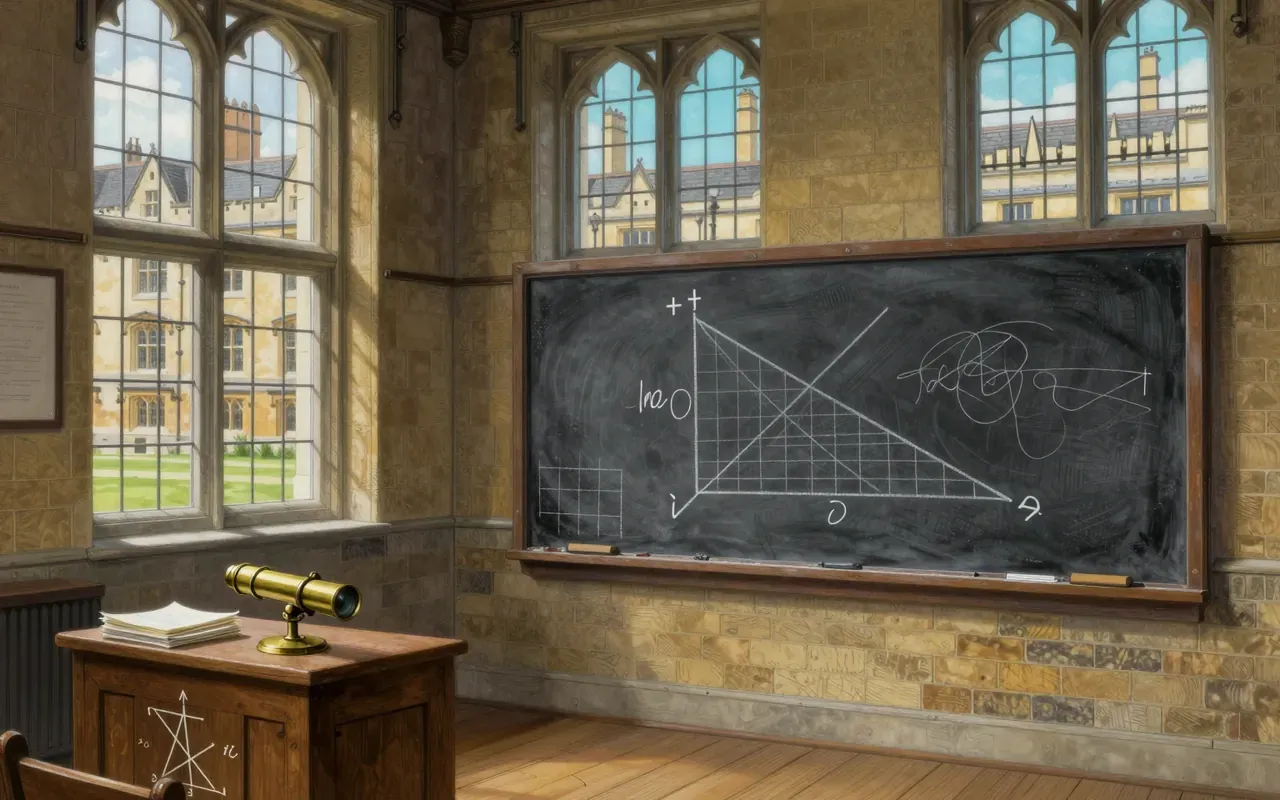
    Einstein fused space and time into one entity: spacetime.

  2. 2:21
    Curved Space

    Space is curved—not flat—and non-Euclidean geometry matches observation.

  3. 4:00
    Gravity’s Signature

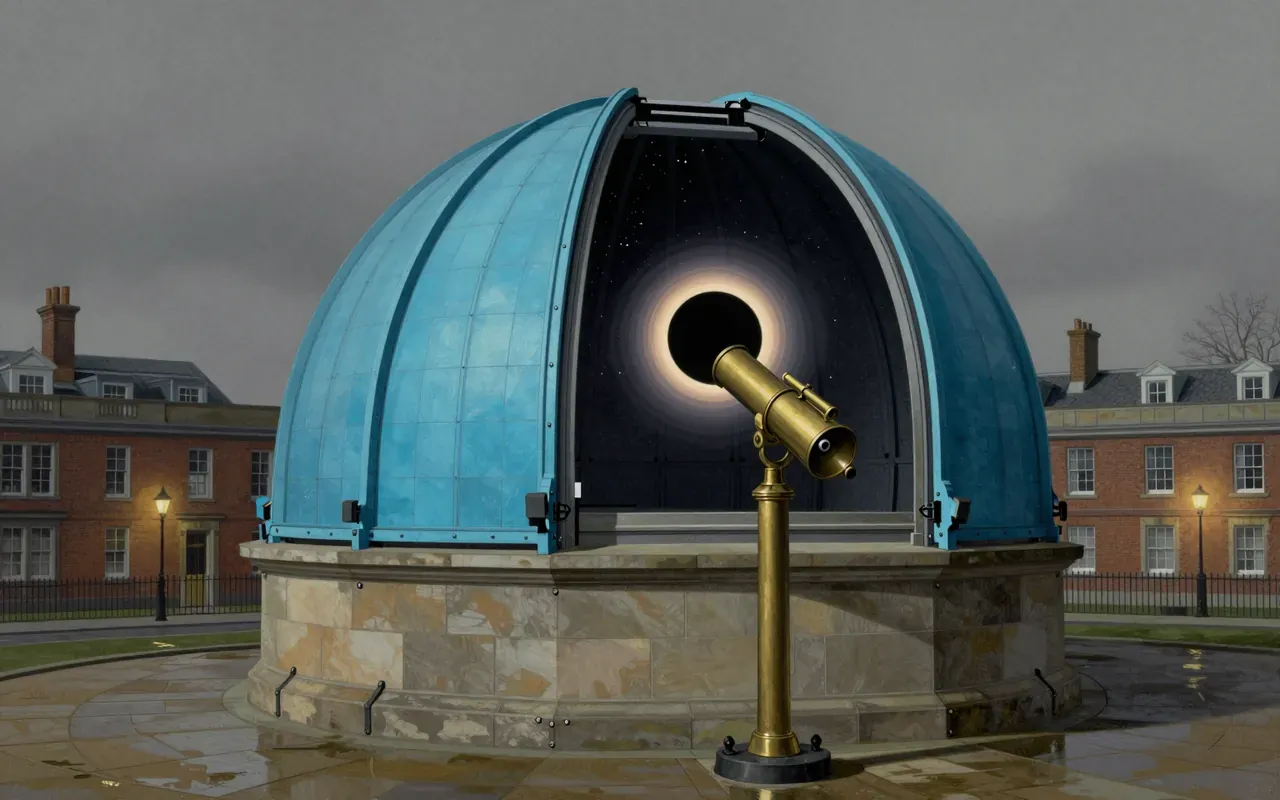
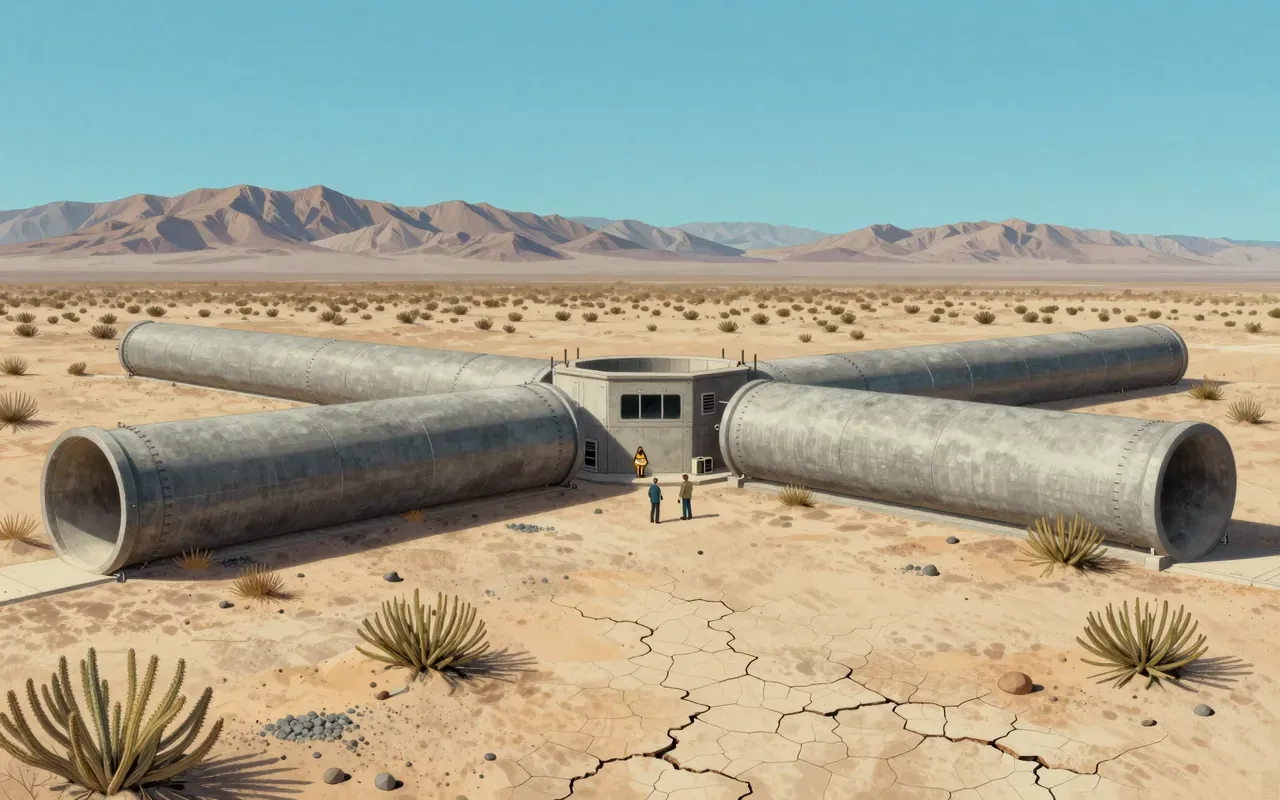
    Gravity warps time, bends light, and shakes spacetime—ripples detected in 2015.

  4. 5:36
    Expanding Space

    Space has age, origin, and expansion—13.8 billion years from Big Bang to now.

Worth your time?

Yes. Study the whole thing.

4.5/ 5
What works
  • replaces Euclidean intuition with testable geometry
  • unifies space and time operationally
  • makes gravity a property of shape, not force
  • gives space a measurable age and expansion rate
What does not
  • proves the Big Bang mechanism
  • resolves quantum gravity
  • defines space's ontological status
Study it if
  • anyone using GPS
  • anyone interpreting astronomical data
  • anyone teaching Newtonian mechanics
Skip it if
  • someone seeking metaphysical closure
  • someone needing engineering tolerances for local construction
  • someone expecting a single experiment to settle all questions
The written brief1 min read

What the work claims

Space is not flat, fixed, or separable from time. It curves near mass. It expands. It vibrates. It began 13.8 billion years ago. Its geometry is physical—not just mathematical—and measurable.

How it was done

Mathematicians developed non-Euclidean geometries in the 19th and 20th centuries. Einstein published special relativity in 1905, unifying space and time into spacetime. General relativity followed, predicting curved spacetime near mass. Experimental tests—including gravitational wave detection by LIGO on 14 September 2015—tested those predictions.

What holds up

Non-Euclidean geometry models space more accurately than Euclidean geometry, per experimental tests of general relativity. Gravitational waves were directly observed. Light bending and time dilation are confirmed phenomena. Spacetime as a unified construct is empirically anchored.

What does not

The document does not establish that space is ‘created’ in a metaphysical sense. It reports cosmology’s claim that space was created in the Big Bang—but offers no mechanism, no test of initial conditions, and no resolution of the singularity problem.

Why it matters beyond the lab

It underpins satellite navigation, gravitational-wave observatories, and all cosmological models of expansion and origin. It forces revision of intuition about simultaneity, distance, and causality—everyday concepts now known to be frame-dependent.

Is it worth your time

Yes. It redefines what ‘space’ means—not as passive backdrop but as dynamic, measurable, warped, and expanding. You cannot grasp modern cosmology, GPS, or gravitational-wave astronomy without it.
Same field · Physics4 of 185
9:50
Georges Lemaître1894–1966Lemaître’s 1927 work used Einstein’s equations to show the universe must expand, linked that to galaxy recession, and proposed the primeval atom — the first Big Bang hypothesis. It is foundational, not because it was confirmed in full, but because its core mathematical and conceptual moves remain indispensable.
12:03
Michelson–Morley experiment1887The Michelson–Morley experiment measured light speed in perpendicular directions to detect Earth's motion through the aether. It found no significant difference — a null result so precise it undermined core assumptions of classical physics and helped catalyse special relativity.
10:15
Roger Penrose1931Penrose’s 1964 singularity theorem showed black hole formation follows inevitably from general relativity—even without perfect symmetry. He did it by analysing spacetime topology, not geometry. The result holds mathematically under classical assumptions. It does not address quantum effects, observability, or internal physics. It matters because it turned black holes from curiosities into necessary consequences—changing how physicists frame cosmic collapse forever.
9:49
Stephen Hawking1942–2018Hawking’s work established rigorous theoretical consequences of combining general relativity with quantum ideas—not verified predictions, but unavoidable implications given the frameworks used. Its strength lies in logical necessity under stated assumptions; its limit is that none of its core results have been empirically confirmed.
Up next in Science

Deep-sea exploration

· 10:52

The deep sea stopped being myth the moment someone dropped a weight and hauled it back wet.

10:52